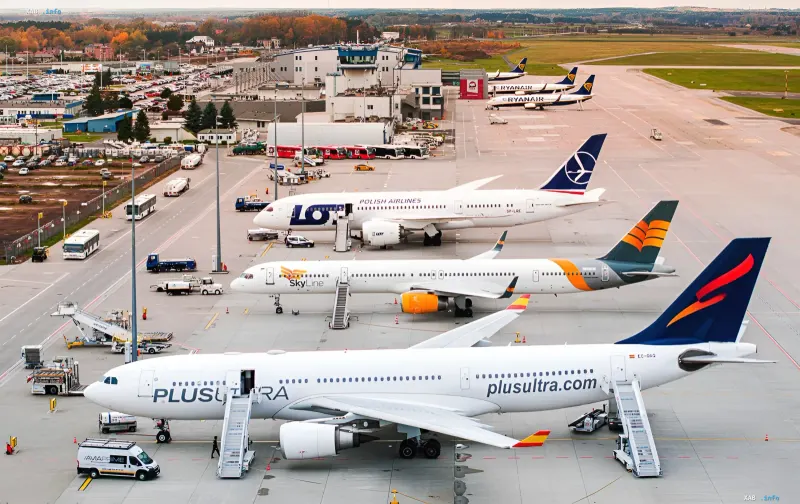
In August 2026, at the height of the summer tourist season, European airports faced an unprecedented logistics crisis. The cause was glitches and delays triggered by the new European Union Entry/Exit System (EES). Passengers arriving from non-EU countries were forced to wait in queues for hours to clear border control.
Crisis in Hubs: Frankfurt, Amsterdam, and Munich
The situation is most acute in the continent's key transit hubs. According to monitoring data from July 2026, peak waiting times at Frankfurt and Amsterdam airports reached a critical mark of 120 minutes. For comparison, these figures were significantly lower last year: in Frankfurt, waiting times doubled from 60 to 120 minutes. In Munich, delays rose from 31 to 60 minutes, and in Amsterdam, from 80 to 120 minutes. This creates a serious threat to connections and airline schedules.
Technology vs. Reality: How EES Works
The EES was introduced to automate the registration of travelers from non-EU countries. Upon first crossing the external border, the system records personal data, takes a facial photo, and scans fingerprints. It is these additional biometric procedures that have become the "bottleneck." Although the technology promised to speed up processes, in practice, the complexity of collecting biometrics amidst high passenger volumes led to the opposite effect.
Contradictory Data
There is a clear gap between official statistics and reality on the ground. Representatives of the European Commission state that registration in the EES takes an average of about 70 seconds and does not create significant additional problems for most travelers. However, airlines such as British Airways and easyJet refute this view, pointing out that in certain airports, the new rules have already led to significant passenger congestion and chaos in terminals.
Industry Warnings and Calls to Action
Representatives of the tourism industry warned even before the system's launch that new procedures could cause significant delays. Now, airlines are urging airport operators to organize the screening process more efficiently. British and European carriers insist that passengers should not be forced to stand in queues for hours due to bureaucratic innovations, which undermines confidence in air travel in the region.