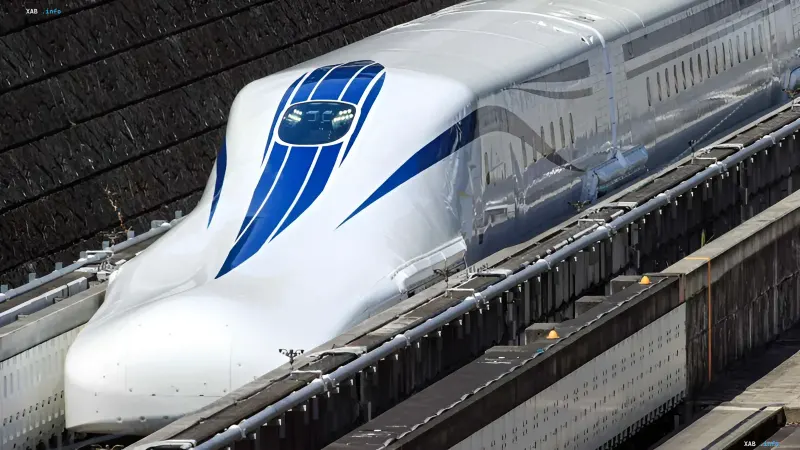
Japan has finally unblocked one of the country's most ambitious infrastructure projects. On July 7, Shizuoka Prefecture Governor Yasutomo Suzuki officially approved the construction of the initial section of the ultra-high-speed maglev line between Tokyo and Nagoya. This decision lifts a decade-long freeze on the project, which was caused by opposition from the region's previous leadership.
Long-Awaited Approval and Partner Reactions
The project, known as the Linear Chuo Shinkansen, became possible thanks to the political will of the new governor. His decision was met with enthusiasm in neighboring regions. Leaders of Aichi and Nagano prefectures, through which the route also passes, welcomed the news and demanded clarification on the completion timeline for the entire line.
Risks and Schedule Shifts: Optimism with Caution
While the news of the construction launch brings joy, experts and railway officials themselves call for sobriety. Back in 2017, when signing the contract for the construction of the Shizuoka section, Central Japan Railway Company (JR Central) targeted a ten-year construction period, implying that the line would not enter service before 2036.
However, JR Central President Shunsuke Niwa warned during a briefing on July 7 that reality could be more complex. According to him, laying the track will require taking into account the preservation of the Oi River's water resources and environmental protection in the Japanese Southern Alps area. Niwa also noted that sections in Yamanashi and Nagano prefectures present no less complexity. Thus, the 2036 opening date may be postponed, although new dates have not yet been announced.
Environmental Challenges and Incidents in Gifu
The issue of protecting nature and water resources for the maglev is not theoretical but already has precedents. In the Okute area of Mizunami City (Gifu Prefecture), tunnel construction led to a drop in groundwater levels. This caused protests from local residents and forced a suspension of work in 2024.
Gifu Governor Yoshihide Esaki emphasized the seriousness of the situation in May: "This is not just concern — the water is actually disappearing." According to him, after stabilizing the situation in Shizuoka, the next critical task will be resolving the problem in Okute.
Action Plan: From Tree Felling to Cornerstone Laying
Despite the risks, the launch process is already gaining momentum. JR Central Executive Vice President Takanori Mizuno stated in June that the exact launch date would be announced after the start of earthworks. Currently, preparatory work is underway on the section, including tree felling.
Shunsuke Niwa reported that the company will soon hold a briefing at the construction site to explain plans and environmental protection measures. Following this, a cornerstone laying ceremony, equipment installation, and the actual laying of the track will take place.
Launch Prospects
As the Asia Nikkei publication notes, it will take time to make an accurate forecast. Even assuming construction begins this year, the final launch date for the high-speed line may be announced later. The reason will be the need to conduct a detailed analysis of underground driving conditions and assess the impact of the work on the environment.