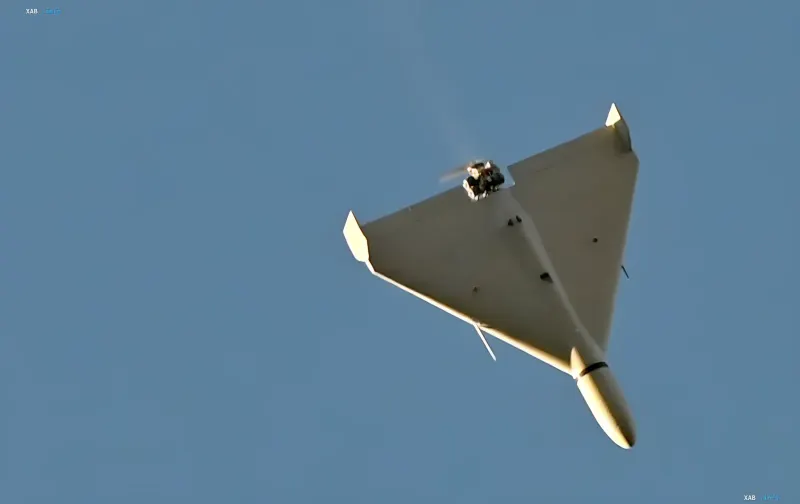
Amid the escalation of the air war in Ukraine, a critical shift in the tactics of using unmanned aerial vehicles (UAVs) by the Russian armed forces is observed. If the main focus was previously on turbine drones, the situation changed radically in August 2026: Russia is increasingly betting on jet-powered versions of kamikaze drones of the 'Shahed' type. This change is dictated by the need to overcome Ukraine's increasingly sophisticated air defense (AD) systems.
Critical growth in the share of jet UAVs
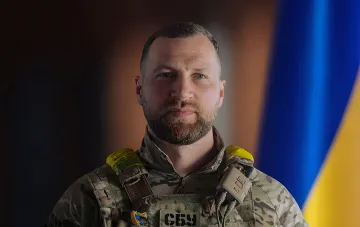
Yuriy Ignat, Head of the Communications Department of the Air Force Command of the Armed Forces of Ukraine, stated shocking statistics in a comment to Business Insider. According to him, at the moment, the share of jet 'Shaheds' among all drones launched at Ukraine may reach two-thirds (about 66%). This is the highest publicly announced estimate of the share of jet drones in the arsenal of Russian attacks. Previously, experts estimated this figure significantly lower — at the level of 20%, and former Commander-in-Chief of the Armed Forces of Ukraine Alexander Syrsky predicted growth to 50%. Current data indicate that the Russian military have not only reached but exceeded these forecasts.
Why interception has become impossible
The reason for such a sharp transition to jet engines lies in flight physics and AD effectiveness. Traditional turbine drones fly slowly, which gives Ukrainian AD systems and fighters enough time to detect and intercept them. Jet UAVs, however, develop significantly higher speeds, which reduces the defenders' reaction time to critical seconds. People's Deputy Yegor Chernyev previously noted that Ukraine manages to intercept more than 90% of conventional cruise missiles and Geran-2 drones. However, against high-speed jet analogues, AD effectiveness drops, forcing Moscow to change its strategy.
Infrastructure modernization of attacks
To mass launch jet drones, Russia is actively modernizing its infrastructure at airbases. According to journalists, special long rails — acceleration tracks — are used to start such devices. They allow the drone to gain the necessary speed to start the jet engine while still on the ground, ensuring a stable takeoff and high speed throughout the flight. This turns ordinary airfields into powerful nodes for delivering high-speed strikes, which are extremely difficult to predict and neutralize at an early stage.
Kyiv's countermove: P1-SUN Jetkiller interceptor drone
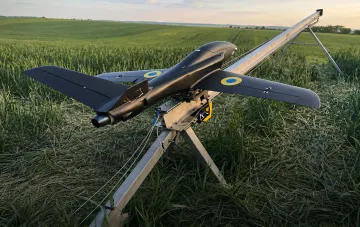
Ukraine is not standing aside from the technological race. In response to the appearance of jet 'Shaheds', Ukrainian engineers are creating a new class of interceptors. In particular, the company SkyFall presented the high-speed interceptor drone P1-SUN Jetkiller. This device was developed specifically for the effective destruction of Russian drones with jet engines. The creation of its own high-speed UAVs became a direct response to Russia's active development of similar technologies, turning the airspace into a zone of high-tech confrontation.
Contradictory data
Despite the general picture, there are differences in the assessment of the situation by different sides. On the one hand, the leadership of the Armed Forces of Ukraine (Yuriy Ignat) states the dominance of jet drones (up to 66%), which indicates a critical threat and the need to change AD tactics. On the other hand, some experts and political figures (for example, Yegor Chernyev) continue to optimistically assess the overall interception effectiveness (more than 90%), however, these data probably concern the totality of all types of threats, including old models, and may not take into account the specifics of jet attacks. There are also discrepancies in chronology: if previously an increase in the share of jet drones to 50% was predicted, then actual data already exceed this mark, which speaks of a more aggressive and faster modernization of Russian tactics than previously expected.