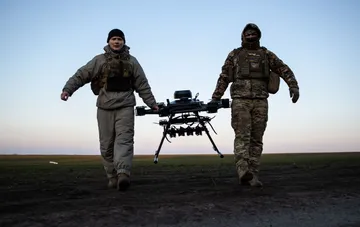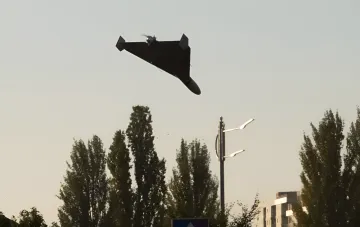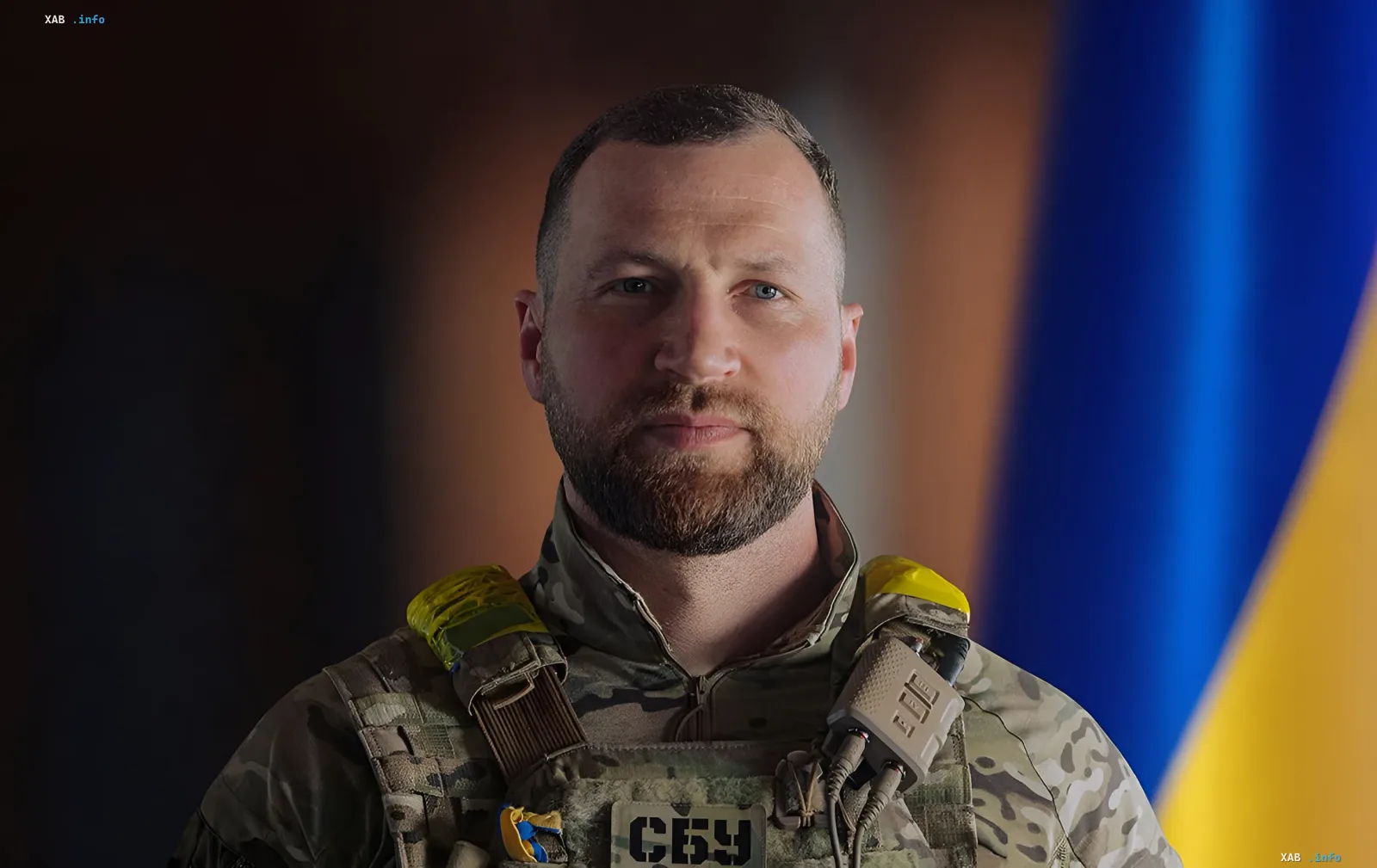
Ukraine's Minister of Defense, Yevheniy Khmara, told journalists in an interview carried by RBC-Ukraine that a breakthrough has been achieved in countering jet-powered Shahed drones. According to him, four potential interceptors capable of shooting down high-speed drones with jet propulsion have already been tested at training grounds in the country. "The search for countermeasures against jet-powered drones is ongoing. We already have four potential interceptors that can shoot down jet-powered Shaheds. Field trials have already been conducted on them," the Defense Minister emphasized.
Field trials completed: what is known about the four interceptors
Khmara did not disclose the technical specifications of the developments, but stressed that all four solutions have already passed the stage of field trials. This means that the interceptors have demonstrated their functionality under real conditions, not only in laboratory or simulated scenarios. The minister noted that at the current stage the main task is to "bring these developments to the required level as quickly as possible" — that is, to bring them to serial combat readiness, unify logistics, and prepare the infrastructure for mass production.
Scaling to thousands of units: production plans
Once the technologies are brought to the required level, Kyiv plans to scale up the production of the new interceptors to thousands of units. "The task is to bring these solutions to the required level as quickly as possible and scale production to thousands of units," Khmara stated. Such a volume of output indicates that the Ministry of Defense views jet-powered Shaheds not as a temporary threat, but as a systemic element of Russian tactics, against which a constant and massive arsenal of air defense systems will be required.
Scale of the threat: from 1,500 to 2,500 launches per month
The context for such plans is set by the dynamics of Russia's use of jet-powered drones. According to data from Serhiy "Flash" Beskrestnov, the president's special advisor on the development of defense technology directions, in July 2026 Russia launched about 1,500 jet-powered Shaheds, and in August their number already exceeded 2,500. Beskrestnov also noted that the Russians launch these drones almost immediately after manufacture, which minimizes the cycle from production to combat use and makes predicting waves of attacks extremely difficult.
Contradictory data
At the same time, open sources record a discrepancy in assessing the effectiveness of existing interception means. The Telegraph, citing field data, reports that current Ukrainian interceptors "cannot keep up" with jet-powered Shaheds due to their increased speed. The commander of one of the air defense units also pointed to technical difficulties in an interview with UNIAN: traditional drone interceptors, designed for piston-powered "mopeds," physically cannot catch up with a jet-powered aircraft that develops a significantly higher speed. Meanwhile, Khmara speaks of four solutions that have already passed trials and are capable of solving the problem. Thus, the question arises: are these interceptors that fundamentally outpace a jet-powered Shahed in speed, or a comprehensive solution (radars + air defense systems + drone interceptors), where each element covers its own segment? No official detailed comment on the tactical and technical parameters had been received as of the time of publication.
Strategic significance: a speed race in the skies over Ukraine
Russia's switch to jet propulsion for Shaheds effectively changes the air defense equation: the time for detection, tracking, and interception is reduced several times compared to piston-powered counterparts. BBC Russian previously noted that the "mopeds" are a thing of the past and Moscow is switching drones to jet propulsion, which threatens Ukraine with the need to review the entire architecture of its air defense. Khmara's statement about the four interceptors and plans to produce thousands of units is, in essence, a response to this paradigm shift: Ukraine is trying not simply to "catch up" with Russian modernization, but to create its own industrial cycle capable of generating countermeasures at a pace comparable to the rate of enemy drone launches.