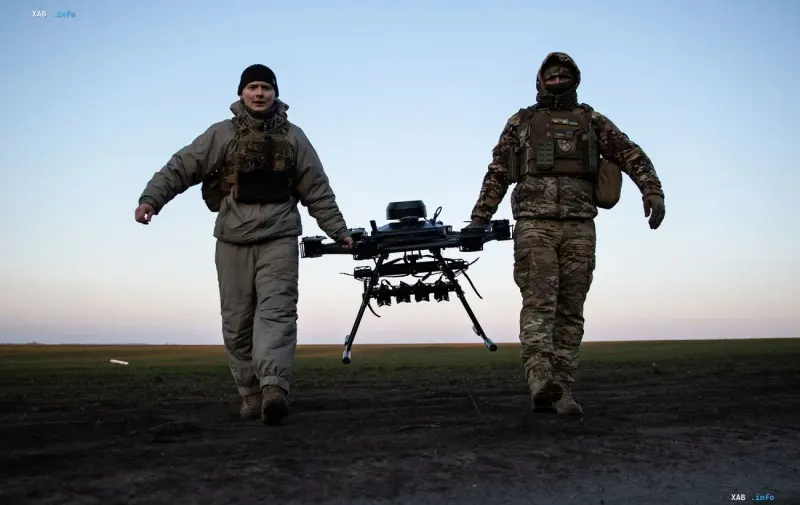
Ukraine's Ministry of Defence has announced the development of the SPECTR AI platform, designed to analyse combat data and generate recommendations for planning military operations. This was reported by RBC-Ukraine, citing the ministry. The platform is already being tested in several combat units of the Ukrainian Armed Forces and is intended to take on part of the routine analytical workload of headquarters: processing large volumes of information, identifying patterns, and developing courses of action.
What SPECTR is and why it was created
According to the Ministry of Defence, SPECTR's key task is to help commanders choose the most effective courses of action and forecast the enemy's possible moves based on accumulated combat data. The system does not replace the human decision-maker; it serves as a decision-support tool: it processes incoming information, identifies hidden correlations, and produces structured recommendations that headquarters can use when planning operations. This shortens the time from receiving intelligence to making a decision.
How the platform will operate in combat conditions
An important architectural feature of SPECTR is its integration into the existing digital solutions of Ukraine's defence forces. The platform does not create a separate "island" — it is embedded into the current infrastructure, which simplifies deployment and reduces risks for operators. All data passing through SPECTR is processed in a secure environment, which rules out the leakage of operational information. The system is being tested in several combat units, allowing the algorithms to be validated under real, rather than simulated, conditions.
The "A1" AI Centre: institutional context
The platform's developer is the "A1" Artificial Intelligence Centre, established by the Ministry of Defence in March 2026 with the support of the Government of the United Kingdom. The creation of a specialised centre became part of a systematic strategy to strengthen the Ukrainian army with artificial intelligence tools. The programme's goals are clearly defined: faster data-driven decision-making, increased effectiveness of weapons systems, and reduced bureaucratic overhead in the operational planning chain.
A broader course: from Avengers Labs to jamming evasion
The launch of SPECTR is not an isolated project. Earlier, the Ministry of Defence granted Ukrainian defence companies access to the Avengers Labs platform, where AI models for unmanned aerial vehicles are trained on real combat data. The platform is built on a dataset of 5 million frames collected by the DELTA combat system, on which an automatic target-detection system has already been trained. In parallel, Ukrainian drones have used AI to evade Russian electronic warfare jamming: the technology allows an UAV to independently acquire a target and complete guidance even without a stable radio link with the operator. SPECTR logically continues this trajectory, moving intelligent analytics from the level of an individual UAV to the level of the operational headquarters.
Significance for operational planning
The comprehensive deployment of AI tools — from the tactical level (drone guidance, jamming evasion) to the operational level (analysis and forecasting in SPECTR) — is forming a multi-layered decision-support system for the Ukrainian Armed Forces. For the adversary, this means that Ukrainian command will be able to adapt more quickly to changes on the front line; for allies, it demonstrates a sustained course of technological modernisation underpinned by international partnership.