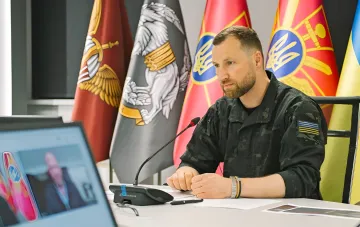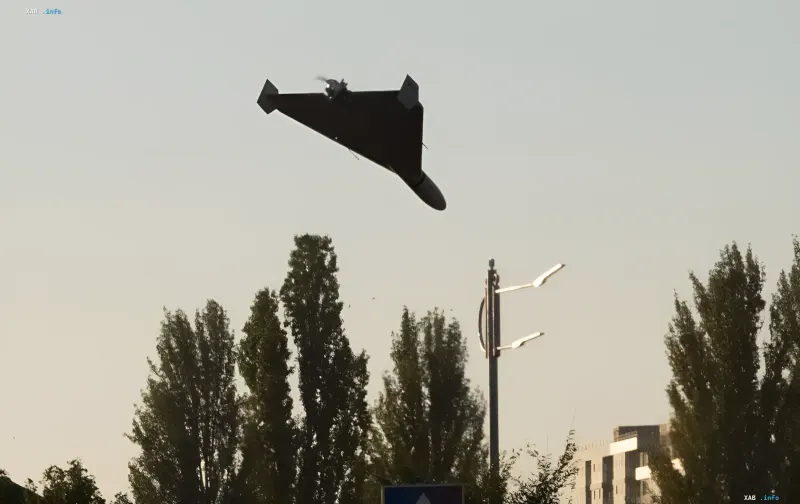
Sergey "Flash" Beskrestnov, the President of Ukraine's adviser on the development of defense technology, has put forward an initiative to give all citizens of the country access to a map showing the movements of Russian "Shahed" drones. He wrote about this in his Telegram channel, as reported by RBC-Ukraine. According to Beskrestnov, a decision to grant access to the digital air-awareness system has already been made for gas stations, as well as for Ukrzaliznytsia and a number of other organizations. At the same time, the President's adviser argues that expanding access is necessary because keeping the information secret from the enemy is now virtually impossible given the large number of users.
Why secrecy has been lost
Beskrestnov pointed to a specific vulnerability: access to data on drone movements is held by the administrators of hundreds of Telegram channels, who "paraphrase in their own words what they see." In his assessment, with so many intermediaries and retellings, it is technically impossible to ensure full confidentiality of official information. Against this backdrop, he posed a rhetorical question: "Find at least one reason why we should not provide this information to the entire population? This could save potentially hundreds of lives!" The adviser emphasized that this option has been discussed several times in the Ministry of Defense of Ukraine and that, in his words, no arguments against such an initiative were found during the discussions.
What will be shown to civilians, and what will remain military
At the same time, Beskrestnov clearly delineated the scope of information: this is not about fully opening the military map. Exact coordinates of targets, their numbers, official information, and data on special objects, under his proposal, should remain accessible exclusively to military structures. The civilian population would be shown only general information about which area is currently under threat. Thus, the system should serve as an alert function, not a disclosure of operational data.
Three implementation scenarios
The President's adviser described several options for the technical implementation of the system. The first is personal alerts: the user receives a notification on their device that a "Shahed" is approaching their location, with an approximate distance to the drone indicated. Beskrestnov called this approach a reserve, alternative scenario in case the military do not approve the main initiative to open the map. The second option is displaying information about "Shaheds" only within urban areas. In Beskrestnov's view, this would not allow the enemy to determine exactly where Ukrainian radar systems detect aerial targets. The third scenario is showing drone movement not by exact coordinates, but by conditional squares of about 2 by 2 kilometers. In the adviser's assessment, this format is sufficient to understand the threat area but does not reveal excessive precision to the enemy.
Context: gas stations already have access
It is worth recalling that on September 15 it became known that gas stations in Kyiv Oblast are already gaining access to a special digital air-awareness system used by the Defense Forces of Ukraine. This system allows gas station workers to see the movement of enemy aerial targets in real time and respond to the threat promptly — for example, by hiding storage tanks or evacuating personnel. Thus, Beskrestnov's initiative logically continues the already launched process of expanding access to air-situation data, scaling it from individual organizations to the entire population of the country.
Contradictory data
Beskrestnov's statements contain a certain duality in assessing the position of the Ministry of Defense. On the one hand, he claims that "arguments against this idea were not found during the discussions," which could be interpreted as military consent. On the other hand, he himself calls the personal-alert option an "alternative in case the military do not approve his proposal to open the map." This indicates that, at the time of the statement's publication, no formal final decision on full civilian access had yet been made, and the discussion within the relevant structures is ongoing. Thus, there is an inconsistency between the claim that no arguments against were found and the retention of a "reserve" scenario, which can be explained by the fact that the approval process is at an intermediate stage.