On October 16, 2026, the Japan Meteorological Agency (JMA) issued a preliminary early warning at 12:40 local time for a potentially destructive magnitude 9.9 earthquake — the maximum value its system can record. According to calculations, the intensity of the tremors in some areas could have reached level 7, the highest on the 7-point Japanese seismic intensity scale, with the impact zone extending from Hokkaido to the Tokai region.
The System Operated at Full Power
Immediately after the warning was issued, mobile phones rang simultaneously, public address systems sounded in cities, and broadcasters urgently urged residents to take shelter in a safe place before powerful tremors began. Users of the NERV disaster prevention app also received a magnitude 9.9 earthquake notification with a countdown timer. In Tokyo, the announcement caused confusion: many pedestrians stopped to check their phones and make sure the ground was not shaking before continuing their business.
Reality Turned Out Different
In fact, a magnitude 6.9 earthquake occurred off the coast of the Kamchatka Peninsula in Russia, while in Japan, tremors were recorded at only level 1 on the Shindo scale — a level that only a few could feel. Live broadcasts from northern Japan showed a calm sea and a normal course of events, while TV channels repeated the warnings in a loop. At 12:48, the JMA lifted the alert, officially announcing that the situation was safe.
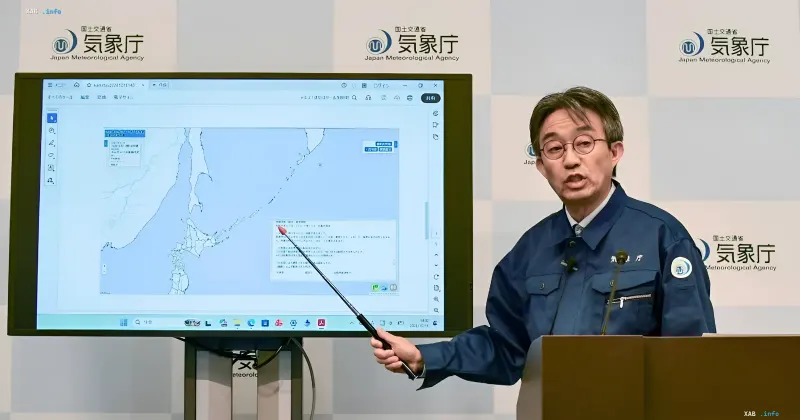
During an afternoon press conference, JMA Earthquake and Tsunami Monitoring Division Head Ayataka Ebita stated that the agency's system incorrectly determined the epicenter and overestimated the earthquake's intensity, leading to the false alarm; the possibility of a cyberattack was ruled out. According to the JMA website, false triggers can be caused by signal interference on sensors — accidents, lightning strikes, or equipment malfunctions, but in the case of October 16, the probability of a lightning strike was very low, and the error likely occurred during the sensor data processing stage. The agency is investigating the cause of the failure.
Cause of the Glitch and Government Stance
During an afternoon briefing, Chief Cabinet Secretary Minoru Kihara reported that the government had received no reports of damage related to the Kamchatka earthquake and confirmed that authorities "take very seriously" the concerns and difficulties people face in evacuating and taking self-protection measures, as well as the inconvenience of those whose travel plans and business activities were disrupted by the warning.
Impact on Transport and Precedents
The false alarm affected several public transport networks: according to Central Japan Railway Company, Shinkansen bullet train operations on the Tokairo line were suspended for 15 minutes after the automatic safety system triggered. Similar incidents have occurred before — in July 2020, the JMA issued warnings for 15 prefectures, including Tokyo, after misidentifying the epicenter and overestimating intensity, and in August 2013, interference from an underwater seismometer led to false triggers in the Kinki region.
Foreign Reaction
Visitors to Japan using alert systems from other countries also received the emergency warning. According to South Korean media, actor Park Joong-hoon posted a screenshot of the Korea Meteorological Administration notification on social media immediately upon arrival in Tokyo. The KMA issued an emergency warning at 12:40 for the region from Hokkaido to central Japan, canceled it about 8 minutes later, and held a press conference at 14:00, apologizing and explaining the glitch was caused by an overestimated magnitude compared to the actual one.