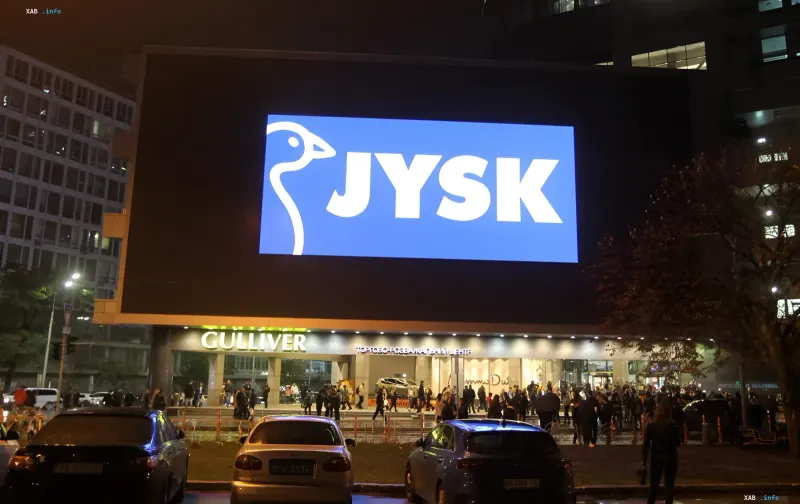
JYSK, the Danish retailer and one of the largest sellers of furniture and home goods in Ukraine, has locked in a maximally conservative policy for operating during wartime: the chain's stores cease operations during any air alert, regardless of its level. The company emphasized that the safety of employees and customers remains the absolute priority. 'At present, during any air alert, regardless of level, our stores cease operations, and staff and customers move to a shelter or safe zone,' the JYSK press office stated. Thus, even a 'yellow' alert, which is issued during drone attacks, automatically halts trading across the chain.
Consequences of strikes on shopping centers
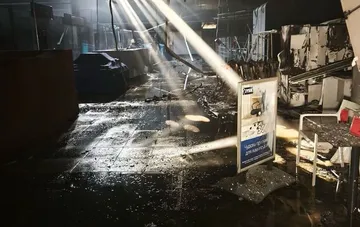
In addition to the general policy, JYSK suspended the operation of individual stores following direct strikes on the shopping centers in which they are located. The press office clarified that after the latest attacks by Russian forces on the 'Amsdor' shopping center in Zaporizhzhia and the 'Manufaktura' shopping center in Sumy, the chain's stores in these facilities have stopped operating. The company is now assessing the extent of the damage and the possibility of resuming trading at these locations. This means that even in the absence of an active alert at a given moment, specific outlets may remain closed for the duration of repairs and safety inspections.
Two-tier alert system
The context for these decisions is set by a new alert system: Ukraine recently began operating two levels of air alert — 'yellow' and 'red.' A 'yellow' alert is declared during attacks by Russian drones, while a 'red' alert is issued during mass strikes and a missile threat. The division into levels was intended to give businesses and the population a more accurate picture of the risks; however, as practice shows, companies interpret it differently: JYSK deliberately makes no distinction and closes at any signal.
Differences in approaches between retail and cinemas
JYSK's position contrasts with the decisions of some other market players. A number of Kyiv shopping centers have already announced that they will continue to operate during a 'yellow' alert, viewing it as a less critical threat level. Along the same lines, on September 10 the Multiplex and 'Oscar' cinemas stated their readiness to operate during 'yellow' alerts. Thus, a split has formed in the industry: some chains choose a full stop at any alert, while others maintain partial operations at the 'yellow' level, relying on the availability of shelters and risk assessments.
What this means for customers
For consumers, the key takeaway is simple: when planning a visit to JYSK, one must bear in mind that the store may close at any moment upon the declaration of an alert of any level, and after strikes on a specific shopping center the outlet may be unavailable for an indefinite period. The company continues to monitor the damage and promises to report on the resumption of operations at the affected stores. Overall, the JYSK case demonstrates that, in wartime conditions, retailers are forced to balance business continuity with responsibility for people, and a choice in favor of maximum caution becomes a permissible, though not the only, strategy.