Agrotech company Kernel has announced the completion of a key validation stage for its carbon project under the international Verified Carbon Standard (VCS), administered by Verra. This is reported by RBC-Ukraine, citing a statement from the company itself. The field audit was one of the most rigorous stages in preparing a carbon project: an independent auditor traveled to the site and assessed how climate practices are applied in real conditions, not just in reports. For the Ukrainian agricultural sector, operating under the conditions of a full-scale war, this event is positioned as proof of compliance with global climate standards.
What Exactly Did the Verra Auditor Check
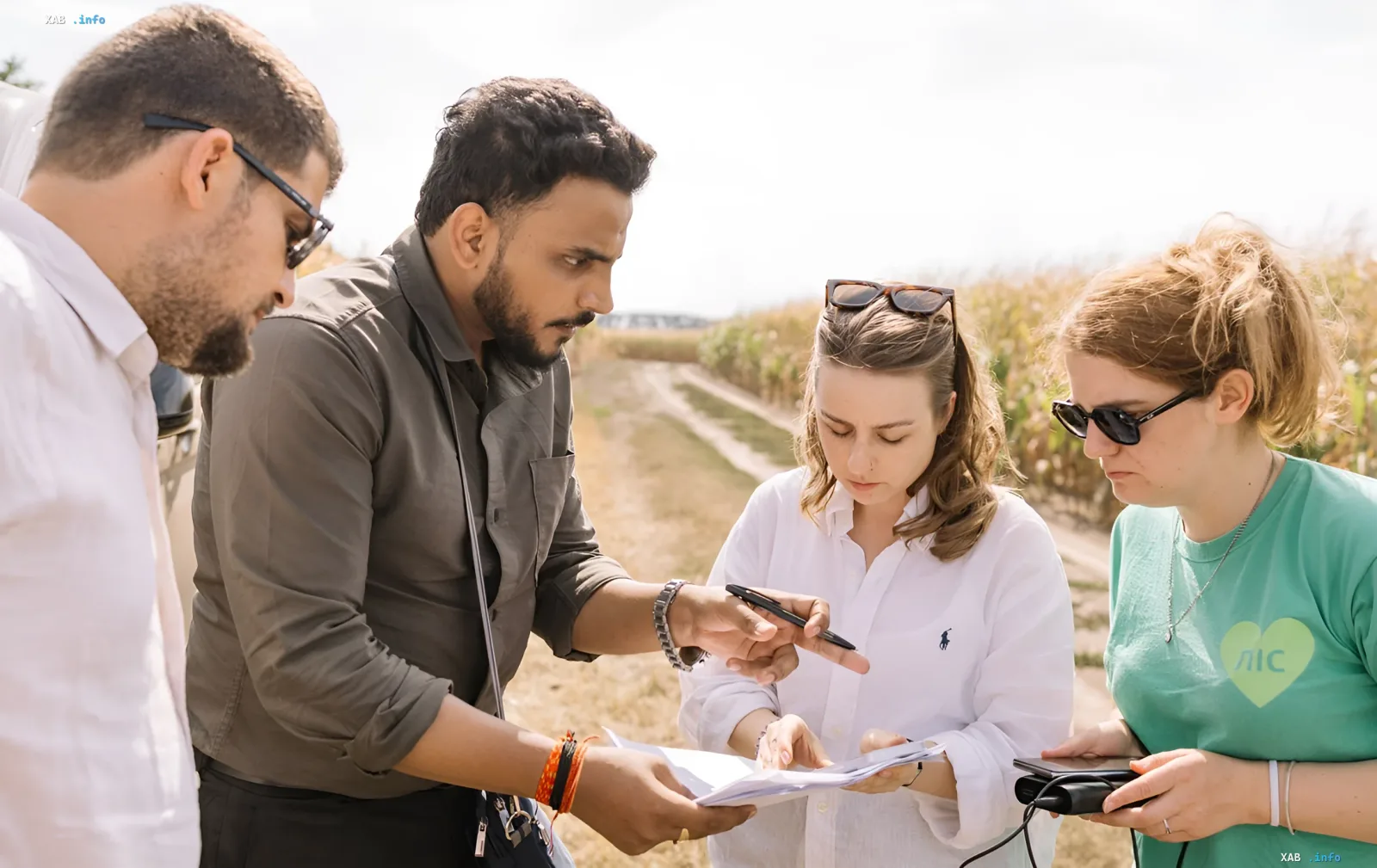
The independent auditor visited 11 fields in the Druzhba-Nova cluster in Chernihiv Oblast to verify the application of climate practices on site. During the visit, the expert conducted a series of interviews with the agronomy service and cluster management, and also assessed soil tillage technologies, the data collection and accounting system, laboratory operations, and agronomic control. According to reports, the auditor noted the high level of project management and the accuracy of the field analytics on which the calculation of carbon accumulation in the soil is based.
Sylvera Assessment and the Role of Sentinel Earth
In parallel, the project has been included in an assessment by Sylvera, a leading international carbon market rating agency, in the pre-issuance category, i.e., before the release of the first certificates. According to the company, this indicates a high quality of data and transparency in the preparation. The project is being implemented by Kernel together with Sentinel Earth on an area of 15,000 hectares in Chernihiv Oblast: the company is modifying certain approaches to land management to reduce emissions and increase carbon accumulation in the soil. Sentinel Earth, as described, specializes in developing and supporting carbon projects — from assessing potential and selecting a methodology to validation and commercialization of carbon units.
What's Next: Registration and Certificate Issuance
The decision on final validation and registration of the project with Verra is expected in January. After that, Kernel will be entitled to issue verified carbon certificates of international standard. A reminder on the role of the institutions: Verra administers the VCS standard, under which the compliance of carbon projects with established requirements and the credibility of the claimed reduction or absorption of emissions are independently verified, while Sylvera assesses the quality of projects and certificates — in particular, the accuracy of calculations and the permanence of the claimed climate effect; these ratings are used by companies and investors when evaluating carbon assets.
Contradictory Data
The wording in two Ukrainian publications differs on what stage the process is at. RBC-Ukraine and the company itself say that Kernel has passed the Verra audit and overcome the key validation stage. At the same time, Interfax's headline describes the event as the start of an international audit under the Verra standard for the issuance of its own carbon certificates. This may reflect different publication timelines (Interfax likely recorded the start of the procedure, while RBC recorded its final stage), however, no single exact date for the field audit is provided in open sources, leaving an inconsistency in the description of the current stage.
Significance for the Ukrainian Agricultural Sector
Marta Trofimova, head of the sustainable development direction at Kernel, stated that it is important for the company to prove that emissions reduction in agriculture can be clearly measured and verified, and since Kernel is implementing these practices on its own fields, it is responsible both for the result and for the quality of the data. In the long term, she said, this experience should pave the way for other Ukrainian agri-producers to attract international climate investments. The company emphasizes that the field audit confirmed that even during the war, Ukrainian agri-production can operate in accordance with strict international climate standards.