Agro-industrial holding Kernel has built a systematic employee first-aid training program where war veterans working at the company play a key role. Over the first seven months of 2026, six veteran instructors conducted 54 training sessions for 696 employees. By the end of the year, the company plans to organize about 50 more sessions and train an additional 500–600 people. Tatiana Karavayeva, Kernel HR Business Partner and leader of the corporate veteran adaptation program, shared this with RBC-Ukraine.
The Initiative Originated from Veterans' Request
The idea of teaching employees the basics of first aid emerged during regular meetings with veterans. Kernel noticed that approximately a year after returning from service, when the most intense adaptation phase is behind them, people begin looking for new opportunities for growth and applying the experience gained. "We received a very clear request from veterans: they want to share the knowledge they acquired during service with their civilian colleagues because they saw that their colleagues lacked certain vital skills. This is how the idea of preparing veterans as pre-medical aid instructors came about," explains Tatiana Karavayeva. Project preparation began in 2025, and the first practical employee training sessions started in March 2026 after the veterans completed the necessary professional training.
Personal Experience as the Main Argument
For colleagues, this is an opportunity to gain knowledge from people who have experienced critical situations firsthand. For veterans, it is a chance to apply their experience in a new, socially important role. "When first aid is taught by a person who has been at war and can explain from personal experience or the experience of brothers-in-arms how a specific skill saves lives, it carries a different weight. Most of our veteran instructors themselves suffered injuries or wounds during service. Therefore, they are living proof of how important it is to know the basics of first aid," says Karavayeva. One such instructor is Vadym Medved, a veteran who lost both limbs and works at Kernel as a monitoring specialist. During the training, he demonstrates how tourniquets were applied to both of his legs, and participants perceive the information differently than they would from an abstract lecturer.
Professional Training and Re-certification
Personal experience does not replace professional training, and Kernel takes this into account. To turn the initiative into systematic training, the company organized instructor training and provided them with equipment for practical exercises. All veterans master coaching skills, as most of them had not previously worked with an audience, explained action algorithms, or monitored their execution. In September–October 2026, current instructors are undergoing annual re-certification. Three more veterans are preparing to join the team: Yevhen from the Kropyvnytskyi Oil Extraction Plant, Nazar from the Starokostiantyniv OEP, and Yuriy from Enselco, a Kernel cluster. After they join, the team will consist of nine instructors.
Training Format and Instructor Working Conditions
Any veteran working at Kernel can become an instructor, regardless of whether they were mobilized directly from the company or joined it after completing their service. The decision to join remains optional. Working as an instructor is an additional paid function alongside main duties, and sessions are conducted during working hours, coordinating the schedule with production tasks. The company provided each instructor with a fully equipped training bag containing tourniquets, bandages, mannequins, and other materials for practical exercises.
What Participants Learn During Trainings
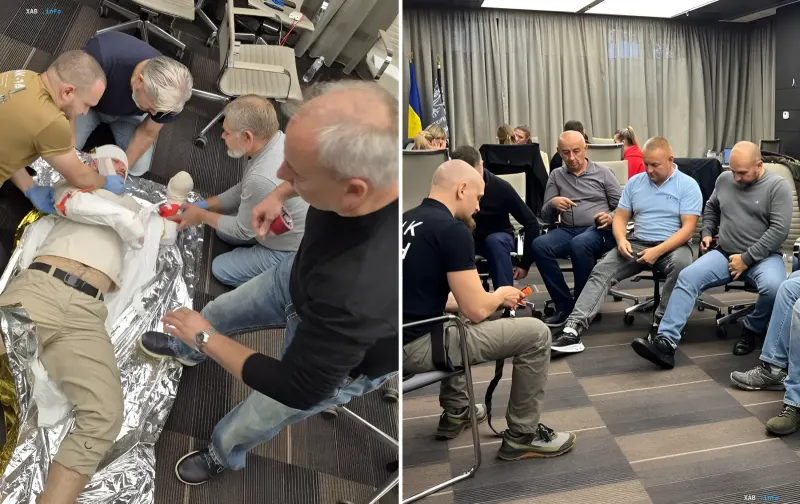
The training sessions last about two to three hours, and the optimal group size is 10–12 participants so that everyone can personally practice the necessary skills. The main focus is on actions in the first minutes after an injury: employees learn to recognize and stop massive bleeding, correctly apply a tourniquet, and call an ambulance. The program is designed so that in a critical situation, an employee can not only save their own life but also assist a colleague before professional medical personnel arrive.