Aleksandr Prokudin, head of the Kherson Regional Military Administration, characterized the situation in the city as persistently critical in a recent interview: according to him, the intensity of attacks on Kherson has multiplied several times over the figures from the beginning of 2026, and only about 20% of the population that lived there at the start of the full-scale invasion remains in the city. The head of the Regional Administration emphasized that this is not about local pockets of risk, but about the entire urban territory, which has in effect turned into a “red zone” with no safe areas.
Demographic decline: from 300,000 to 60,000
Prokudin cited demographics as the key indicator of the scale of the crisis. In his assessment, if around 300,000 people lived in Kherson before the start of the full-scale invasion, then today the city is home to only about 60,000 residents — that is, roughly one-fifth of the original population. This means that over a year and a half or more, the city has lost about 80% of its inhabitants, who either evacuated or were forced to leave due to the constant risk. These figures confirm that the mass outflow of population has become a long-term structural process, rather than a temporary reaction to individual shelling incidents.
A “red zone” with no exceptions and daily casualties
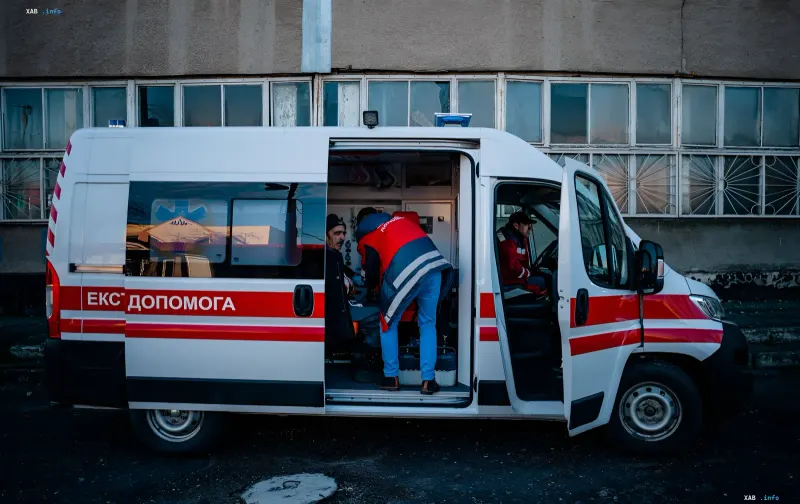
Prokudin noted that today it is virtually impossible to single out specific “most dangerous” places in Kherson: the entire zone where the city is located has come under attack. In his words, even districts that could still be called more or less safe two months ago are now classified as a “red zone,” where the highest number of wounded and killed is recorded. The head of the Regional Administration gave a daily estimate of losses: “Every day we see 20 people wounded or killed.” This means that staying in Kherson has remained dangerous for all residents for more than a year and a half, and the level of everyday risk has become chronic.
Night strikes by “Shaheds” and the threat to critical infrastructure
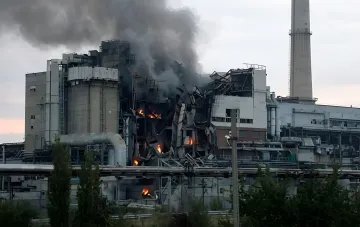
Separately, Prokudin pointed to a change in the nature of the attacks: their composition has now included “Shahed” loitering munitions, which had not previously been recorded in Kherson and which, in his words, strike the city’s critical facilities every night. Against this backdrop, on August 28 the Kherson Regional Military Administration called on residents who are not ready to leave entirely to at least spend the autumn-winter period in safer regions. Deputy head of the Regional Administration Aleksandr Tolokonnikov explained that decentralizing heat supply under constant shelling is extremely difficult, and the launch of just a few drones can wipe out all preparations for winter. Earlier, on August 27, a strike on the Kherson Thermal Power Plant (TPP) was reported, after which the Regional Administration suggested that the facility may not operate in winter, increasing the risk of the city being left without heat and electricity.
Contradictory data
The initial formulations contain several inconsistencies that are important to take into account. First, the announcing part of the message states that the number of attacks on Kherson has grown “2.5 times” compared to the beginning of the year, whereas in Prokudin’s direct quote the intensity of shelling is described as having grown “several times” — the exact multiplier has not been officially recorded. Second, the baseline for the population is formulated differently: in one place the reference is to the “pre-war” population, while in Prokudin’s quote it is to the population “at the time of the full-scale invasion,” which may result in a difference in the baseline figure. Finally, there is a contradiction between the authorities’ calls to leave the city and statements from the business community: on September 3, the “ATB” retail chain denied rumors of a full closure of its stores in Kherson, explaining that it is closing only the locations damaged by shelling, while the rest continue to operate where the security situation allows. Thus, the official risk assessment and the actual activity of the city’s infrastructure are currently at odds.
What this means for residents and what comes next
The totality of the Regional Administration’s statements — about the population shrinking to 20%, the absence of safe areas, daily losses numbering in the tens, and nightly strikes on critical infrastructure — paints a picture of a city that the authorities are in effect recommending residents leave for the autumn-winter period. At the same time, the maintenance of some retail locations and attempts to adapt the heat supply indicate that the city continues to function under conditions of constant risk. For residents, this means that the decision to remain in Kherson becomes a conscious choice in the face of chronic danger, rather than a reaction to a single event.