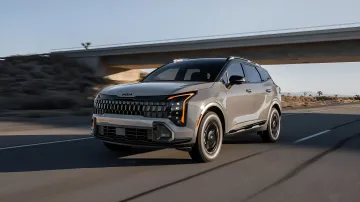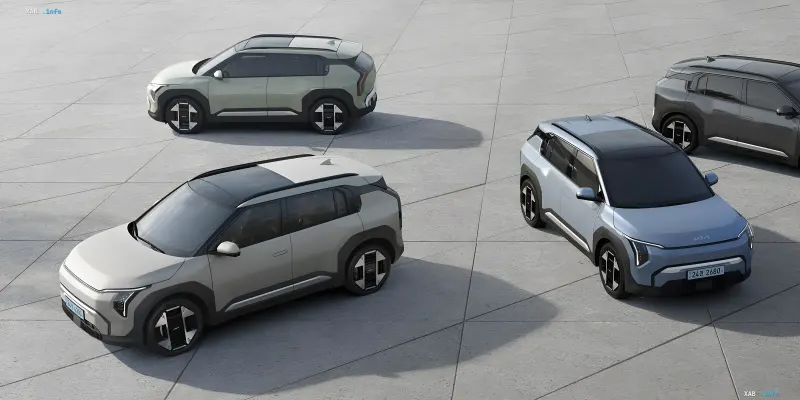
Korean automaker Kia has secured its status as the first automotive brand to surpass the 300,000-unit mark in domestic electric vehicle sales in South Korea. According to the company, cumulative EV sales reached 304,800 vehicles by November 9, 2026, representing a 41.9% increase compared to the same period the previous year. For a market where competition among local giants is traditionally fierce, this milestone carries both symbolic and pragmatic significance: it marks the transition of electric vehicles from a niche novelty into the mainstream segment of everyday demand.
From 100K to 300K: How Momentum Accelerated
Kia's growth trajectory in South Korea's electric vehicle segment has been step-by-step yet consistent. In 2021, the company first sold over 100,000 EVs domestically in a single year—109,741 units—becoming the first automaker to achieve this feat. By 2024, cumulative sales surpassed 200,000 vehicles, and 2026 set a new benchmark at 304,800 units. This rapid acceleration indicates that demand for EVs is not merely holding steady but accelerating: since the beginning of the current year, Kia has already sold 123,600 units, marking more than a twofold increase year-over-year.
A Lineup That Delivers
The sales breakdown reveals that specific models are driving this overall result. The compact EV3 leads the charge with 30,455 vehicles sold since the beginning of the year, followed by the EV5 crossover with 28,971 units, and rounded out by the PV5 commercial electric vehicle with 24,266 sales. This combination of passenger and commercial electric vehicles forms the core volume of demand and explains why Kia has managed to outpace competitors in its domestic market, including its sister company Hyundai.
Hybrids as a Second Pillar
Alongside pure electric vehicles, hybrids remain a crucial part of Kia's lineup. Since the start of 2026, hybrid sales reached 179,700 cars, up 16.9% year-over-year. Around 75% of this volume came from three models, including the Sorento crossover and the Carnival minivan. Thus, the company is pursuing a dual-front strategy: EVs deliver record-breaking growth, while hybrids sustain steady mainstream demand on transitional technologies.
What This Means for the Market
For South Korea, where Kia and Hyundai have historically shared leadership, reaching the 300,000-EV milestone is not just a marketing milestone, but a signal that local consumers have fully embraced electric vehicles as a primary purchase option. The more than twofold annual growth in sales for 2026 and the concentration of demand on several affordable models point to market maturity: the segment has ceased to rely on isolated flagship models and is now built on a broad lineup spanning compact crossovers to commercial transport.