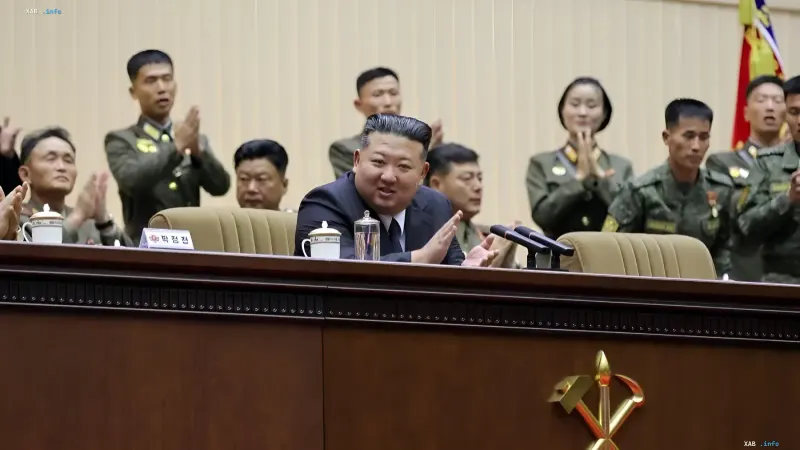
On October 27, 2026, North Korean leader Kim Jong Un demanded that army company commanders bring the combat training of their subordinate units to the level of full war readiness. The statement was made during a photo session with participants of the Third Conference of Company Commanders of the Korean People's Army (KPA), as reported by North Korea's state news agency KCNA.
Order for "Radical Improvement" of Training
According to the text quoted by the agency, the "main revolutionary task of company commanders" is to bring combat training to such a level that units are fully prepared for combat operations, and the path to this lies through a "radical improvement of tense and intensive combat training." The North Korean leader also urged commanders to demonstrate loyalty to the Workers' Party of Korea and create "highly effective combat companies," guided by a patriotic spirit and an "unyielding will to fight." The event was attended by top military officials, including Vice Chairman of the Central Military Commission Pak Jong Chon, Defense Minister Kim Sung Gi, and KPA Chief of General Staff Ri Yong Gil.
Context: Demilitarized Zone Incident
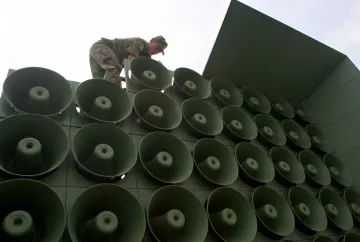
The statements came amid escalating tensions on the Korean Peninsula. On September 21, an explosion occurred in the Demilitarized Zone (DMZ) separating North and South Korea, injuring three South Korean soldiers. Seoul accused Pyongyang of involvement in the incident and offered to resume military contacts for de-escalation; North Korea denies the accusations and, according to reports, has not yet responded to the dialogue proposal. Both sides have submitted documents outlining their positions on the incident to the UN Security Council.
Washington's Concerns
On the same day, October 27, the commander of the 8th U.S. Army in South Korea, Lieutenant General Joseph E. Hilbert, at a press conference in Washington, expressed concern that North Korean military personnel are gaining modern combat experience through the Russian-Ukrainian conflict. According to him, returning soldiers bring back experience in using advanced technologies—small unmanned aerial vehicles and robots, which, according to the U.S. command, are changing combat methods. Earlier, Xavier Brunson, Hilbert's predecessor as commander of U.S. forces in South Korea, also expressed concern over the progress of North Korea's combat capabilities.
Assessment
The combination of a public order for maximum combat readiness and statements by the U.S. command about the growing combat experience of North Korean units indicates that both sides perceive the Korean Peninsula as a zone of increasing military risk. At the same time, Pyongyang has neither officially confirmed nor denied the participation of its troops in foreign conflicts, while Seoul and Washington continue to insist that the accumulated experience strengthens North Korea's military potential.