Amid ongoing tensions along the inter-Korean border, North Korea has announced its intention to resume anti-South Korean propaganda radio broadcasts and deploy additional tactical offensive weapons along the southern border. The announcement was made on October 19 by Kim Yo Jong, the sister of North Korean leader Kim Jong Un, in a sharp statement following a landmine explosion incident on September 21 that injured three South Korean soldiers.
Causes of Escalation: The Landmine and Mutual Accusations
The direct trigger for the flare-up was the explosion of an antipersonnel landmine in the border zone on September 21. South Korean military officials accused Pyongyang of intentionally planting the mines and demanded an official apology as well as the clearance of remaining devices. North Korea flatly rejected these accusations and warned of a "harsher response" should Pyongyang's perceived provocations continue. In her October 19 statement, Kim Yo Jong accused the South Korean side of "repeated warning shots and alert announcements" in the border area since August, which she claimed were carried out under the "absurd pretext" of North Korean service members crossing the border. "A serious situation is unfolding along the southern border due to the reckless behavior of South Korean soldiers," she stated, adding that such actions had "crossed a red line" following the landmine incident.
What Pyongyang is Preparing: Weapons and Loudspeakers
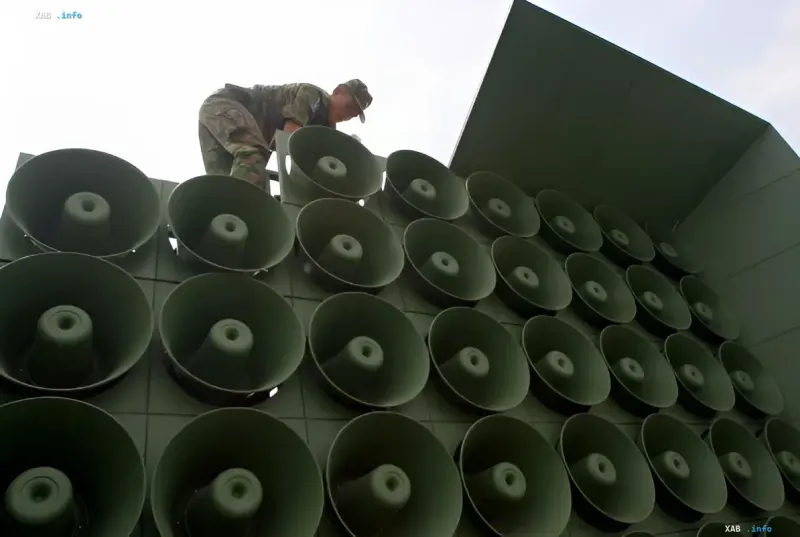
According to Kim Yo Jong, the North Korean military is considering the "deployment of more tactical offensive weapons along the southern border as a preemptive and deterrent measure to respond to unforeseen situations," alongside the resumption of propaganda broadcasts. The dissemination of propaganda via loudspeakers is a Cold War-era psychological warfare tactic that both Koreas have periodically used during periods of confrontation. Photographs taken during preparations for the broadcasts show rows of large outdoor loudspeakers mounted on walls along the demarcation line, with a camouflaged soldier servicing the equipment.
Context: 50 Violations and the Policy of Severing Ties
South Korean military authorities recorded 50 violations of the military demarcation line by North Korean soldiers this year amid stepped-up frontline defenses. According to Seoul, South Korean forces responded to these violations with warning shots and loudspeaker announcements. In recent years, as part of its policy to sever ties with South Korea, Pyongyang has actively fortified the front line with antipersonnel mines, barbed wire, anti-tank barriers, and other defensive structures. South Korean authorities have reportedly not yet responded to Pyongyang's latest warning.
Political Background: From Detente to Pressure on Washington
It is worth noting that since taking office last year, South Korea's government under President Lee Jae-myung suspended its own loudspeaker propaganda broadcasts in an effort to improve relations with North Korea. Pyongyang subsequently halted its own broadcasts as well. Thus, the threat of their resumption marks a definitive reversal from the course of de-escalation. North Korea has recently stepped up weapons testing. Observers believe this may be a way for Pyongyang to pressure the United States into concessions after President Donald Trump expressed readiness to meet with leader Kim Jong Un once again. Against this backdrop, the escalation along the inter-Korean border takes on a broader geopolitical context beyond bilateral tensions.