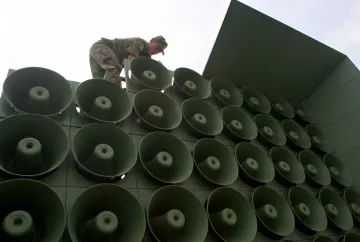
Tensions on the Korean Peninsula reached a new critical point after North Korean heavy weaponry was spotted in the vicinity of the Demilitarized Zone (DMZ) on October 26, 2026. Correspondents monitoring the situation from South Korean observation posts recorded the presence of three self-propelled 122-mm howitzers deployed by the DPRK in an open area. This display of force, according to military experts, is an extremely rare occurrence in the border regions, with the barrels of the combat vehicles aimed directly towards the southern neighbor.
A Show of Force at the Borders
In addition to the deployment of artillery systems, observers noted the presence of North Korean engineering units. Approximately 20-30 DPRK military personnel were observed installing fencing within the DMZ. The South Korean Yonhap agency emphasizes the atypical nature of these maneuvers, which could be interpreted as a direct signal of Pyongyang's resolve to maintain a hardline policy in border security, excluding diplomatic compromise.
Causes of Escalation and Pyongyang's Stance
The fundamental cause of the current tension was a mine incident that occurred on September 21 of this year within the DMZ. The South Korean authorities blamed North Korean military personnel for the placement of the explosive device, classifying it as a grave violation of the armistice terms that ended the active phase of the Korean War. This position was supported by the UN Command, which maintains control over the buffer zone. In turn, Pyongyang categorically rejects these allegations, calling Seoul's actions an attempt to fabricate a pretext to accuse the DPRK of aggression.
International Diplomatic Confrontation
The situation has moved into the realm of international proceedings: Seoul has officially appealed to the UN Security Council, demanding that the incident be reviewed. In response, the DPRK foreign ministry sent a letter warning the South Korean side against "violating its sovereignty" and threatening self-defense measures. Representatives of the South Korean Ministry of Unification characterized these statements as an attempt to justify engineering work to reinforce the border, while simultaneously continuing to urge Pyongyang to engage in direct negotiations to de-escalate.
Significance of Events and Outlook
The deployment of howitzers and the intensification of border activities occur against the backdrop of overall DPRK militarization, including recent tactical ballistic missile tests on October 12 and the display of the "Hwasong-20" intercontinental missile. Current dynamics indicate that the risk of accidental or intentional clashes in the separation zone of the two states is significantly increasing. Further development depends on whether Pyongyang is ready for dialogue or will continue its strategy of demonstrative military pressure while invoking the protection of its national interests.