Kim Yo Jong, department director of the Central Committee of the Workers' Party of Korea and younger sister of North Korean leader Kim Jong Un, issued an English-language statement on October 19 released by the country's state news agency (KCNA). In it, she described the situation at the southern border as 'very unstable' and blamed the deterioration on 'the reckless actions of South Korean military groups,' which she said constantly threaten the security of the border regions.
Accusations of Crossing the 'Red Line'
Kim Yo Jong accused South Korean troops of threatening North Korean service members and escalating tensions, stating that their actions 'crossed the red line following a fabricated landmine explosion drama.' She claimed that the government of South Korean President Lee Jae-myung 'has gone too far, even further than the conservative administration of Yoon Suk-yeol,' despite public declarations of seeking reconciliation and peace between the two Koreas.
Figures Cited by Pyongyang
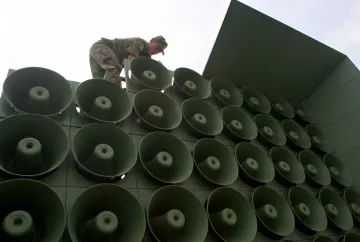
The statement provided specific data regarding South Korean activities between August 1 and October 17: according to Kim Yo Jong, Seoul conducted 2,870 loudspeaker broadcasts across the border and fired 201 warning shots toward North Korean service members conducting border engineering work. These figures were termed hostile provocations exacerbating the border situation.
Strike Assets and Resumption of Broadcasts
The North Korean leader's sister announced that DPRK military forces are considering deploying more tactical strike assets along the border and resuming loudspeaker broadcasts in response to the current situation; she did not specify what other measures are being discussed. 'We issue a serious warning to the South Korean military groups about their reckless actions that worsen the situation by constantly threatening border security. Seoul will undoubtedly regret this and face uncontrollable and horrific danger,' Kim Yo Jong stated.
Context: The DMZ Landmine Incident
The statement came against the backdrop of mutual accusations surrounding the September 21 incident in the Demilitarized Zone, where a landmine explosion injured three South Korean soldiers, two of them seriously. According to Yonhap news agency, Pyongyang has repeatedly denied responsibility for the blast and rejected Seoul's conclusion that it was caused by an intentionally planted antipersonnel mine, calling the incident a 'fabricated drama.' Earlier, as part of Lee Jae-myung's efforts to rebuild trust, Seoul suspended loudspeaker broadcasts along the border, after which the DPRK also halted similar broadcasts.
Assessments and Prospects
Kim Yo Jong's speech marks a sharp cooling of rhetoric amid formal efforts by Seoul to normalize relations and brings back onto the agenda the threat of renewed propaganda and military pressure along the DMZ. Future dynamics will depend on whether Pyongyang implements its stated intentions to deploy strike assets and resume broadcasts, as well as on Seoul's reaction to the mutual accusations regarding the landmine incident.