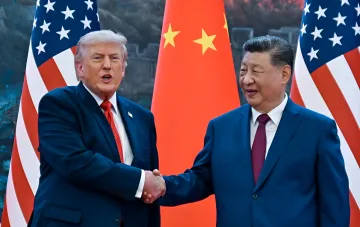
August 17, 2026, marked a significant day in Jordanian-Chinese relations: King Abdullah II made his first visit to the PRC since 2015 — his ninth during his entire reign. The visit, organized at the personal invitation of PRC President Xi Jinping, was not merely a diplomatic formality but a strategic step by Amman amidst growing regional instability and economic challenges.
Diplomatic Mission and Economic Goals
During his stay in China, King Abdullah II will hold a series of meetings with the top leadership of the PRC: President Xi Jinping, Premier Li Qiang, and Speaker of the National People's Congress Zhao Leji. Visits to Shanghai and Shenzhen — key economic hubs of the country — are also expected. The goal of the visit is to deepen bilateral cooperation, particularly in trade, investment, and infrastructure. As stated by the Jordanian royal family, the King will lead a delegation of economic officials to negotiate with Chinese business leaders. Several agreements aimed at diversifying Jordan's economy and reducing dependence on Western partners are expected to be signed.
Economic Context: China as the Main Partner
China is already Jordan's largest trading partner: bilateral trade has reached $6.7 billion, and the share of Chinese imports accounts for about 20% of the country's total import volume. This makes Beijing a critically important player for the Amman economy, especially against the backdrop of rising import costs due to shipping disruptions between East Asia and the Middle East. Jordan's Minister of Investment, Tareq Abu Gazaleh, emphasized that the country aims to take the partnership with China to a "broader and more diversified level," serving mutual interests and supporting the sustainable development of both economies.
Regional Tensions and Geopolitical Balance
The visit takes place against the backdrop of increasing pressure on Jordan's economy due to instability in the Middle East. In February 2026, Jordan was subjected to Iranian attacks, partially provoked by the presence of US troops in the country. In July, three American soldiers were killed in a strike on an airbase in eastern Jordan. Against this backdrop, Amman seeks to expand economic and trade relations with China to mitigate risks and find new sources of support. At the same time, Jordan remains a long-standing ally of the US and depends on Washington's military aid, where thousands of American servicemen are stationed.
Contradictory Data
There are discrepancies in assessments of the scale of the visit. According to the Chinese Ministry of Foreign Affairs, the leaders will exchange views on bilateral relations and regional issues to make a positive contribution to peace and stability in the Middle East. However, Jordanian sources focus exclusively on economic aspects, without mentioning political or military topics. There is also no unified position on whether agreements on military or technological cooperation will be signed — the Chinese side remains silent, while Jordanian officials speak only of "broad and diversified" cooperation.
Prospects and Long-term Significance
This visit could become a turning point in Jordan's foreign policy, signaling Amman's desire for a more balanced geopolitical position. Strengthening ties with China does not mean abandoning the partnership with the US, but demonstrates Jordan's readiness to use multi-vector diplomacy to ensure its security and economic development. In the context of global restructuring of trade routes and intensifying competition between superpowers, Jordan could become an important player in the region, capable of balancing between East and West.