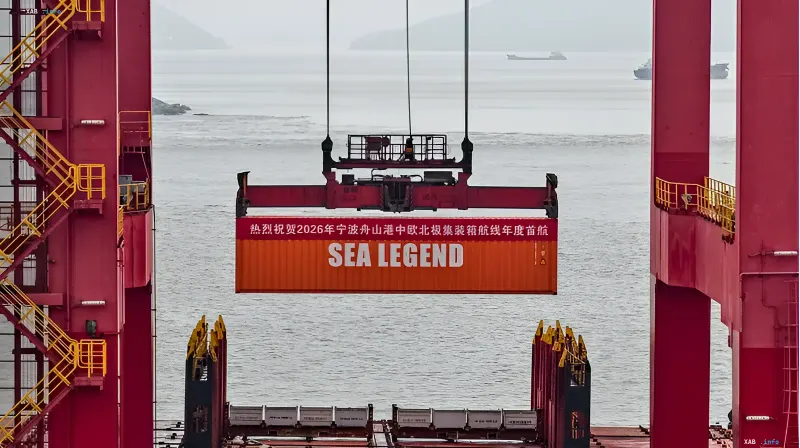
On August 15, 2026, a historic event for global logistics took place at the port of Ningbo (Zhejiang province): the first regular maritime route connecting China and Europe via the Northern Sea Route (NSR) was put into operation. In a solemn ceremony, accompanied by the lifting of a container with the inscription «SEA LEGEND», the maiden voyage of the vessel Dubai Tower was launched. This landmark event, supported by Russia, opens a new era in trans-Arctic transport, offering an alternative to traditional routes through the Suez Canal.
Strategic bypass of «hot spots»
The launch of regular traffic via the NSR comes against a backdrop of escalating geopolitical tension in the Middle East region. According to sources, in July 2026, Iran offered the Houthi forces in Yemen the opportunity to block oil supplies through the Red Sea in the event of a US strike on Iranian energy infrastructure. In response, the Houthis intensified attacks, disrupting port operations and creating a threat to the Bab el-Mandeb strait. Under these conditions, the Northern Sea Route, running along the northern coast of Russia through the waters of the Arctic Ocean, becomes a critically important tool for diversifying risks for Chinese exports.
Economics of time and logistics
According to data from the Xinhua News Agency, the new route demonstrates impressive efficiency indicators. The journey from Ningbo to the British port of Felixstowe takes approximately 20 days. This is about twice as fast as the journey through the Suez Canal and the Red Sea, and 5 days faster than the international «China-Europe» railway line. Xin Jianning, General Director of Zhejiang Port Logistics Group, noted that from the point of view of supply chain security, the NSR offers significant advantages, allowing companies to avoid delivery schedule fluctuations caused by geopolitical factors.
Cargo and development prospects
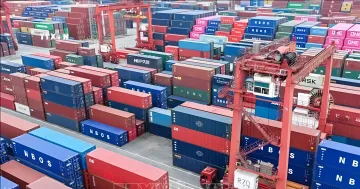
The maiden voyage of the Dubai Tower vessel, owned by Sea Legend, carries a variety of high value-added goods produced mainly in the Yangtze River Delta region. The cargo manifest includes energy storage cabinets, power batteries, photovoltaic modules, and components for the new energy industry. As part of this voyage, the ship will visit ports in the Netherlands, Germany, and Poland. Sea Legend plans to complete eight voyages on this route in the current year, which indicates the seriousness of Beijing's intentions to develop the Arctic direction.
Contradictory data
Despite the strategic advantages, the economic feasibility of the route raises questions. According to China Transport News, the cost of transporting a 40-foot container (FEU) through the Suez Canal is currently around $4,500. At the same time, tariffs for transport via the Northern Sea Route reach $8,000–8,500 per FEU, which is almost twice as high. In addition, the route is not yet year-round: due to harsh climatic conditions, the NSR can be operated mainly in the period from July to October. This creates seasonal limitations that currently do not allow the Arctic route to be considered a full-fledged replacement for traditional routes throughout the year.