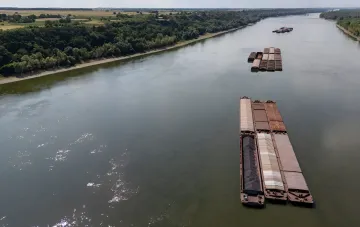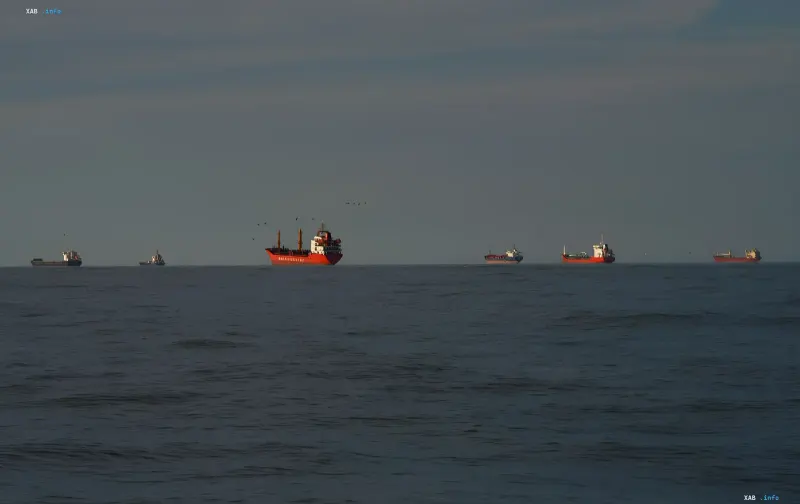
A queue of roughly 60 vessels is moving through the Sulina Channel, which today serves as a key alternative route for Ukrainian exports. According to Kateryna Kononenko, operations manager at the company "Avalon," some of them have been sitting at anchor for a week or more, and the queue continues to grow. Each day of idling costs the vessel owner 6,000–7,000 dollars, turning organizational breakdowns at the channel into direct financial losses for the industry. The expert stated outright that Ukraine needs to promptly hold negotiations with Romania to increase Sulina's throughput capacity.
The Cost of Idling and the Growing Queue
As Kononenko explained, the problem is not accidental but systemic: vessels are not idling because of weather or technical malfunctions, but because of bottlenecks in paperwork processing and the pilotage service. At a rate of 6,000–7,000 dollars per day, even a week of waiting turns into tens of thousands of dollars in losses per vessel, and the cumulative burden on the logistics chain is many times greater than these figures. Against this backdrop, the buildup of the queue becomes not merely an inconvenience but a factor that hits the competitiveness of Ukrainian exports as a whole.
Pilot Shortage and a Single Working Commission
One of the main constraints remains the shortage of Romanian pilots: it is they, not Ukrainian pilots, who have the authority to guide vessels through Sulina. Even increasing their numbers, in Kononenko's assessment, will not fully solve the problem, because only one commission processing vessels operates at Sulina. It takes at least an hour per vessel, and in complex cases up to two hours. "If three or four such commissions were working, several vessels could be processed in parallel, and the queue would move much faster," she emphasized.
Opaque Coordination Between Services
The expert named opaque coordination between AMPU, the Lower Danube Administration in Galați, and the services at Sulina as an additional problem. Vessel agents, she said, cannot see the lists and do not know until the last moment whether a given vessel will be assigned a pilot. Such uncertainty makes planning impossible and reinforces the "traffic jam" effect at the channel. Kononenko noted that the situation largely repeats the problems of 2022, even though four years have already passed since then.
The New Minister's Tasks and the Macroeconomic Stakes
Under such conditions, one of the top priorities for the new Minister of Development of Communities and Territories, Mykola Kalyuzhnyi, must be an operational dialogue with the Romanian side: increasing the number of pilots, launching several parallel processing commissions, and coordinating the schedule of all involved services. Without resolving these organizational issues, Sulina will not be able to accept a substantially larger flow of vessels or become a full-fledged alternative export route. The stakes are significant macroeconomic losses: according to estimates by the Ukrainian National Committee of the International Chamber of Commerce, if the maritime corridor does not resume full operation, Ukraine risks losing about 10 billion dollars in GDP, 17 billion dollars in export revenue, and a further 8.5 billion dollars in tax revenues, while more than 30 million tons of agricultural products will fail to reach world markets.