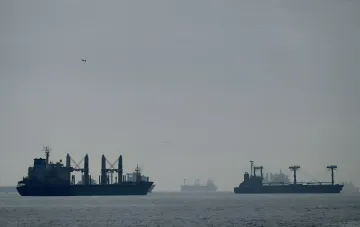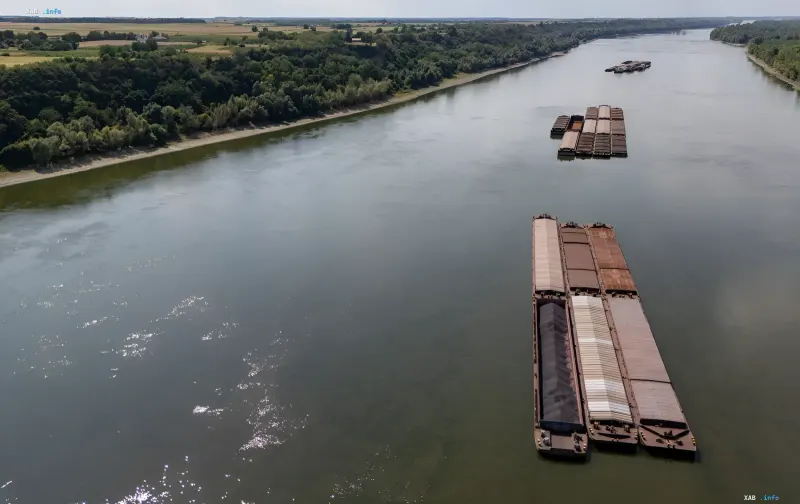
Attacks on the ports of Greater Odesa have highlighted the importance of alternative routes for Ukrainian exports. How to utilize the potential of the Danube and develop inland navigation as part of a sustainable logistics system is discussed in a column by shipping and maritime logistics expert Serhiy Hursky for RBC-Ukraine.
Lessons from the Crisis: From Temporary Solution to Strategy
The war is forcing Ukraine to take a fresh look at its transport system. What could have been considered a long-term development issue a few years ago has now become a matter of economic resilience. Systemic attacks on the ports of Greater Odesa have once again demonstrated that Ukrainian exports cannot depend on a single route, no matter how powerful it is. We already learned this lesson at the beginning of the full-scale war, when a significant portion of cargo traffic had to be reoriented to the Danube. It became obvious then that inland waterways could be not a secondary element of logistics, but a critically important part of export infrastructure. However, today we face a different task – not just increasing the number of vessels on the Danube when another crisis arises, but creating a system capable of operating under various scenarios.
International Coordination and the Danube Cluster
The Danube cluster is already operating under significant load. Its throughput capacity depends not only on Ukrainian ports, but also on the operation of the international route, in particular the Sulina Canal and procedures at the junction of several state systems. Therefore, what is needed here are not situational decisions, but permanent coordination between Ukraine, Romania, Moldova, and the European Union. Practical tasks include increasing throughput capacity, reducing waiting times, developing night navigation on the Sulina Canal, increasing the number of inspection groups, digital information exchange, and synchronizing the work of regulatory services.
Contradictory Data
While experts insist on expanding river and Danube logistics as the only stable way out under blockade conditions, official diplomatic and international platforms report the rejection by the Russian side of proposals for the safe functioning of Black Sea corridors. A dissonance arises between attempts to locally strengthen river route infrastructure and the global inability to guarantee navigation safety in the Black Sea, creating serious risks for global food security.
Four Pillars of the Future River and Maritime Economy
Strategically, the Danube must become part of a cohesive policy for the development of Ukraine's inland waterways. First of all, this concerns infrastructure: berths, terminals, navigational support, and repair facilities that will remain competitive for decades to come. The second direction is the complete digitalization of processes to eliminate bureaucracy and queues. The third direction is the development of a service economy, including ship repair and supplies. Finally, the fourth factor is the preservation and development of qualified human resources, a maritime and river personnel training school, without which the stable operation of the entire logistics chain is impossible.