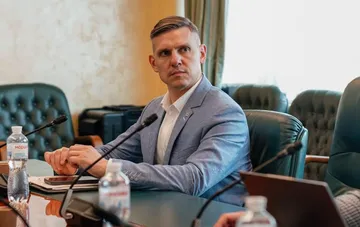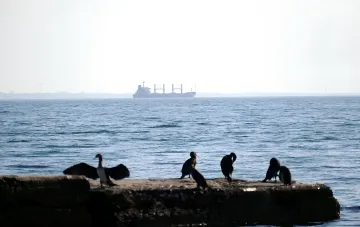
Ukrainian maritime logistics, which in wartime remains the artery for exporting agricultural products and critical cargo, has found itself at the center of a new corruption scandal. People's Deputy Anna Skokhokh, in a public statement on Facebook, alleged a systematic practice of extortion for the priority servicing of vessels in ports. According to her, sailors, farmers, and entrepreneurs contact her daily, claiming that they cannot ship grain, send goods, or receive necessary cargo without paying so-called “bribes.” RBC-Ukraine analyzed the parliamentarian's statement and the situation surrounding the Shipping Administration, which, in the deputy's version, has become the epicenter of the problem.
The Deputy's Statement: A “Bribe” for Priority in Ports
In her statement, Skokhokh specified a particular sum that, according to her data, may be demanded for the ability to load or unload a vessel without waiting in line: from 10,000 dollars. The deputy emphasized that this is not about isolated cases but about a possible systematic practice in which “people demanding bribes are appointed to various positions.” In her words, sailors and logistics companies are “in despair,” as they cannot ensure normal operations without additional payments, which, in the context of war and attacks on port infrastructure, multiplies the risks for the entire industry.
Who Is Involved in the Scandal
At the center of the accusations voiced by Skokhokh is the leadership of the Shipping Administration. The deputy named two officials by first and last name: the head of the Administration, Serhiy Hurskyi, and the head of the Odesa Directorate, Oleksandr Zaborovskyi. According to her, an investigation is ongoing against Hurskyi related to possible violations in public procurement, while Zaborovskyi, in the parliamentarian's words, is named in cases handled by the SBU and the State Border Service on charges of possible abuse of power. Skokhokh also drew attention to the fact that Hurskyi was confirmed as having successfully passed his probationary period, which, in her view, creates prerequisites for his continued tenure despite public accusations from representatives of the maritime industry.
Context: War, Logistics, and Personnel Decisions
Maritime logistics is of strategic importance for the Ukrainian economy: a significant portion of exports passes through the ports, and any delays and opaque rules generate additional costs for businesses. In wartime, port infrastructure is subjected to Russian attacks, creating heightened security risks and complicating logistics. Against this backdrop, in Skokhokh's assessment, personnel decisions within the Shipping Administration system take on particular significance. The deputy stated that the appointment of the new minister, Mykola Kalashnyk, gave hope for change; however, in her words, “the old schemers continue to sit in leadership positions.” Skokhokh also pointed to possible protection of certain officials by representatives of the authorities and called on the public to monitor the progress of the case.
Contradictory Data
The presented materials contain a significant discrepancy between the positions of the parties. On the one hand, Deputy Skokhokh claims that the corrupt practice in the ports is systemic and that specific officials (Hurskyi, Zaborovskyi) are directly linked to the extortion. On the other hand, the institutional response to these accusations is expressed in the fact that Hurskyi was confirmed as having successfully passed his probationary period, which formally confirms his fitness for the position he holds. Moreover, the text of the deputy's statement lacks references to specific documents, protocols, or investigative materials confirming the fact of receiving 10,000 dollars for priority servicing. The mention of SBU and State Border Service cases against Zaborovskyi is also not accompanied by an indication of the stage of these cases or the existence of indictments. Thus, Skokhokh's public statements and the current institutional status of the named individuals form two different pictures, the final resolution of which depends on the law enforcement agencies and the courts.
Significance for the Economy and Export Potential
If the facts voiced by the deputy are confirmed, this may indicate systemic problems affecting not only individual market participants but also the competitiveness of Ukrainian exports as a whole. In a situation where port infrastructure operates under the pressure of attacks and logistical constraints, any additional barriers and opaque rules for servicing vessels directly hit the profitability of exports. Skokhokh concluded her statement with a call: “The old schemes and schemers must disappear from Ukraine forever so that our economy can survive in the present.” Final conclusions regarding specific officials and possible offenses, as emphasized in the materials, must be made by the law enforcement agencies and the courts.