Kyiv Mayor Vitali Klitschko has publicly commented on President Volodymyr Zelenskyy's initiative to introduce free public transport in the capital and to form a bus reserve. In his Telegram statement, cited by RBC-Ukraine, the mayor pointed to systemic issues that he believes must be resolved before implementing the program: a shortage of drivers, uncertainty regarding funding sources, and a months-long delay in approving the city's resilience plan.
Presidential Initiative and City Hall Reaction
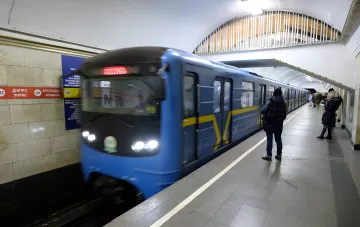
On November 8, 2026, Volodymyr Zelenskyy announced that he had instructed the government to prepare a program for free public transport in Kyiv and to provide a sufficient reserve of buses. According to the president, the Prime Minister, the Secretary of the National Security and Defense Council (NSDC), and the Minister of Internal Affairs have already presented options for reserve transport schemes for the capital; the necessary number of vehicles and the reorganization of traffic in certain districts are being processed. Commenting on this decision, Klitschko stressed that before introducing free travel and replacing subways with buses, central authorities must identify funding sources and calculate the actual need for transport and personnel. "The president instructed the Prime Minister to present a program for such travel (which means finding money for it?) and to find a bus reserve," the mayor wrote.
Driver Shortage as the Key Bottleneck
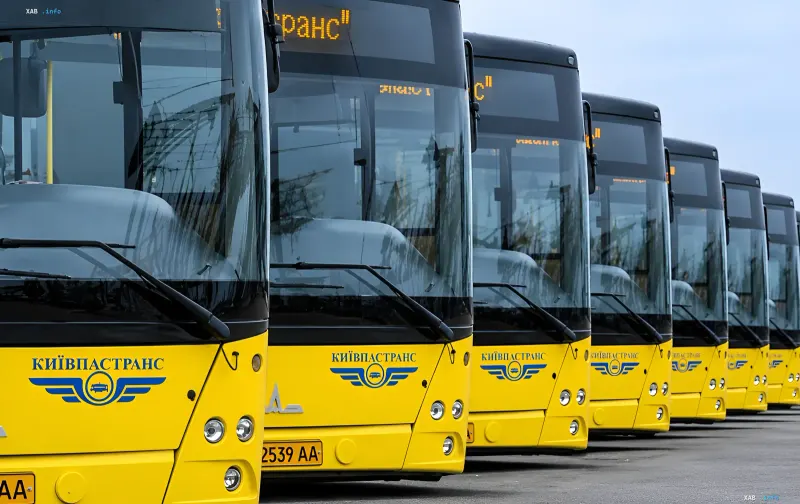
A key operational problem highlighted by Klitschko is the staffing deficit. According to him, the city has buses to increase the number of routes, but there are not enough drivers. "I will start with the reserve. Kyiv has buses to add. But we don't have drivers! Maybe the police should catch them, like they catch electricians?" the mayor remarked ironically. Currently, Kyivpastrans can put another 25 technically sound buses on the routes, but this requires at least 50 category D drivers, who must also undergo route training. The mayor also pointed out that the company cannot reserve new drivers due to existing limits.
Funding Issue and an 8 Billion UAH Debt
A separate part of Klitschko's commentary was dedicated to the financial support for free transport. The mayor reminded that the capital's public transport already carries over a million passengers who are eligible for benefits for free, and these costs, according to him, should be covered by the state. "Maybe the government should first return the subvention owed to Kyiv for 11 years for free transportation of privileged categories? That is over 8 billion UAH," he stated, pointing to the long-standing nature of unsettled accounts between the center and the city budget.
Resilience Plan: Six Months of Blocking and Budget Cuts
Klitschko also touched on the Kyiv resilience plan, which provides measures to prepare the city for winter. According to him, central authorities blocked the document for six months. The plan was first presented by the mayor at the NSDC meeting on March 3, 2026; it was approved only on August 5. Moreover, as Klitschko noted, the budget for the planned work was cut by almost half—from 67 billion to 37 billion UAH. "The central government managed to deal with the Kyiv resilience plan, successfully blocking it for half a year. Now they have moved on to public transport," the mayor emphasized.
Current State of the Capital's Bus Network
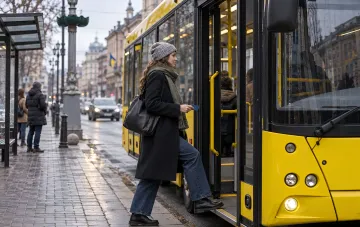
Following the suspension of electric transport, the city redirected passenger traffic to bus routes. According to Klitschko, there are currently 129 bus routes in Kyiv, with 418 buses operating and a staff of 685 drivers. To fully replace the subway with bus service, the mayor estimates Kyiv would need 1,020 vehicles—nearly 2.5 times more than what is currently in operation. Thus, even with the technical fleet and funding, the implementation of the presidential initiative faces a staffing and organizational deficit which, according to Klitschko, requires a systemic solution at the central government level.