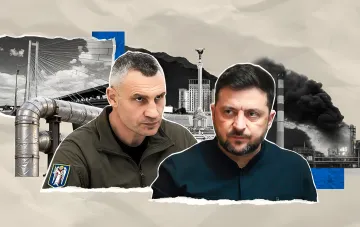
The idea of introducing free public transport in Kyiv has been discussed in the capital for several weeks. The triggers were bridge shellings and regular blackouts that make getting around the city unstable. On November 27, Volodymyr Zelenskyy held a meeting of the Staff of the Supreme Commander-in-Chief, hearing reports from the military, intelligence, officials, and Kyiv Mayor Vitali Klitschko on the situation in the capital. Following the meeting, algorithms for public transport and urban logistics were developed in case of a critical worsening of the situation, so that Kyiv residents can move around the city under any circumstances.
What Exactly Should Change in Transit Operations
The government and local authorities have been instructed to develop a new transport system that will allow Kyiv residents to guarantee and freely use certain bus routes if other modes of transport stop. Previously, the president had already instructed the Cabinet to develop a program for free ground transit and form a bus reserve in case the metro stops or bridges are blocked. As Desnianskyi District State Administration Head Maksym Bakhmatov stated on the RBC-Ukraine podcast 'TSE BAZA', the initial idea of free transit concerned communication between the banks of the Dnipro River: after strikes on the bridges, it was planned to launch free routes so people could reach hubs, cross the river, and continue their journey.
Who Actually Pays for 'Free' Transit
Canceling the fare does not mean that transportation becomes free, explains Bogdan Slutsky, an economist at the Center for Economic Strategy: instead of passengers, taxpayers start paying for transport through the budget. According to his estimate, the minimum additional budget requirement to compensate for revenue from ground transport fares in Kyiv will be about 2 billion hryvnias per year — and this is only the lower limit, as free travel will increase demand for trips. If the city does not add transport, cabins will be overcrowded, and intervals longer; if it adds transport, money will be needed for new routes, drivers, fuel, electricity, and repairs. Separately, a reserve of buses must be laid down in case of metro suspension or bridge damage.
How Much It Costs According to Carriers
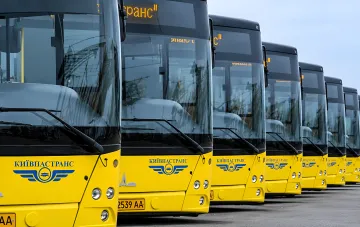
In response to an RBC-Ukraine inquiry, Kyivpastrans Municipal Enterprise confirmed that canceling the fare would lead to a loss of about 180.7 million hryvnias monthly, or approximately 2.2 billion hryvnias per year. In addition, the enterprise pointed out that the state budget debt for preferential transportation for 2021–2025 already amounts to 2.48 billion hryvnias. The capital's mayor, in turn, reminded the government about the approximately 8 billion hryvnias of state debt for preferential transport over 11 years and pointed to an acute shortage of drivers and the need for more than a thousand buses to replace the metro. Currently, the city independently finances preferential travel for vulnerable categories of Kyiv residents and displaced persons: according to the Department of Social and Veterans Policy of the Kyiv City State Administration, as of November 1, 2026, carriers have already been paid over 776.1 million hryvnias in compensation from the city budget, of which 462.7 million hryvnias account for ground transport.
The Main Obstacle Is Not Money, But Personnel
According to Igor Moiseyenko, head of the Association of Carriers of Kyiv and Kyiv Region, city authorities believe that free travel will only worsen the situation and require significant funds from the budget to subsidize communal enterprises. The key obstacle to increasing transportation today is the shortage of personnel in depots: in the capital's communal motor pools, more than 50 buses are already idle due to a shortage of drivers, which could otherwise work on lines.
The Risk of Turning a Capital Measure into a Nationwide Program
Economist Slutsky emphasizes that if free transit becomes Kyiv's permanent policy, the city budget must pay for it — by cutting spending on kindergartens, schools, hospitals, or shelters, or by accumulating debt. State support, in his view, is appropriate only for specific military needs — a reserve of buses, evacuation, or metro replacement during attacks, rather than as a general benefit for everyone. The expert warns that if the state finances free travel in Kyiv, other cities will rightfully demand similar support, and the capital's initiative will turn into a much more expensive nationwide program. That is why specialists do not advise automatically following Kharkiv's path, where travel has been free since the beginning of the war, without taking into account the difference in budget burden and human resources.