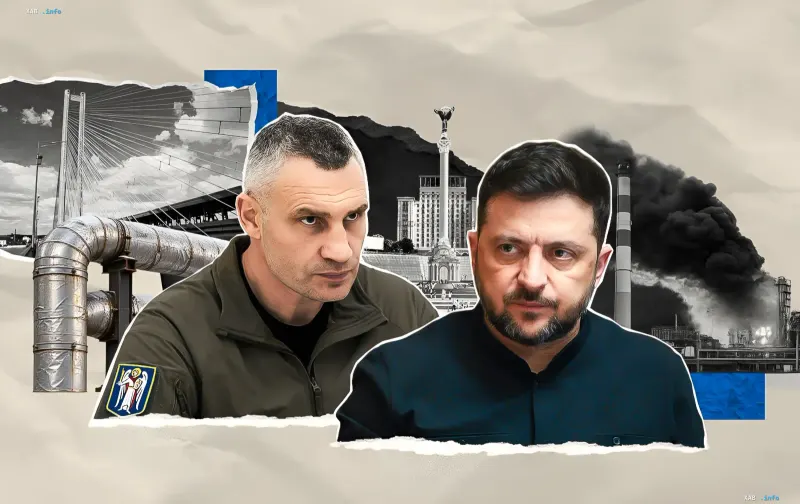
The 2026/2027 heating season has become not only an engineering trial for Kyiv, but a political one as well. President Volodymyr Zelenskyy's public accusation on October 13 regarding the capital's insufficient preparation for Russian energy strikes triggered a chain of events that strained relations between the President's Office and the mayor's office for weeks. According to RBC-Ukraine, the presidential circle considered a radical scenario—removing Vitali Klitschko from his post as head of the Kyiv City State Administration—however, it failed to gain the support of the majority of influential team members. Instead, according to the publication, Zelenskyy proposed creating a special consultative «cabinet» on Kyiv under the government, consisting of about ten people. In response, the mayor called current events a «very strange story» and stated that the city authorities are not solely responsible for the city's readiness for winter.
Public Accusation and Closed-Door Consultations
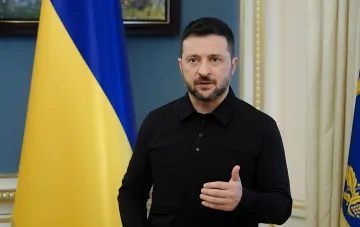
On October 13, 2026, Zelenskyy stated in a public speech that even border and frontline regions are executing energy resilience plans better than the capital. The president drew attention to the fact that following Russian strikes, a significant part of Kyiv remains without electricity and water, and announced decisions that would involve not only strengthening the protection of energy facilities but also changing approaches to city governance. On the same day, according to RBC-Ukraine, Zelenskyy held consultations with representatives of the security sector, business, and local self-government. Among his interlocutors were former SBU head Vasyl Maliuk, businessman Kostiantyn Yefimenko, and Kharkiv mayor Ihor Terekhov. These meetings immediately sparked rumors that the president intends to pit a serious opponent against Klitschko in the Kyiv administrative field, especially since the acting head of the Kyiv Military Administration, Andrii Tkachov, is not distinguished by public activity.
Dismissal on the Agenda: Who is For, Who is Against
According to two independent RBC-Ukraine sources, the presidential circle did indeed discuss the scenario of removing Klitschko from the leadership of the KCMA. One of the proponents of this idea, according to the publication's interlocutors, was the former head of the President's Office, Andriy Yermak. However, the majority of influential members of the presidential team—both directly on Bankova and beyond—spoke out categorically against it. The reason was not only the political inexpediency of such a step, but also the specific legal and managerial consequences that would render the decision practically meaningless in terms of redistributing authority.
Legal Deadlock: Why the Mayor Cannot Simply Be «Fired»
The key problem lies in the governance structure of Kyiv. According to a Constitutional Court ruling, the head of the city state administration must be the city mayor elected by Kyiv residents. Formally, the head of the KCMA is appointed by the president, but legally this position is tied to the mayor's mandate. Even if Klitschko is removed from leading the KCMA, he will retain the powers of the elected mayor and influence over the Kyiv City Council—a body elected by Kyiv residents that is subordinate neither to the president nor to the military administration. Thus, removal from the KCMA does not deprive the mayor of a single real lever of city governance, but merely creates an additional source of institutional conflict. According to sources, this very argument became decisive in abandoning the radical scenario.
«Cabinet» Instead of Dismissal: What the Central Authorities Are Preparing
An alternative scenario reported by RBC-Ukraine involves the creation of a special body under the government—a «cabinet» for Kyiv. According to the publication, the new mechanism may include about a dozen participants and will have a consultative or advisory status. This means it will not replace the KCMA, the Kyiv City Council, or the military administration, but will operate as an additional coordination layer between central agencies and city structures. The specific composition, regulations, and powers of the «cabinet» were not disclosed at the time of material preparation. The publication's interlocutors characterize it as a tool allowing Bankova to maintain influence on the Kyiv agenda without direct conflict with elected municipal institutions.
Energy Balance: What is Actually Ready for Winter
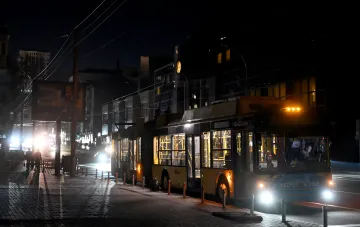
Behind the political confrontation lies a concrete engineering reality. The capital is entering the new heating season with damaged combined heat and power plants (CHPs) and unfinished construction of large backup heat sources. According to RBC-Ukraine, Kyiv has accumulated more backup equipment than for the previous season, but key infrastructure projects—in particular, the construction of large backup CHPs—remain unfinished. Due to Russian strikes on energy infrastructure, the capital has lost a significant part of its own electricity generation and has become more dependent on electricity supplies from other regions of the country. This means that in the event of repeated massive strikes on generation or transmission facilities, Kyiv will not be able to compensate for losses through internal reserves to the extent planned before the war began.
Winter Scenarios: From Heating Outages to Metro Shutdowns
RBC-Ukraine's interlocutors do not rule out that the 2026/2027 winter could prove harder for Kyiv residents than the previous one. Among the possible scenarios are prolonged power outages, disruptions in heat supply in certain areas, and the suspension of the metro system. According to sources' estimates, specific consequences will depend on two variables: the intensity and accuracy of further Russian attacks on energy infrastructure, as well as weather conditions—if the winter turns out to be anomalously cold, the load on the remaining heat sources will increase manifold. The mayor's office, in turn, emphasizes that not only the city authorities are responsible for the city's winter readiness, but also central agencies and power grid operators, which effectively shifts part of the responsibility for potential failures to the state level.
Klitschko's Position: «A Very Strange Story»
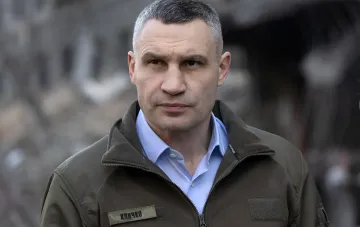
Vitali Klitschko publicly commented on the situation, calling it a «very strange story.» According to Gazeta.Ru, the mayor was summoned to a Verkhovna Rada meeting due to claims that he failed the city's winter preparations. Klitschko stated that they want to remove him from office and outlined the position that responsibility for the capital's energy resilience lies not only with the city administration. Thus, the public rhetoric of the two sides remains polar: Bankova insists on the need to change approaches to city governance, while the mayor's office rejects the thesis of «failure» and points to systemic limitations that go beyond municipal powers. The resolution of this conflict—or its further escalation—will depend on how quickly the announced «cabinet» is formalized and put into operation and what specific decisions on protecting energy facilities are made before the first severe frosts.