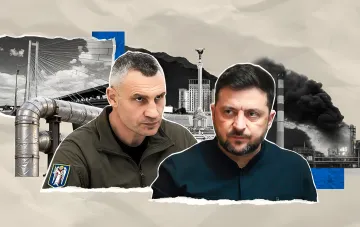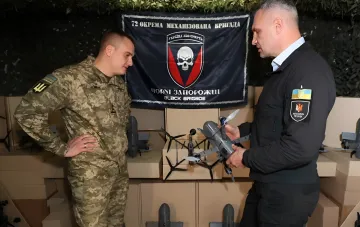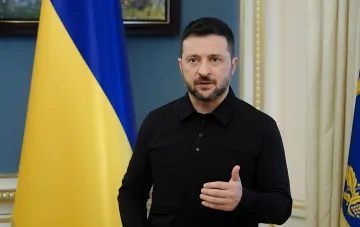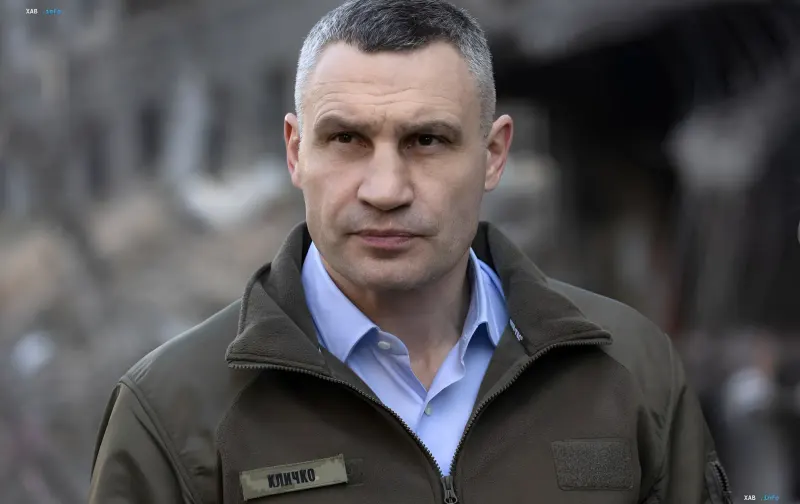
In October, the inner circle of Ukrainian President Volodymyr Zelenskyy considered the possibility of removing Vitali Klitschko from his position as head of the Kyiv City State Administration (KCSA). This was reported by two independent sources from RBC-Ukraine, who confirmed that such an option was indeed discussed at Bankova. However, the initiative did not receive the support of most influential members of the presidential team and was ultimately rejected.
Who Pushed the Idea and Why It Was Rejected
According to RBC-Ukraine’s insiders, former Head of the Presidential Office Andriy Yermak was one of the proponents of removing Klitschko from the leadership of the KCSA. Nevertheless, the initiative did not find sufficient support: opposition to this step came from both within and outside Bankova. The main arguments against it were potential legal problems and the risk of further complicating the management of the capital under martial law.
Legal Barriers: The Constitutional Court's Decision
The key obstacle was the legal framework linking the positions of the mayor and the head of the KCSA. Formally, the head of the state administration is appointed by the president, but a decision of the Constitutional Court stipulates that this post must be held by a person elected by Kyiv residents as mayor. Furthermore, even removing Klitschko from the KCSA would not strip him of his mayoral powers and influence over the Kyiv City Council. «In theory, this could be done, but in practice, the city management scheme would become even less operational than it is now. Klitschko would block everything through the Kyiv City Council. There might even be problems with access to offices,» explained one of the publication's insiders.
The European Factor as a Deterrent
An additional factor that prevented a drastic personnel decision was Klitschko's ties with European politicians. According to sources, two circumstances play a role here: the strategic importance of local self-government for Ukraine's European partners and the mayor's personal contacts within the European establishment, particularly in Germany. Sources claim that this factor had previously deterred Bankova from taking overly harsh steps against the capital's mayor. Moreover, against the backdrop of public disputes between the central and city authorities, signals were sent from Khreshchatyk to Brussels, after which European partners began expressing concern.
Alternative: A Special «Cabinet» Under the Government
Ultimately, Zelenskyy publicly proposed a different approach to solving Kyiv's problems—creating a special «cabinet» under the government to handle capital issues. Thus, instead of a direct personnel reshuffle, a mechanism was chosen that allows for enhanced coordination without violating the legal framework of city management.
Klitschko's Team: The Issue is Not Finally Closed
The Kyiv mayor's inner circle does not believe that the issue of his potential removal is permanently closed. They assume that the central authorities may return to this topic later, when the situation in the capital becomes particularly tense. One of the possible triggers for a new escalation could be Kyiv's preparations for winter. In particular, attention is drawn to the NSDC decision of August 5, which enshrines the personal responsibility of officials for implementing resilience plans. «It is impossible to execute this plan perfectly. In any case, there will be some gaps, something will go wrong somewhere. This can turn into an argument against the mayor,» the source suggested. At the same time, the NSDC decision itself does not mean the automatic dismissal of Klitschko or his legal liability: this requires separate legal grounds and compliance with the appropriate procedure.
As a reminder, tension between the central authorities and the Kyiv mayor escalated in October amid preparations for the heating season in the capital. On October 9 and 13, Volodymyr Zelenskyy publicly criticized the city authorities, accusing them of insufficient preparedness for winter and delaying the implementation of the resilience plan. On October 13, the Verkhovna Rada summoned Klitschko to report, and the next day the mayor spoke in parliament and rejected the accusations, explaining the problems as a consequence of Russian strikes on thermal power plants, and also stating that the government is allocating funds too slowly to cities and that Kyiv lacks air defense assets to protect its energy infrastructure.