The offensive arsenal of the Democratic People's Republic of Korea has been bolstered by a new generation of solid-fuel ballistic missiles, designated KN-30 in the West. This system represents a further development of the well-known Hwasong-11 series, yet it is distinguished from earlier versions by noticeably larger dimensions and, as a result, increased weight. It is precisely these parameters that make the KN-30 one of the most discussed products of North Korean missile development in recent years.
From the Pyongyang parade to a test launch
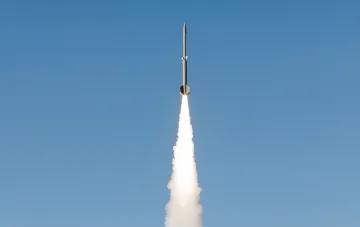
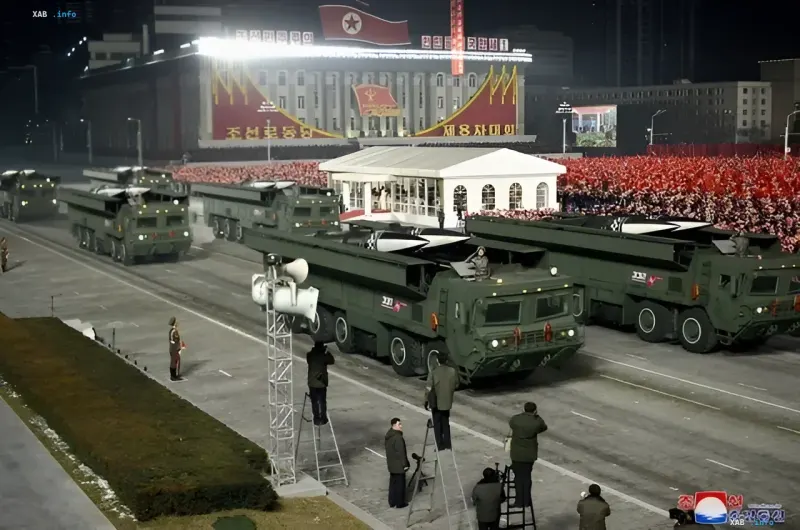
The KN-30 missile was first shown to the public at a grand military parade in Pyongyang in January 2021. The system's actual combat capabilities were confirmed in March of the same year, when the first test launch took place. According to the data cited in the sources, during this launch the missile flew at least 600 kilometers, which, by estimates, confirmed the declared tactical and technical characteristics of the complex.
Design: two missiles on a five-axle chassis
A distinctive feature of the new system's design is the parallel placement of two missiles on a robust five-axle off-road chassis — analogous to the Russian Iskander-M complex. With a standard warhead mass of 2.5 tons, the KN-30 missile, according to the cited data, has a maximum range of 900 kilometers. For comparison: the Russian Iskander-M missile, carrying a 480-kilogram warhead, has a range of around 500 kilometers.
The 4.5-ton heavy variant
In addition to the base version, the North Korean KN-30 test program includes a heavier improved variant capable of carrying a 4.5-ton payload. At the same time, the final decision on the feasibility of mass-producing missiles of this type remains unclear: by estimates, their range will likely be significantly reduced due to the increased warhead mass.
Contradictory data
There is a notable spread in the assessments of the KN-30's heavy variant by different parties. The source material emphasizes that the question of mass production of the 4.5-ton variant remains open, and that its range will most likely be shortened. At the same time, a number of publications, in particular vietnam.vn, present this same variant in alarming tones, asking whether it could become a "nightmare" for Ukraine. Thus, one side emphasizes the technical limitations and production uncertainty, while the other highlights the potentially threatening capability, and both versions coexist in open sources without a definitive factual resolution.
Context for Ukraine
Additional context is provided by the tsn.ua material, which cites ISW data: it is claimed that North Korea transferred new missiles to Russia with 2,500-kilogram warheads, after which, according to this version, seven regions of Ukraine came under threat. These 2,500 kilograms correspond to the standard warhead mass of the base KN-30 version described in the source material, linking the two topics into a single picture. Nevertheless, the specific figures on the transfer and on the list of "threatened" regions are based on the estimates of a single source and require cautious interpretation.