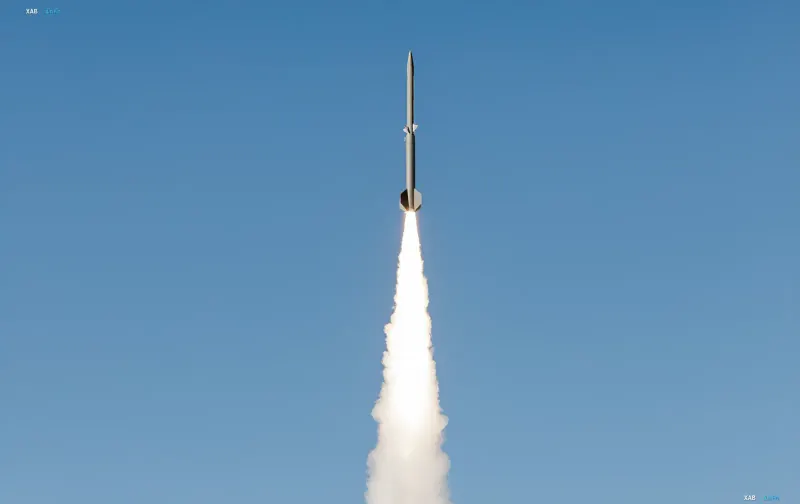
On August 25, 2026, the US Navy signed a contract worth $89,997,162 with Castelion Corp. to bring the Blackbeard hypersonic strike missile to the level of Early Operational Capability (EOC). This is reported by RBC-Ukraine, citing data from Army Recognition. The agreement elevates Blackbeard from an experimental system to a Program of Record for the Navy and provides for the development of 50 EOC missiles, as well as the deployment of production facilities capable of manufacturing the weapon in series.
From Prototype to Serial Program
The contract is a logical continuation of a series of previous agreements. In February 2026, funding was allocated for full-scale prototypes, flight tests, and preparation for field deployment, while the April modification added requirements for test configurations and integration, including live-fire launches within the US Indo-Pacific Command's area of responsibility. Work on the new phase will be carried out in Torrance, California, with a planned completion in August 2028. Castelion will provide engineering, technical, logistical, and manufacturing services that bring the missile closer to its operational configuration.
Carrier Variant and Integration with the Super Hornet
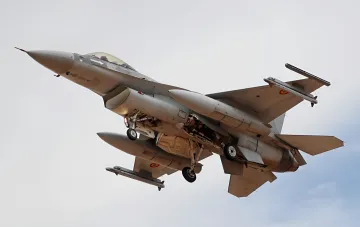
A separate development track for Blackbeard is its integration with the F/A-18E/F Super Hornet carrier-based fighter. According to the company, the April work included safety and airworthiness certification, as well as tests related to carrier deployment; achieving EOC for the aircraft variant is planned for 2027. The carrier-based missile allows the launch point to move together with the air wing and the ship, making it harder for enemy intelligence and air defense systems to predict the direction of the strike.
Bet on Mass Production
The second key element of the program is production scale. The SBIR topic formulation directly defines the task as creating "inexpensive, production-ready" weaponry, and the August contract provides for the deployment of production facilities and the manufacture of 50 EOC missiles. This distinguishes Blackbeard from typical hypersonic programs, which often remain limited in quantity due to high cost and manufacturing complexity: the Navy expects to obtain a weapon capable of replenishing its arsenal in meaningful volumes during a prolonged conflict.
Broader Context: Hypersonics as a Priority and a Threat to Ukraine
Hypersonic weapons remain one of the priority areas of US rearmament. It was previously reported that the US Army conducted its first full-scale test of a hypersonic warhead, firing it from a large-caliber gun retrofitted for this purpose at the Yuma range in Arizona — a method that allows testing the warhead's vulnerability without spending an entire missile on each test. Meanwhile, the threat from hypersonic and ballistic weapons remains relevant for Ukraine as well: Russia is intensifying strikes with North Korean KN-23 ballistic missiles, and President Volodymyr Zelenskyy has warned about the increase in such deliveries as a sign of Moscow's preparation for further escalation of the war.