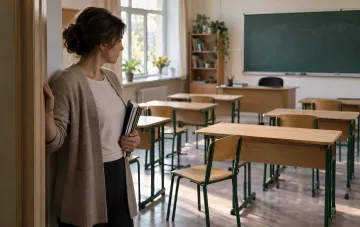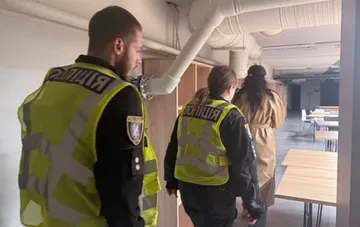
Taras Shevchenko National University of Kyiv (KNU) has temporarily switched students to a remote learning format. As the university's rector, Valeriy Kopeyka, stated in an interview with Ukrainian Radio, reported by RBC-Ukraine, the educational process will take place online at least until the beginning of 2027. According to him, the decision was made against the backdrop of a 'radically changed' situation in the capital, where regular enemy shelling and prolonged air alerts make in-person classes virtually impossible.
Why the in-person format became impossible
Kopeyka emphasized that none of the university's premises originally 'provided for the presence of shelters for such situations,' that is, for regular shelling. What was managed to be built during the war, in his words, are shelters where one could 'wait out, sit through air alerts and bombings,' but conducting full-fledged learning in them is 'very difficult.' The rector recalled that air alerts in Kyiv lasted up to 20 hours a day, which meant a significant portion of study time was spent traveling to the buildings and staying in shelters. As a result, in his assessment, only about 10% of the university's premises remain suitable for classroom activities in shelters.
Holiday break until March 1, 2027
In order to direct resources toward expanding the network of shelters suitable for classes, KNU introduced a 'holiday break' until March 1, 2027. According to Kopeyka, plans are to involve internal construction teams and additional funding to set up a sufficient number of seats in the shelters. 'I hope that by March 1 we will manage to set up a sufficient number of seats in the shelters to return to in-person learning… at least in a rotational format,' the rector stated. Thus, a full return to the classic in-person schedule is not guaranteed: the discussion concerns a hybrid rotational model in which part of the classes will take place in shelters.
What cannot be done online
The rector separately noted that a number of elements of the educational process 'cannot be fully implemented online,' first and foremost laboratory sessions. This is precisely why the remote period is considered a temporary measure, not a new permanent model. The educational process, in his words, has been reorganized to 'maximally prevent educational losses,' and classes currently conducted in the form of recordings or webinars are planned to be moved to an in-person format where possible after March 1.
The question of compensation for the difference in fees
Since students are effectively studying part-time until March, without attending classrooms and laboratories, journalists drew the rector's attention to the significant difference in tuition costs between the full-time and part-time formats. Kopeyka acknowledged that the question of compensation for the switch to the remote format is 'quite logical,' but did not give a direct answer to it. Instead, he repeated that the university expects to return to in-person offline learning from March 1. Thus, the question of recalculation or compensation of tuition remains officially unresolved.
Context: what this means for students
For KNU students, this means that the winter period of the 2026/2027 academic year will take place in remote mode with a holiday break until March 1, 2027. In-person and laboratory classes will resume, according to the rector's office plan, no earlier than the beginning of March and, probably, in a rotational format taking into account the capacity limits of the shelters. Students are advised to monitor the university's official orders and directives on adjusting the study schedule for the winter period, as well as to clarify with the deans' offices the procedure for confirming grants and paying tuition during the remote period.