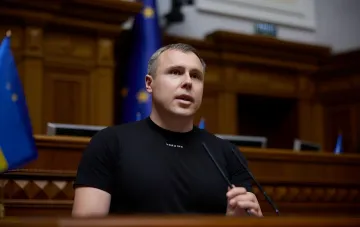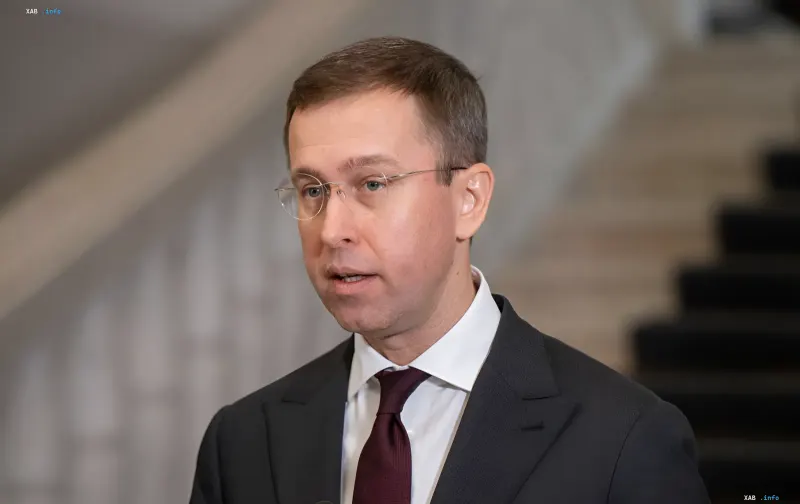
Ukrainian Prime Minister Sergiy Koretsky has officially responded to a petition proposing to lower the upper age limit for military service during martial law from 60 to 55 years. According to RBC-Ukraine, the head of government did not support a direct change to the norm, but emphasized that the issue requires «a comprehensive approach taking into account the security situation in the state and the needs of the Defense Forces». His response does not mean a decision has been made to lower the mobilization age, but notes that the topic will be further reviewed as part of ongoing legislative work.
The Petition and Its Parameters
The initiative, titled «Reduction of the Age Limit for Military Service», was registered by Natalia Borsuk on July 27, 2026. By October 19, the document had gathered over 25,000 votes, which, under the rules, served as the basis for its official review by the head of government. The petition's author proposes submitting bills to the Verkhovna Rada to reduce the age limit for military service during martial law from 60 to 55 for privates, sergeants, non-commissioned officers, and officers. Additionally, it proposes allowing voluntary discharge for all military personnel who have reached the age of 55.
The Prime Minister's Position
In his response, Koretsky recalled that current regulations set the age limit for service during a special period at 60, and for higher officer ranks at 65. According to him, changing these norms without considering the state's real needs is impractical. «The issue of reducing the age limit for military service and in reserve requires a comprehensive approach, taking into account the security situation in the state and the needs of the Defense Forces», the prime minister noted. Thus, he did not reject the idea outright, but neither did he confirm any intention to change the law, limiting himself to pointing out the need for careful analysis.
Ministry of Defense Legislative Work
Koretsky stated that the Ministry of Defense is already working on legislative initiatives designed to improve the procedure for military service during martial law, specifically regarding the clarification of terms and grounds for discharge. «During the processing of the mentioned changes, the issues raised in the petition will be further considered», added the head of government. This means that the topic of the age limit may be included in a broader package of amendments that the agency is preparing to submit to parliament.
Context: Broader Discussion on Mobilization Age
The prime minister's response fits into a broader public discussion on mobilization age that has recently intensified. For instance, the commander of the 63rd Separate Mechanized Brigade of the Armed Forces of Ukraine, Denys Shapoval, has publicly spoken in favor of lowering the mobilization age, arguing that younger servicemen learn easier, adapt faster, and fall ill less often. Former Foreign Minister Dmytro Kuleba, in turn, called lowering the mobilization age a more likely scenario than introducing the mobilization of women. Ukrainian media also reported on deputies' intentions to consider lowering the lower age limit, while the SBU suggested starting the mobilization of 18-year-olds. These statements primarily concern the lower age limit and are not identical to the petition on the upper limit, but they show that the age issue in general has become central to the discussion on mobilization policy.
What This Means in Practice
It is important to emphasize: the prime minister's response is not a decision to lower the mobilization age. It is a reaction to a petition, establishing that the issue will be taken into account when finalizing the legislation. Concurrently, as the publication notes, the Armed Forces of Ukraine are tightening control over the work of military medical commissions to improve the quality of medical examinations and prevent the mobilization of unfit citizens. Together, these steps indicate that the state is tuning both age and medical parameters of service based on an assessment of the Defense Forces' needs and the overall security situation.