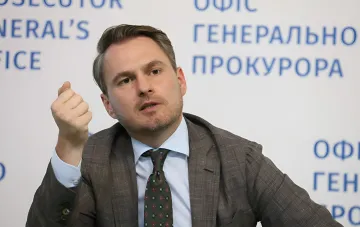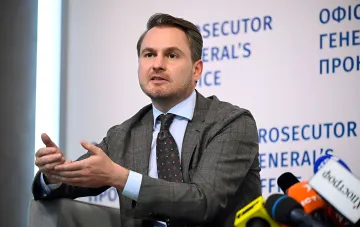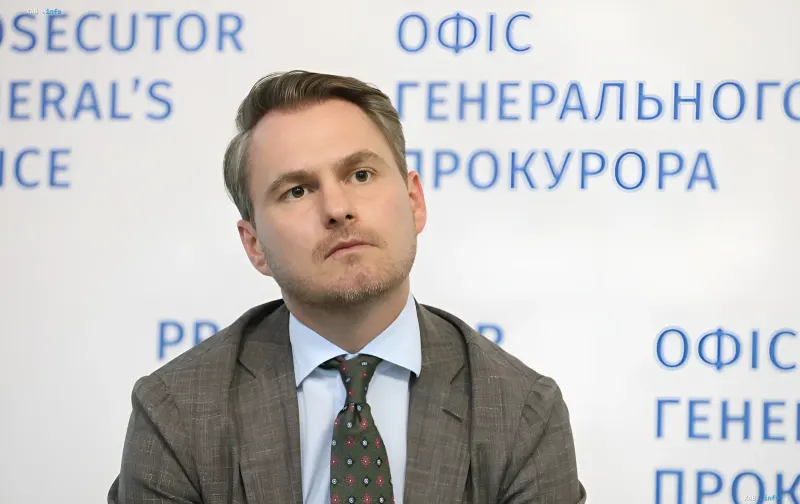
Ruslan Kravchenko, the Prosecutor General of Ukraine, has submitted his resignation. As reported by RBC-Ukraine, this became known from the Prosecutor General's own Telegram channel. In his statement, Kravchenko described his step as a conscious one and emphasized that his position on the accusations leveled against him has not changed. He also thanked his colleagues who, in his words, honestly do their job: present charges in court, work with victims, document Russian crimes, and defend the interests of the state, and asked that this work not be devalued.
"A Political Decision"
At the heart of the statement is an emphasis on the political nature of the step. "This is a political decision. And I made it consciously. I don't want the position of Prosecutor General to be used as a tool of political confrontation," Kravchenko stated. In doing so, he effectively shifts the frame of the discussion from the plane of the criminal case to the plane of political pressure, insisting that he is leaving not under direct pressure from the investigation, but to prevent the instrumentalization of his post. In closing, he thanked the president and the Verkhovna Rada for their trust and asked them to accept his dismissal.
Context: the "Carthage" Case
The resignation came against the backdrop of a high-profile corruption case. This refers to the special operation of the National Anti-Corruption Bureau (NABU) and the Special Anti-Corruption Prosecutor's Office (SAP) known as "Carthage," within the framework of which the protection of illegal call centers and the legalization of property obtained from them are under investigation. Previously, Kravchenko reacted to his own appearance in NABU recordings: he refuted the accusations of possible "protection" of fraudulent call centers and denied any connection to a safe with money, family trips, the purchase of a laptop, or the renovation of a house in Kozyn. It is precisely this case that, according to observers, became the main backdrop for his departure.
Contradictory Data
Here there is a notable inconsistency in the Prosecutor General's own public position. Until recently, Kravchenko had commented on the very possibility of leaving his post and stated that he did not plan to resign on his own, but was ready to comply with a decision of the Verkhovna Rada should one be made. Now, by contrast, he has himself submitted a resignation — that is, he has moved from a passive position of "waiting for the Rada's decision" to an active step. Moreover, a contradiction arises in the interpretation of the motives: on the one hand, Kravchenko calls his departure a "political decision" and distances himself from the criminal case, while on the other — chronologically the statement coincides with the height of the "Carthage" case and his public refutations, which allows outside observers to consider the corruption scandal the real, rather than declarative, reason. Both versions — "political pressure" and "pressure from the investigation" — are currently unrefuted and exist in parallel.
What Comes Next
Formally, the resignation statement still has to be accepted: Kravchenko asked the president and the Verkhovna Rada to accept his dismissal, which means that at the time of publication the matter concerns a submitted, but not necessarily yet formalized, departure. Until the corresponding decision is made, his status is formally preserved. Thus, the key next step will be the position of the head of state and the parliament, as well as the further dynamics of the "Carthage" case, which, in Kravchenko's own words, should not become a reason to devalue the work of the prosecutor's office.