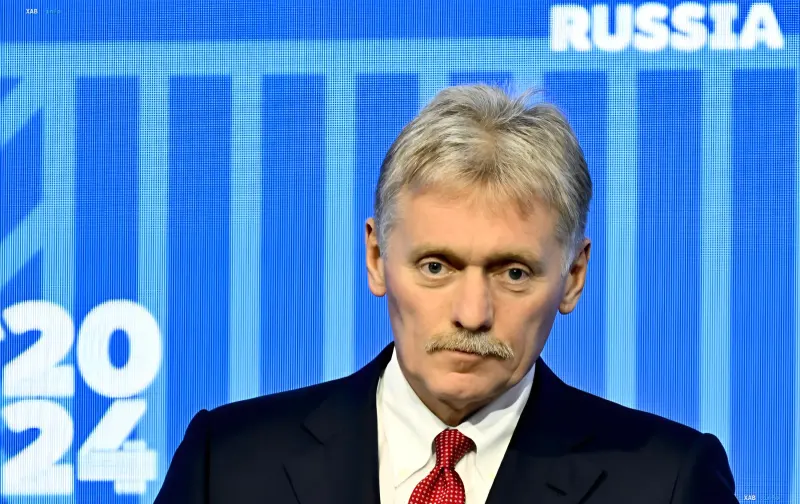
Press Secretary of the President of the Russian Federation Dmitry Peskov has openly expressed discontent with the stance of the United States, which insists on a preliminary settlement of the situation around Ukraine before restoring full-fledged bilateral economic cooperation. Such demands from official Washington are causing serious irritation in Moscow, which relies on the prompt lifting of sanctions barriers and the launch of joint projects despite the ongoing armed conflict.
Kremlin's Reaction to Washington's Economic Conditions
Commenting on the current state of Russian-American relations, the Kremlin representative stressed that the Russian side deeply regrets the White House's decision to condition economic rapprochement on political steps in the Ukrainian direction. According to Peskov, Moscow considers such an approach counterproductive and is convinced that the implementation of mutually beneficial economic initiatives could begin immediately, without waiting for the final resolution of the geopolitical crisis.
Contradictory Data
While the Russian leadership insists on separating economic issues from the Ukrainian crisis, Western analysts and US officials emphasize that large-scale sanctions and restrictions will remain in force until the complete withdrawal of Russian troops and the restoration of Ukraine's territorial integrity. A fundamental contradiction arises: the Kremlin seeks to restore business ties unilaterally, whereas Washington and European allies view economic pressure as a key tool for strategic deterrence and peace enforcement.
Assessment of the European Position and Negotiation Track
Particular attention in the Kremlin's statements was paid to the European foreign policy vector. Dmitry Peskov accused European countries of obstructing the negotiation process between Kyiv and Moscow, stating that the unified anti-Russian mainstream in the EU dominates cautious calls by individual politicians for dialogue. In addition, Moscow reacted extremely negatively to the EU's efforts to form its own security identity and allocate large budget funds for defense needs, calling it a destructive step that leads Europe away from finding ways to de-escalate.