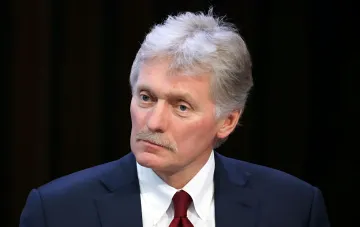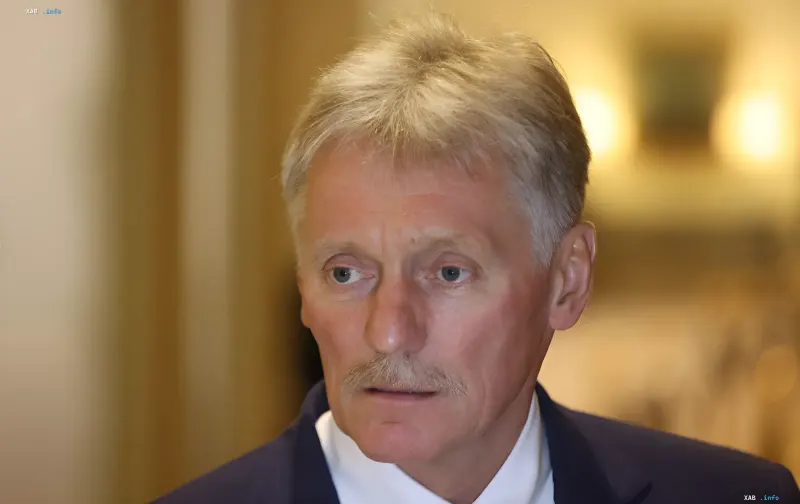
Russian presidential spokesman Dmitry Peskov stated that the Kremlin has an "understanding" that the negotiations on ending the war in Ukraine in Abu Dhabi will continue, although specific dates for the next round have not yet been determined. According to him, "dates for the next round of talks in Abu Dhabi have not yet been set," while Moscow proceeds from the assumption that the dialogue "must continue." The statement comes amidst ongoing discussions about the format and timing of future contacts between Ukraine, the US, and Russia.
No dates, but with an "understanding" of continuation
The key emphasis in Peskov's speech was on distinguishing between two points: on one hand, the Kremlin acknowledges that the negotiation process is not finished and must evolve; on the other, there is no fixed timeframe for the next meeting in Abu Dhabi. Thus, Moscow confirms its readiness to continue contacts but does not tie them to a specific date, leaving room for maneuvering within the diplomatic schedule.
The issue of European participation: four sides vs. three
Separately, Peskov commented on the persistence of European countries in wanting the Ukraine negotiations to take on a four-party character. According to him, "the Europeans are insisting that the negotiations on Ukraine become four-party, but Moscow does not yet understand what contribution they could make to the peace settlement process." The wording indicates that the Kremlin is skeptical about expanding the format and demands that Europe demonstrate a concrete role in the settlement, rather than just having a seat at the table.
No documents transferred to Trump or Xi Jinping
The Kremlin spokesman also clarified the question of possible direct high-level contacts: Vladimir Putin, according to him, did not transfer any documents containing settlement proposals or security guarantees to US President Donald Trump or Chinese leader Xi Jinping. This statement dispels some speculation that Moscow had already sent written sets of conditions to the parties, shifting the discussion back to oral and multilateral formats.
Context: Abu Dhabi outcomes and Kyiv's position
Recall that on November 10–11, trilateral negotiations between Ukraine, the US, and Russia took place in Abu Dhabi. The parties agreed to continue the dialogue and discussed the possibility of involving European countries. On November 21, President Volodymyr Zelensky announced that the Trump team wants to organize a new round of peace talks before December 25, and stressed the need to do everything possible to ensure that a four-party meeting — Ukraine, Europe, America, and Russia — takes place as soon as possible. Kyiv, according to Zelensky, is ready for this "literally tomorrow."
Putin to decide on delegation composition
Previously, on October 22, the Kremlin reported that President Vladimir Putin himself would decide who will be part of the Russian delegation when trilateral negotiations with the US and Ukraine resume. This underscores the centralized nature of the Russian side's preparation for the next round and indicates that the personnel issue remains with the top leadership until the meeting date is fixed.
The aggregate of these statements shows that the negotiation track regarding Ukraine remains active but is not synchronized in terms of timing: Kyiv and Washington are oriented toward a December horizon and an expanded format, while Moscow confirms its readiness to continue the dialogue without setting dates and raising questions about Europe's practical contribution to the settlement.