Amid a protracted conflict and a complex situation on the front line, the Russian leadership is making unprecedented efforts to create an illusion of success. According to the Institute for the Study of War (ISW), the Kremlin has launched a systematic information campaign aimed at creating an impression among domestic and foreign audiences of a massive advance by Russian troops. At the center of this campaign are video materials whose authenticity is seriously questioned by analysts.
Information campaign: from inspections to fake videos
The culmination of the current information attack was a statement by the Russian Ministry of Defense made on August 15, 2026. Immediately after a public inspection of the Eastern Group of Forces conducted by Defense Minister Andrey Belousov, the ministry announced the capture of the settlement of Rybalskoye southwest of Alexandrovka. In total, according to the Ministry of Defense, 19 settlements came under control during the summer campaign. These claims were supported by the active activities of Russian military bloggers, in particular, the author of the channel 'Warrior DV'.
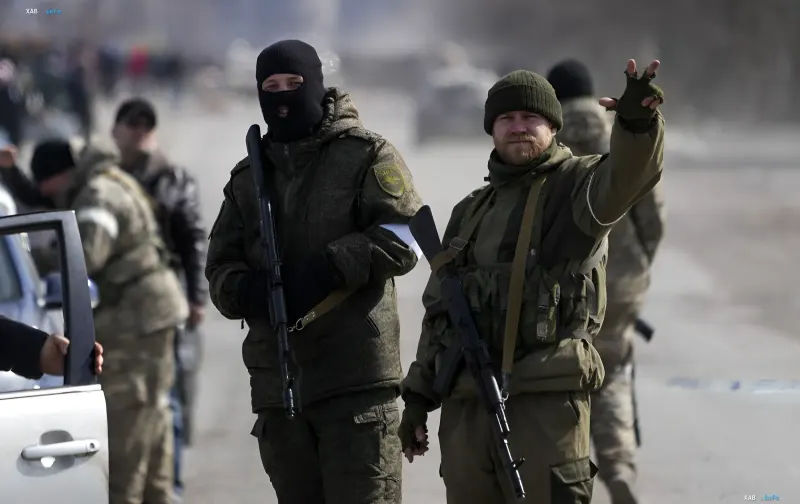
The blogger published a series of videos dated August 12–14, where Russian soldiers with flags allegedly demonstrate control over territories near Alexandrovka and Huliaipole. According to the author, these materials were a response to a Ukrainian message from August 12 about the liberation of 26 villages as a result of counter-offensive operations. However, ISW notes that the chronology and content of these videos do not stand up to scrutiny.
The role of artificial intelligence in falsification
Analysts from the Institute for the Study of War conducted a detailed analysis of the published materials and concluded that a significant part of them does not correspond to reality. In particular, some video fragments were likely created or modified using artificial intelligence technologies. This allows the Russian side to generate 'proof' of the capture of territories that are actually under the control of the Armed Forces of Ukraine (AFU) or were not occupied at all.
Furthermore, some video materials may contain old footage presented as recent events. This practice allows for the manipulation of audience perception, creating a false impression of the dynamics of hostilities. As a result, video materials cannot serve as reliable confirmation of the claimed Russian advance.
Contradictory data
There is a clear contradiction between the statements of the Russian side and the actual situation on the front. On the one hand, the Russian Ministry of Defense and military bloggers claim the capture of new territories and a breakthrough of Ukrainian defenses. On the other hand, Ukrainian military forces report counter-offensive operations and the liberation of 26 villages between January and August 2026. According to the AFU, about 745 square kilometers of territory in the Dnipropetrovsk, Donetsk, and Zaporizhzhia regions have returned to control.
There are also discrepancies in the assessment of specific areas. For example, the blogger 'Warrior DV' claimed the capture of positions west of the Alexandrovka-Khristoforovka line and a breakthrough in the Roven and Kopanov areas. At the same time, other sources point to the absence of stable Russian positions in these areas. This creates a situation where each side operates with its own data, which is often not confirmed by independent observers.
Goals and consequences of falsification
According to ISW, the actions of the Russian Ministry of Defense and military bloggers correspond to a broader Kremlin campaign aimed at creating the desired information effect. This involves spreading claims about tactical successes of the Russian army even in areas where occupiers do not have stable positions. Thus, Moscow seeks to create a false impression of an alleged massive advance of troops and a possible collapse of Ukrainian defenses.
This campaign is aimed not only at the domestic audience but also at the international community. Russia is trying to influence the perception of the situation outside the country to weaken support for Ukraine and create an impression of its inevitable defeat. However, the use of falsified materials undermines trust in official statements and may lead to the opposite effect.
Conclusions and prospects
In conclusion, it can be said that the Russian side is actively using information technologies to manipulate public opinion. The use of AI and old footage allows for the creation of an illusion of success that does not correspond to reality. At the same time, Ukrainian military forces continue to conduct counter-offensive operations and liberate new territories. It is important that the international community and independent observers critically evaluate information from both sides and rely on verified data.