
On the night of August 15, 2026, the Ukrainian Defense Forces carried out a large-scale series of strikes covering both occupied territories and the deep rear of the Russian Federation. The operations were aimed at neutralizing air defense systems, command posts, and strategic industrial facilities supporting the Russian war machine.
Strikes on Occupied Territories: Kreminna, Ugledar, and Lisychansk
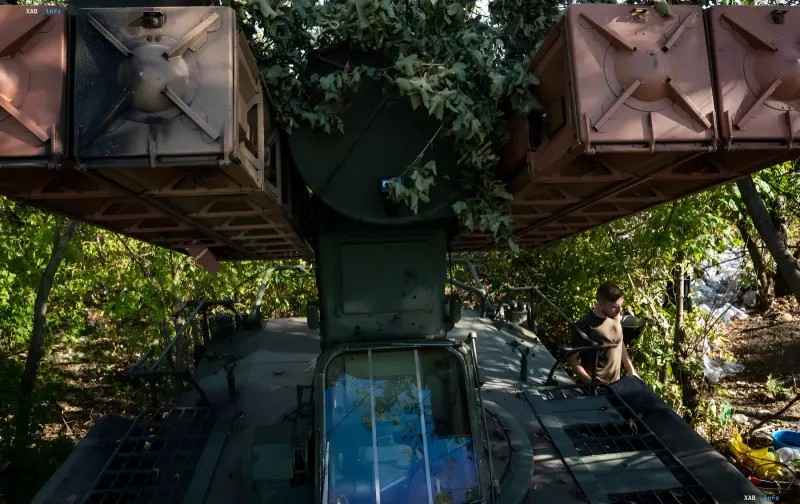
According to data from the General Staff of the Armed Forces of Ukraine, Defense Force units carried out precision strikes on a number of critically important facilities in the Luhansk and Donetsk regions. In particular, in the city of Kreminna, a 'Strela-10' surface-to-air missile system (SAM) was hit. The destruction of this air defense system is of strategic importance, as it allows for clearing the airspace for further Ukrainian drone and aviation operations in this sector.
In addition to air defense systems, logistics hubs were targeted. In Ugledar in the Donetsk region, a train carrying unmanned aerial vehicles was attacked, and in Lisychansk in the Luhansk region, a train carrying material and technical supplies was hit. These actions are aimed at disrupting supply chains and reducing the combat effectiveness of the enemy's forward groupings.
Destruction of Command Hubs in Selydove and Mykhailivka
Special attention during the night operation was paid to command centers. The Ukrainian Defense Forces struck two Russian military command posts. One was located in the city of Selydove (Donetsk region), and the second in Mykhailivka (Zaporizhzhia region). The destruction of command posts (CPs) is traditionally considered one of the most effective ways to disorganize enemy actions, as it leads to a temporary loss of communication between headquarters and units at the front.
Strategic Strikes on Russian Territory: Samara and Nizhny Novgorod
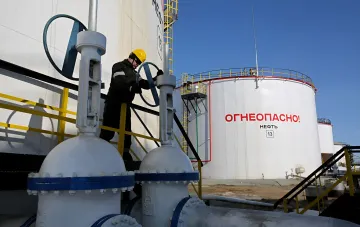
Parallel to combat operations on the front line, the Ukrainian Defense Forces continued the campaign of long-range strikes on the territory of the Russian Federation. On the night of August 15, two key facilities were attacked: the 'Progress' Rocket and Space Center in Samara and the 'Savasleika' military airfield in the Nizhny Novgorod region.
The strike on the 'Progress' plant in Samara, one of Russia's largest manufacturers of rocket engines, was made possible thanks to the use of new 'Flamingo' missiles. According to President Volodymyr Zelenskyy, Ukrainian munitions covered a distance of about 900 km from the border, demonstrating a significant increase in the range and accuracy of Ukrainian missile armaments. The attack on the 'Savasleika' airfield caused damage to infrastructure used for the basing and servicing of military aviation.
Damage Assessment and Prospects
The General Staff of the Armed Forces of Ukraine noted that the final results of the strikes and the extent of the damage inflicted on the enemy are still being verified. However, the department emphasized that work on key military targets of the Russian aggressor continues. Command views these strikes as part of a long-term strategy to exhaust the enemy's military potential and destroy its rear infrastructure.