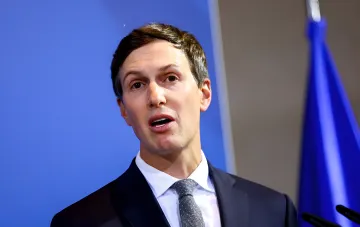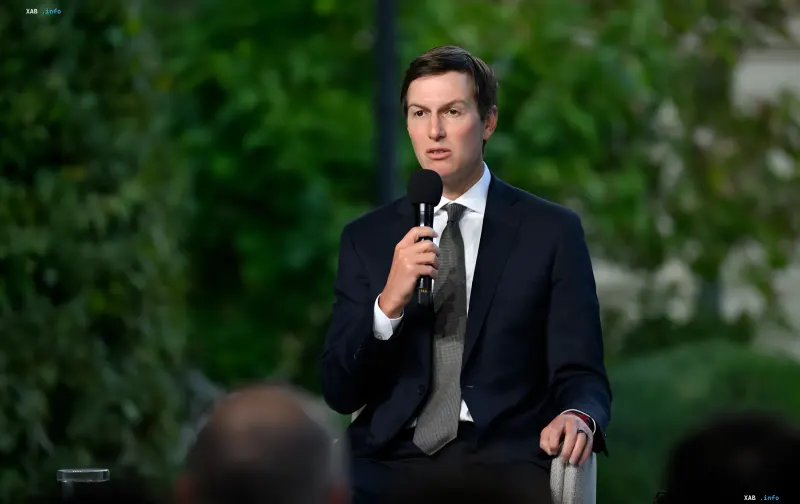
US President Donald Trump's special envoy Jared Kushner outlined key conditions in a post on social media platform X under which Washington is prepared to consider providing Ukraine with security guarantees similar to those under Article 5 of the NATO Charter. According to him, Russia's willingness to discuss such commitments is a “significant step forward” and a potential indication of Moscow's seriousness regarding peace. Kushner stressed that reliable guarantees, backed by mechanisms for deterrence and conflict prevention, can substantially reduce the risk of a new war.
Commitments Must Be Concrete and Documented
The American representative agreed with Ukrainian President Volodymyr Zelenskyy's position: future commitments must be concrete, reliable, and clearly documented. According to Kushner, he is currently working on drafting them in cooperation with the US Special Presidential Envoy for Peace Missions (SEPeaceMissions). He noted that these are among the most weightiest commitments the US can undertake, and therefore they require thorough preparation. The final decision, Kushner emphasized, will be made directly by Donald Trump in compliance with all constitutional procedures and with the participation of Congress.
Up to Trump: The National Interest Criterion
Kushner explained that Trump will take this step only if he concludes that it clearly serves America's national interests, and broader security arrangements make it highly unlikely that these guarantees will ever need to be invoked. Thus, the provision of guarantees is tied to Washington's overall risk assessment and how thoroughly the final security architecture eliminates the very need to activate them.
Security Architecture and Balance for All Parties
The American representative stressed that guarantees for Ukraine cannot be finalized separately from the post-war security architecture in Europe. Among the key elements of the future system, he cited military de-confliction and greater transparency, as well as mutual de-escalation measures and verified commitments by the parties. The goal of the negotiations, he said, is to achieve a balance: Ukraine must be protected, Russia must have the assurance that NATO does not seek confrontation, and the Alliance and its partners must have confidence in Russia's respect for the sovereignty of its neighbors.
Economic Dimension and Next Steps
Kushner separately focused on the economic dimension: security must be underpinned by a long-term plan for Ukraine's prosperity and reforms to strengthen its institutions and self-sufficiency. According to him, large-scale support from the US and Europe must be matched by Kyiv's own commitment to its success. In the coming weeks, the American side plans to hold closed-door negotiations and multilateral discussions with Ukraine, European partners, and Russia to reach a common understanding of this architecture. Kushner concluded that while nothing has been finalized yet, the parties' readiness to discuss these issues opens up an opportunity to stop the bloodshed and channel hundreds of dollars away from war toward economic development, infrastructure, and lower energy prices.
Context: Moscow's Position and the US Counter-Proposal
To understand the framework of the discussion, it is worth recalling information from Washington Post columnist David Ignatius: according to his sources, in private conversations Vladimir Putin agreed to Ukraine receiving post-war security guarantees from the US and Europe analogous to NATO Article 5, but set a condition that Alliance troops not be deployed on Ukrainian territory. In response, the American side proposed the withdrawal of Russian troops from the border immediately upon a ceasefire and the lifting of sanctions, with the possibility of their instant return should Russian forces concentrate for a new offensive. These details show that the discussion of guarantees is tied to issues of force deployment, the ceasefire regime, and sanctions policy.