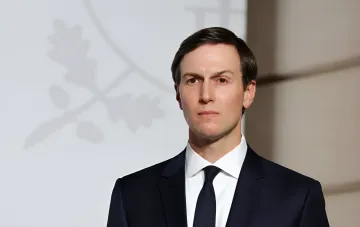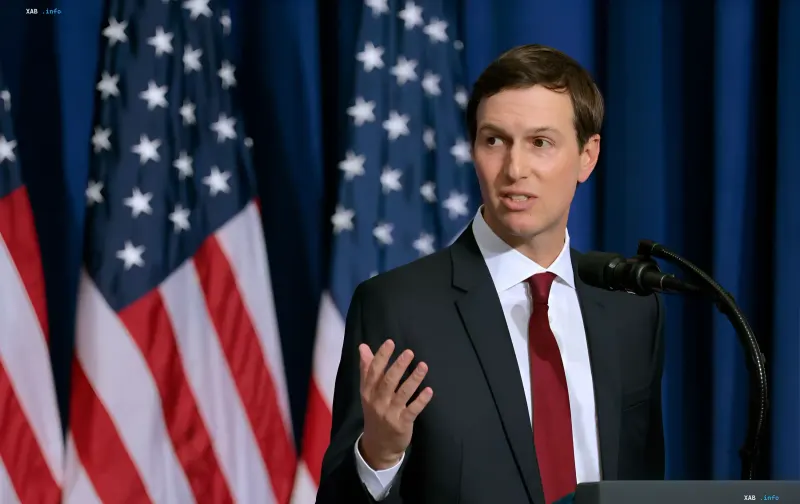
U.S. Special Envoy Jared Kushner, in an interview with journalist Mathias Döpfner (The Telegraph), spoke about the prospects of Ukraine joining the North Atlantic Alliance. This was reported by RBC-Ukraine, citing The Telegraph. According to the son-in-law of the American leader, the question of Kyiv's membership in NATO remains open, and the final decision, in his opinion, must be made by the parties to the conflict themselves.
'All is possible': Answering the question on the realism of membership
When asked directly whether he considers Ukraine's entry into NATO realistic, Kushner responded affirmatively: "Everything is possible; let the parties find a solution themselves." At the same time, as TSN notes, when asked whether the Donald Trump administration itself supports Ukraine's future membership in the alliance, the special envoy did not give a direct answer, stressing that the search for a solution remains with the negotiating parties. Thus, Washington, in essence, does not set a public position on the timing and mechanisms of entry, leaving this topic in the zone of diplomatic negotiations.
The 2008 hypothesis: The war could have started earlier
Döpfner also asked Kushner whether joining the alliance back in 2008, if then-German Chancellor Angela Merkel had not opposed it, would have protected Ukraine from war. The special envoy replied that such a scenario is "possible," but did not rule out the opposite: "But it is also possible that this, on the contrary, would have accelerated the start of the war — and it could have broken out ten or twenty years ago." According to his assessment, Russia's current war against Ukraine was "led to by a series of misunderstandings, wrong decisions, and miscalculations made over many years by various leaders," and he added: "We can no longer change anything, but we can try to learn from this."
Context: Assessing the negotiation process and a 'new beginning' with the US
Kushner made the statements about the prospects for entry against the backdrop of broader rhetoric surrounding peace talks. Earlier, RBC-Ukraine reported that the special envoy spoke highly of the Russian negotiating team, and Vladimir Putin, according to the publication, called him a "grandmaster of politics." Kushner himself, in turn, believes that the Russian leader seeks not only peace but is also trying to "change relations with America and find out if there is an opportunity for a new beginning." According to news.mail.ru, Kushner characterizes the negotiations with representatives of Ukraine, NATO, and Europe as "productive and meaningful."
The peace deadline and NATO's position: Who is hindering entry
President Volodymyr Zelensky, in turn, stated that Trump's special envoys Jared Kushner and Steve Witkoff want a peace agreement as soon as possible — ideally before January 2027. Against this background, NATO Secretary General Mark Rutte, responding to questions from parliamentarians of the alliance countries in Berlin on November 23, noted that Ukraine's entry into NATO is being hindered by several allies, not just the US, while there is no country in the alliance that supports Russia's demand to return NATO to its 1997 borders. Rutte recalled the decision of the 2024 Washington Summit, which recorded the irreversibility of Ukraine's path to the alliance, and emphasized the need for work on two levels: a long-term ceasefire or a full-fledged peace agreement and ensuring Ukraine's security after the end of hostilities.