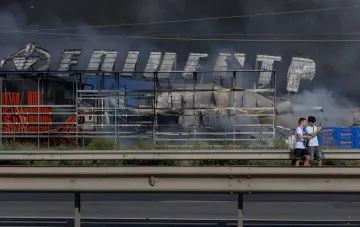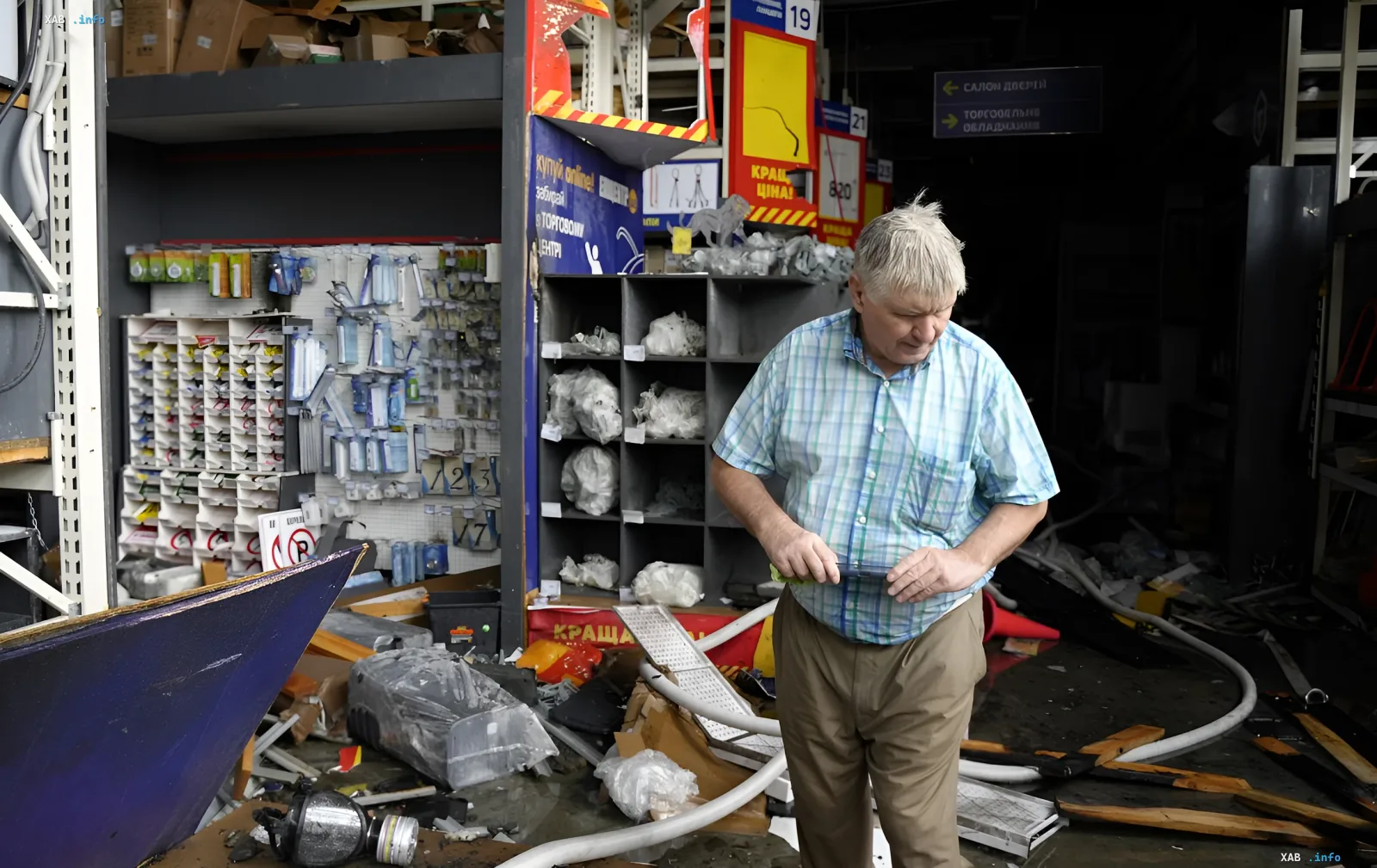
The Government of Ukraine has expanded the list of high-risk territories to include Kyiv and the Kyiv region. The decision was made under the state program for insuring military risks and is aimed, above all, at protecting business assets. The news outlet XAB.info has looked into exactly what the new status changes for entrepreneurs and residents of the capital and the region, and which questions remain open.
What are “high-risk territories”
“High-risk territories” are the areas to which the state program for insuring military risks applies. The list of such territories (excluding the temporarily occupied ones) is established by Cabinet of Ministers Resolution No. 1541. It is to this list that Kyiv and the Kyiv region have now been added by government decision. A region’s inclusion in the list does not mean an automatic deterioration of living conditions: as Timur Tkachenko, head of the Kyiv Regional Military Administration, explained, the decision does not introduce any new restrictions and does not change the rules of people’s everyday lives. Its essence lies in expanding the support tools available to business.
What changes for business
For enterprises operating in high-risk territories, the new status means access to an additional tool for protecting assets. The Cabinet of Ministers has not only expanded the program’s geographic coverage but also increased the maximum compensation for a single enterprise — from three to five million hryvnias per year. At the same time, the list of insurable property has been expanded: it now includes, in particular, fuel, as well as vehicles used for its transport and storage. According to financial analyst Andriy Shevchishyn, the key significance of this decision is that business gains access to compensation in the event of damage or destruction of property as a result of military actions.
Impact on everyday life and lending
For ordinary residents, the region’s new status is virtually imperceptible: it introduces no restrictions on movement, work, or everyday activities. Similarly, in Shevchishyn’s assessment, an enterprise’s presence in a “high-risk” territory should not directly affect lending terms or similar financial parameters, since banks base their decisions on their own internal risk-assessment criteria rather than on the Cabinet’s administrative list.
Contradictory data
Here it is important to honestly distinguish two viewpoints. On the one hand, the official position and the very fact of the decision are presented as an expansion of support: business gains a new compensation channel, and the payout ceiling is raised to five million hryvnias. On the other — experts point out that the mechanism’s actual functioning is in question. Vice President of the Chamber of Commerce and Industry Rostyslav Korobko emphasized that the foundation of military-risk insurance is reinsurance with predominantly foreign companies that are actually willing to assume military risk. In his words, almost no one is taking on such risks now, since Kyiv and the Kyiv region are the center of attacks on business. Korobko’s conclusion: the government’s decision on the capital and the region neither guarantees nor compensates for the costs an entrepreneur may incur. Thus, there is a noticeable gap between the declared expanded support and the actual availability of payouts, which sources explicitly note.
The key question: where does the money come from
Beyond the reinsurance problem, the budget question also remains open. Shevchishyn noted that it is still unclear whether funds for compensating business are allocated in the state budget. “Are there funds for this in the budget? Because other areas are being cut at a frantic pace,” the analyst summed up. Against the backdrop of these caveats, the new status of Kyiv and the region should be viewed as a formal expansion of the program, whose practical payoff will depend on whether reinsurers and budget financing can be secured.