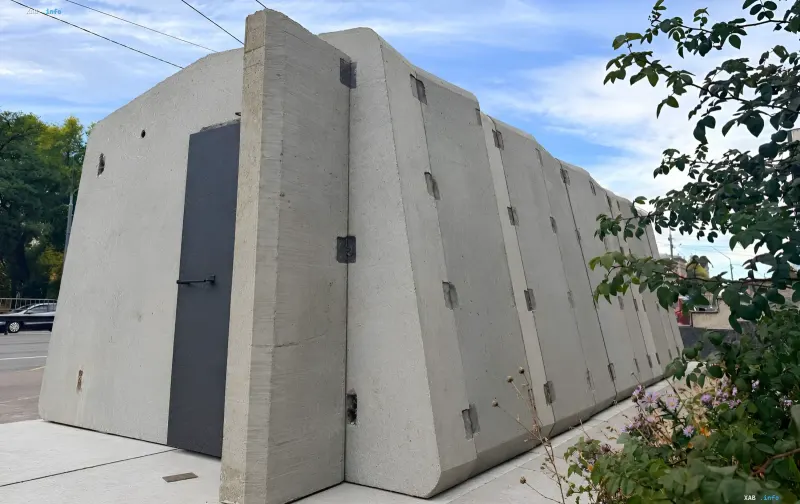
The capital of Ukraine has begun installing its first mobile concrete shelter near a public transport stop. The project is being implemented with the support of the city administration and benefactors amid ongoing efforts to strengthen civilian infrastructure safety. The structure is designed to protect passengers in the event of sudden air raids along busy transport arteries.
Exact Location and Technical Specifications
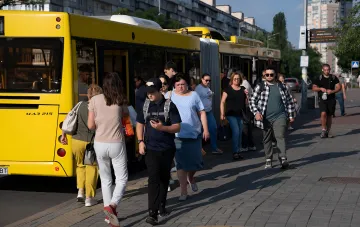
The first prefabricated mobile shelter has been installed on Beresteiskyi Avenue near the Ivan Bagriany Park stop. Numerous trolleybuses and buses regularly run through this transport hub, making the location critically important in terms of passenger traffic. According to the Kyivpastrans municipal enterprise, the structure is designed to accommodate up to twenty people simultaneously and is capable of withstanding shrapnel damage and blast waves.
Funding and Network Expansion Plans
As specified by the Kyiv City State Administration, the acquisition and installation of the facility did not require budget funds—the work was entirely financed by benefactors at the initiative of Kyiv Mayor Vitali Klitschko. Acting General Director of Kyivpastrans Tetiana Tarasko stated that in the near future the enterprise intends to expand the network of protective structures. The official procurement procedure for the next fourteen similar modules is currently underway.
Security Context and Legal Proceedings
The appearance of mobile modules at stops was a response to public requests and demands from supervisory agencies. Previously, the acting head of the Kyiv City Military Administration, Andrii Tkachev, announced the large-scale deployment of such protective structures throughout the city. In parallel, the city prosecutor's office through judicial instances demanded that the capital's authorities mandatorily arrange additional shelters in areas with the largest concentrations of people.
Significance of the Initiative for Urban Infrastructure
The introduction of modular-type mobile shelters significantly increases the level of operational safety for citizens waiting for public transport far from capital underground metro stations. The experience of installing the first fifteen structures will make it possible to assess their practical effectiveness, installation speed, and ease of operation in an urban environment. In the future, the city authorities expect to attract additional resources to protect all key transport hubs of the capital.