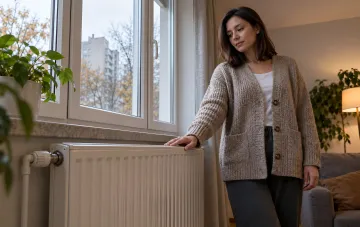
As of October 20, 2026, about 15% of social sector institutions in Kyiv have been connected to the heat supply system. This was reported by RBC-Ukraine with reference to the Kyiv City State Administration (KCSA). We are talking about hospitals, schools, kindergartens, and other facilities for which the heating season in the capital started on October 16. According to Petro Panteleev, acting first deputy head of the KCSA, heat has currently been supplied to 10 healthcare facilities, 13 kindergartens, and 16 schools.
Connection via Individual Applications
As specified in the KCSA, heat supply to social facilities is carried out not according to a single citywide schedule, but upon individual applications from the heads of the respective institutions. This particular mechanism explains why the share of connected institutions is currently about a fifth of the total number: each facility submits an application, after which the heat supply company performs the connection. In fact, this means that the launch pace depends on the readiness of the institutions themselves and the speed of application approvals.
Restrictions in Certain Districts
At the same time, the KCSA notes that heating is not yet being turned on in parts of the Dniprovskyi and Darnytskyi districts of Kyiv due to damage to an energy facility. This creates local restrictions for some social institutions in these areas, and the issue of their connection will be resolved as the damaged facility is restored. Thus, the citywide figure of 15% does not take into account these local disruptions, which may shift launch schedules in specific buildings.
Context: How Heating Is Turned On in Other Cities
The Kyiv schedule fits into a broader picture across the country. For instance, in the Irpin community, hospitals, schools, and kindergartens began connecting to heat as early as October 15, while in the Chernihiv region, heating is even being supplied to residential buildings in some communities; in the Sarny community of the Rivne region, connection is proceeding in stages. At the same time, in Zaporizhzhia, Lutsk, Lviv, and Chernivtsi, the launch of heating is tied to a meteorological criterion — a drop in the average daily temperature to +8 °C and below. Different approaches reflect both regulatory and technical features of each region.
Tariffs and Housing Subsidies
Separately, the KCSA reported that during the 2026–2027 heating season, the cost of thermal energy, heating, and hot water supply for the population in Kyiv will not change; economically justified tariffs approved for Kyivteploenergo and EURO-RECONSTRUCTION LLC will apply to budgetary institutions, other categories of consumers, and religious organizations. As for support, for the majority of Ukrainians, housing subsidies for the 2026–2027 heating season will be recalculated automatically. An application and declaration must be submitted by those applying for assistance for the first time, those who received a refusal for the non-heating period, or those with changes in household composition; if applying within two months after the start of the season, the subsidy will be granted from October, and the payment for that month will be accrued in November.