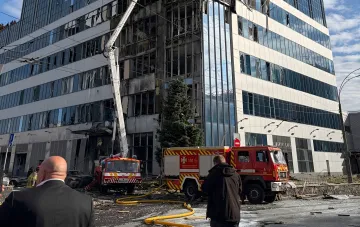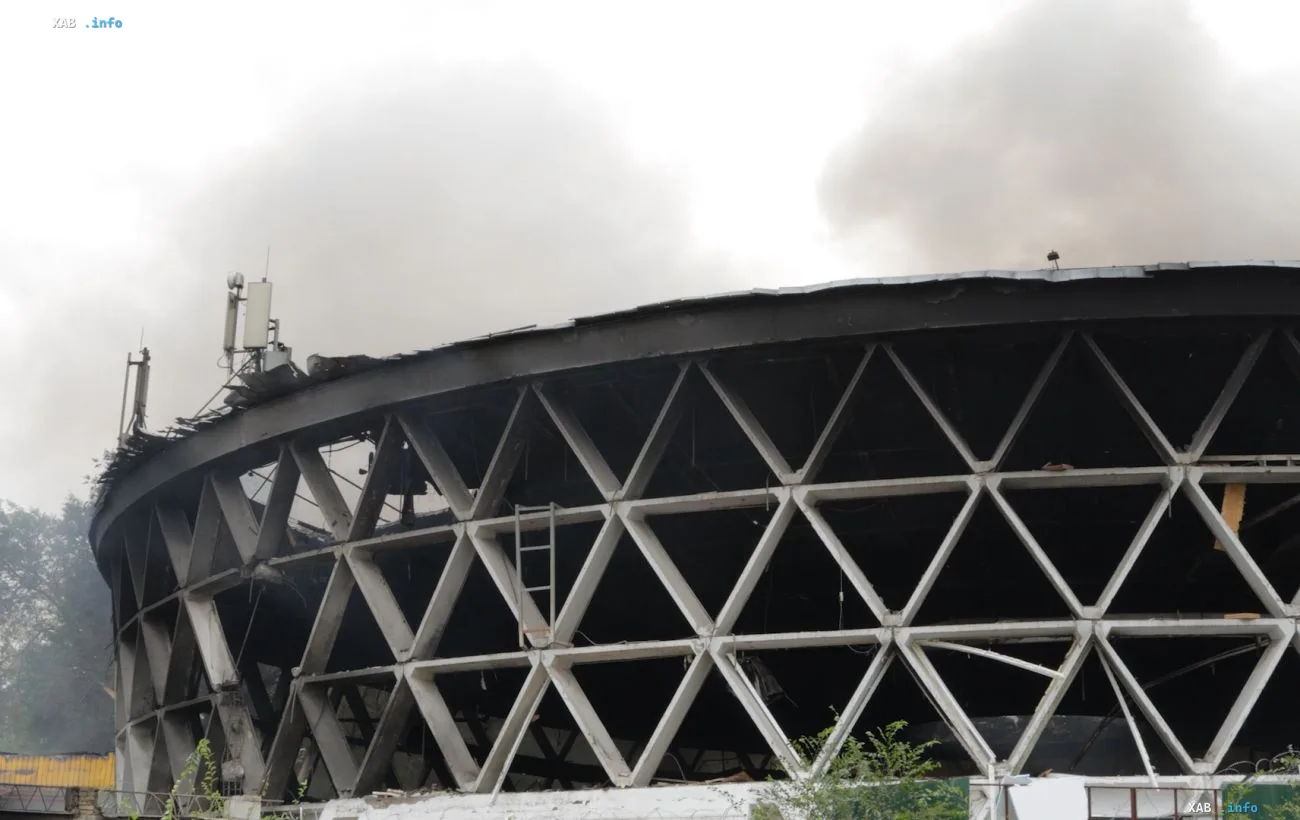
On Wednesday, September 23, 2026, Russian forces carried out a massive strike on Kyiv using strike drones. One of the targets hit was the former Railway Market in the area of the Central Railway Station, which Kyiv residents had called 'Shayba' for decades. According to reports from the scene, the building in the Solomianskyi district was effectively destroyed as a result of the impact: after the fire, only a burnt-out frame of the structure remained. Correspondents who visited the site documented the scale of destruction of this iconic object for the capital.
The attack and its impact on 'Shayba'
The building of the former Railway Market is considered a monument of Kyiv's 20th-century modernism. It was built in 1973 to a design by architects Alla Anishchenko and Natalya Chmutina. The distinctive round structure gave the market its popular name 'Shayba'. During the morning and daytime strikes on September 23, according to available data, two people were killed in the Darnytskyi and Solomianskyi districts of Kyiv as a result of drone impacts and the fall of their debris, while the number of injured, according to the latest reports, reached 36. Casualty figures are typically refined as emergency services continue their work.
The history of the iconic building
Initially, the facility functioned as a covered trading complex and was known as the Railway Market and the Railway Collective Farm Market. In the late 1980s, the 'Okean' store operated in its premises; in the 1990s, the building was occupied by the Kyiv Universal Exchange, and from the 2000s it was converted into the 'Velika Kyshenya' supermarket, which suspended operations in 2021. The object also became widely known in 2022, when a music video for the song 'Stefania' by Kalush Orchestra was filmed in its premises, the song with which Ukraine won the 'Eurovision 2022' contest.
The market's fate and the demolition controversy
Even before the attack, the building had been in the public spotlight due to plans for its demolition. In 2021, the Kyiv City Council permitted the demolition of the market and transferred the land plot for the construction of the multifunctional 'Railway' complex. Capital activists repeatedly advocated for granting the building monument status, trying to prevent its destruction. Thus, the September 23 attack struck an object that had already been considered vulnerable in terms of cultural heritage preservation.
The scale of strikes on the capital
In addition to the former market building, according to available information, drones were used against a number of other objects in Kyiv in the morning and during the day: a gas station, a business center building, an office building, the premises of a pharmaceutical enterprise, and premises near the station. Fires broke out at the impact sites. It is noted that the adversary resorts to repeated strikes on the same objects, which intensifies the destruction and hampers the work of rescue services.
Contradictory data
When cross-checking open sources, a discrepancy is found in the dates and figures related to drone attacks on Kyiv. In particular, in one of the verified materials (ura-inform.com), an incident dated August 31, 2026, is described, reporting two injured and the fall of debris in three districts of the capital. These data relate to a different event and do not match the figures for the September 23, 2026 attack (two killed and 36 injured according to current reports). The differences are explained by the fact that the strikes are of different dates, as well as by the fact that information on the injured and killed during hostilities is updated as information from emergency services arrives. Until official confirmation of the final figures, both versions remain in the open field.
The incident with the destruction of 'Shayba' became not only a military but also a cultural blow to Kyiv: an object that carried symbolic significance for the city's residents and was associated with one of Ukraine's most resonant musical successes on the international arena has been lost. The final assessment of the damage and the fate of the land plot allocated for the multifunctional complex remain open questions.