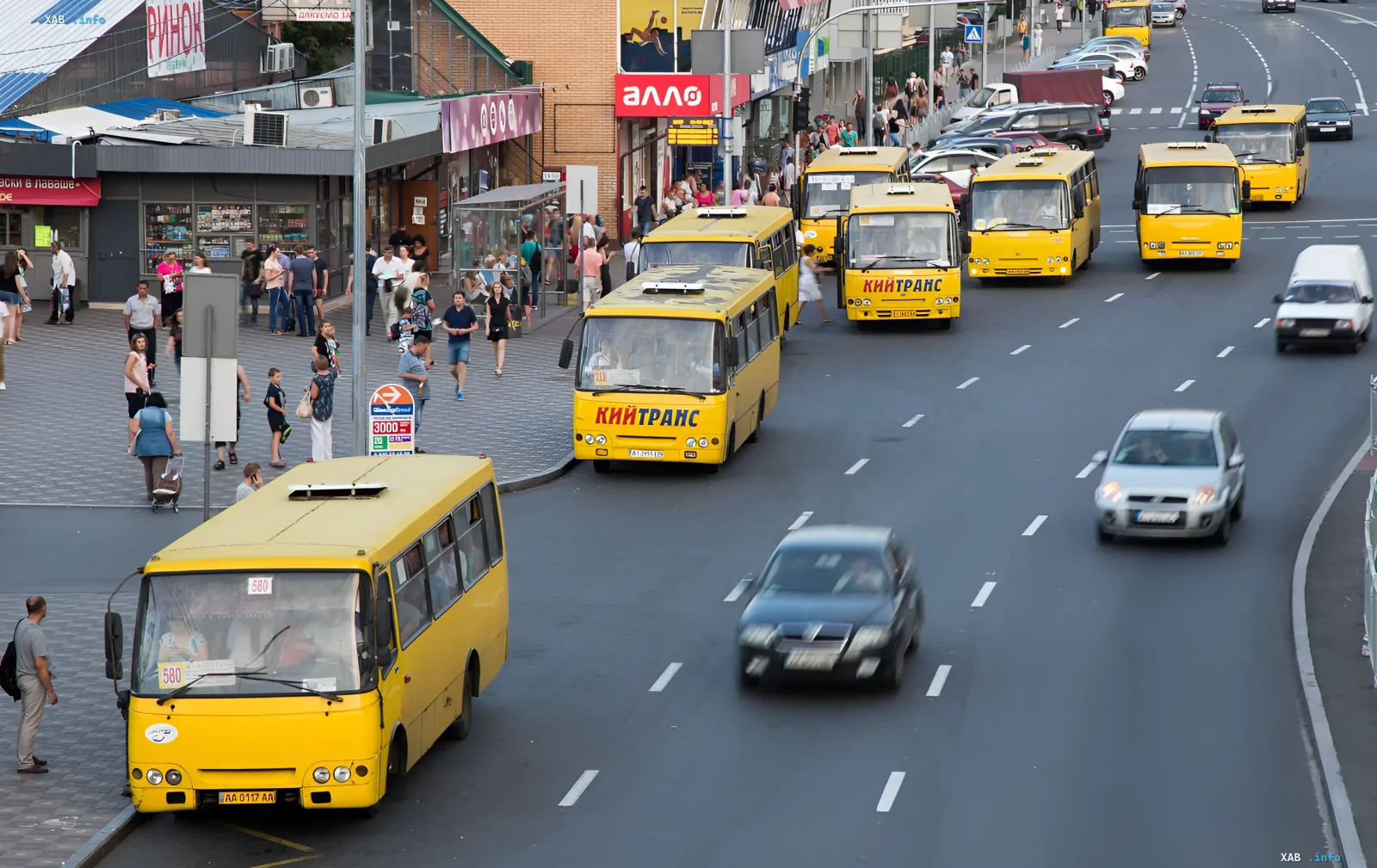
On August 13, 2026, Kyiv's transport system stands on the brink of major changes. The focus is on private passenger transport, which has operated in a "grey" zone for decades, relying exclusively on cash transactions. The Department of Transport Infrastructure of the Kyiv City State Administration (Kyiv City Council) has announced a clear plan to integrate marshrutkas into the city's unified digital ecosystem, although the implementation timeline depends on the geopolitical situation.
Nine-month deadline after the lifting of martial law
According to an official response from the Kyiv City Council to a request from the publication Hromadske, published by RBC-Ukraine, the key condition for modernization is the lifting of martial law. It is from this moment that the countdown begins: private carriers must equip their buses with validators for cashless payment within nine months. This requirement aims to eliminate the shadow economy in the transport sector and ensure transparency of financial flows.
Currently, the capital's marshrutkas are not equipped with terminals and are not connected to the city's automated passenger accounting system (ASUP). Authorities admit that the transition to cashless payments is a complex process requiring not only technical equipment but also a restructuring of carriers' business models.
Seeking partners and technical challenges
The Kyiv City Council confirmed that work on the introduction of cashless payments is already underway. "Measures are being taken by private carriers to introduce cashless payment for travel, including studying implementation methods and cooperation opportunities with financial and banking institutions," the department stated.
The essence of the problem lies not only in the cost of equipment but also in logistics. Connecting to banking systems requires resolving issues with internet connectivity in transport, data protection, and integration with existing city cards. For now, specific mechanisms for interaction with banks are being developed, and carriers are looking for optimal solutions that will not lead to a sharp increase in tariffs for passengers.
Civil control: petitions and new requirements
The modernization initiative has received a strong impulse from citizens. A petition has been registered in Kyiv, the authors of which demand that private carriers be obliged to equip marshrutkas not only with validators but also with GPS trackers and video surveillance systems by January 1, 2027. The initiative is in the active stage of collecting votes, signaling a high public demand for safety and control.
Another wave of proposals concerns the tariff system itself. Citizens propose moving from a fixed ticket price to payment by distance or number of stops. This could make travel fairer for those making short trips. Also gaining momentum is the initiative to limit the number of free rides for pensioners, which, according to the authors, will help relieve transport during peak hours.
Contradictory data
There is a clear gap between citizens' expectations and the actual timelines announced by the authorities. The citizens' petition sets a strict deadline — January 1, 2027. However, the official position of the Kyiv City Council ties the introduction of validators to the lifting of martial law with a subsequent nine-month term.
If martial law is not lifted by the end of 2026, fulfilling the petition's requirement for the date of January 1, 2027, will become technically impossible, as the implementation process will take a minimum of 9 months after the lifting. This creates legal uncertainty: will the authorities ignore the petition or revise their plans, trying to accelerate the equipment implementation process under wartime conditions?