Kyiv has approved a differentiated procedure for organizing the operation of the metro and surface transport across the Dnipro, depending on the level of air threat. This was announced by the city's mayor Vitali Klitschko in his Telegram channel, according to RBC-Ukraine. The decision comes against the backdrop of the Ukrainian Cabinet of Ministers having agreed on the very concept of dividing air alerts by the nature of the threat, while the city administration has detailed exactly how the metro lines and bridge crossings will operate under such a regime.
Two threat levels: how the signals are distinguished
Under the logic approved by the Cabinet, the yellow level of air alert is introduced during attacks by Russian unmanned aerial vehicles, while the red signal indicates an elevated danger of a missile or combined strike. It is precisely the choice of level that determines which sections of the metro and which bridges remain open to passengers and drivers, and which will be temporarily closed. In this way, the city is moving away from a single "close everything" approach and shifting to a scenario-based model in which the impact on passenger flows is tied to the type of threat.
Metro: the green and red lines in different modes
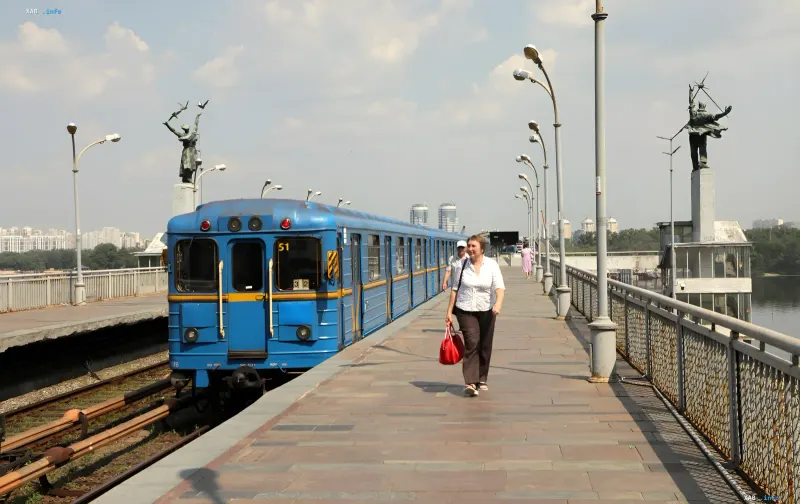
Under the yellow threat level, the Syretska–Pecherska (green) line will operate without restrictions: trains run along the entire line, including the section across the South Bridge, allowing passengers to move between the left and right banks. Under the red level, the green line's service is split into two independent sections — between "Syrets" and "Vydybychi" stations and between "Slavutyshch" and "Krasnyi Khutir" stations — meaning that a through crossing of the river by metro is not provided for during this period. The Sviatoshynsko–Brovarska (red) line operates in a limited mode under both scenarios: passengers are carried along the underground section between "Akademiychne" and "Arsenalna" stations.
Bridges over the Dnipro: what will be closed and for how long
During an air alert, traffic on the South Bridge is allowed without restrictions, however a technical closure for 30 minutes after the alert is declared and for a further 30 minutes after it is lifted is provided for. During the alert, entry onto the South Bridge from Saperno-Slobodska Street and Mykhailo Boychuk Street will be closed. The Darnytsia Bridge, the Paton Bridge, the Metro Bridge and the North Bridge continue to operate without changes. The Podilsko–Voskresenskyi bridge crossing is also technically closed for 30 minutes after the alert is declared and for the same period after it is lifted, and its traffic organization changes: a reversible mode is introduced there.
Surface transport and additional routes
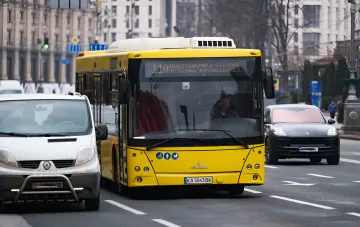
Surface public transport, according to the city administration, continues to operate without restrictions. In addition, an additional bus route duplicating the red metro line has been launched in Kyiv: it runs from "Dvorets Sportu" (Palace of Sports) station via "Arsenalna" to "Lesna" station. According to NV, the city has dispatched around 140 buses to the additional routes and is preparing changes to traffic on the bridges during air alerts, which underscores the scale of preparation of a surface "cushion" in case the metro's operation is restricted.
Contradictory data
Here it is worth noting a discrepancy in how the information is presented. On the one hand, it was precisely the Cabinet of Ministers that approved the very differentiation of air alerts into yellow and red levels — this is the basic framework established at the central level. On the other hand, the headline and framing by RBC-Ukraine directly state that the actual mode of metro operation during an alert will be "not as proposed by the Cabinet," i.e. the city administration is implementing its own operational scenario, which is not identical to the government's original proposal. The specific details of the discrepancy are not disclosed in the provided materials, so the authoritative source for the working rules (which lines and bridges operate) remains the mayor of Kyiv's publication, while the framework of threat levels is the Cabinet's decision.
Context: curfew and transport schedule
The new rules are introduced against the backdrop of other decisions on organizing the capital's life under wartime conditions. Earlier, the Kyiv Defense Council decided to shorten the duration of the curfew, which also affected the schedule of the city's public transport. The combination of these measures forms an updated model: instead of a complete paralysis of transport, a managed, threat-level-linked restriction is introduced, designed to preserve the city's connectivity across the Dnipro even during air alerts.