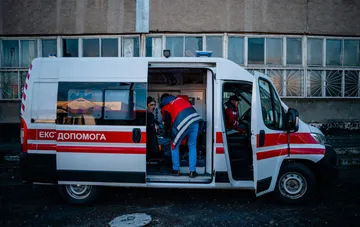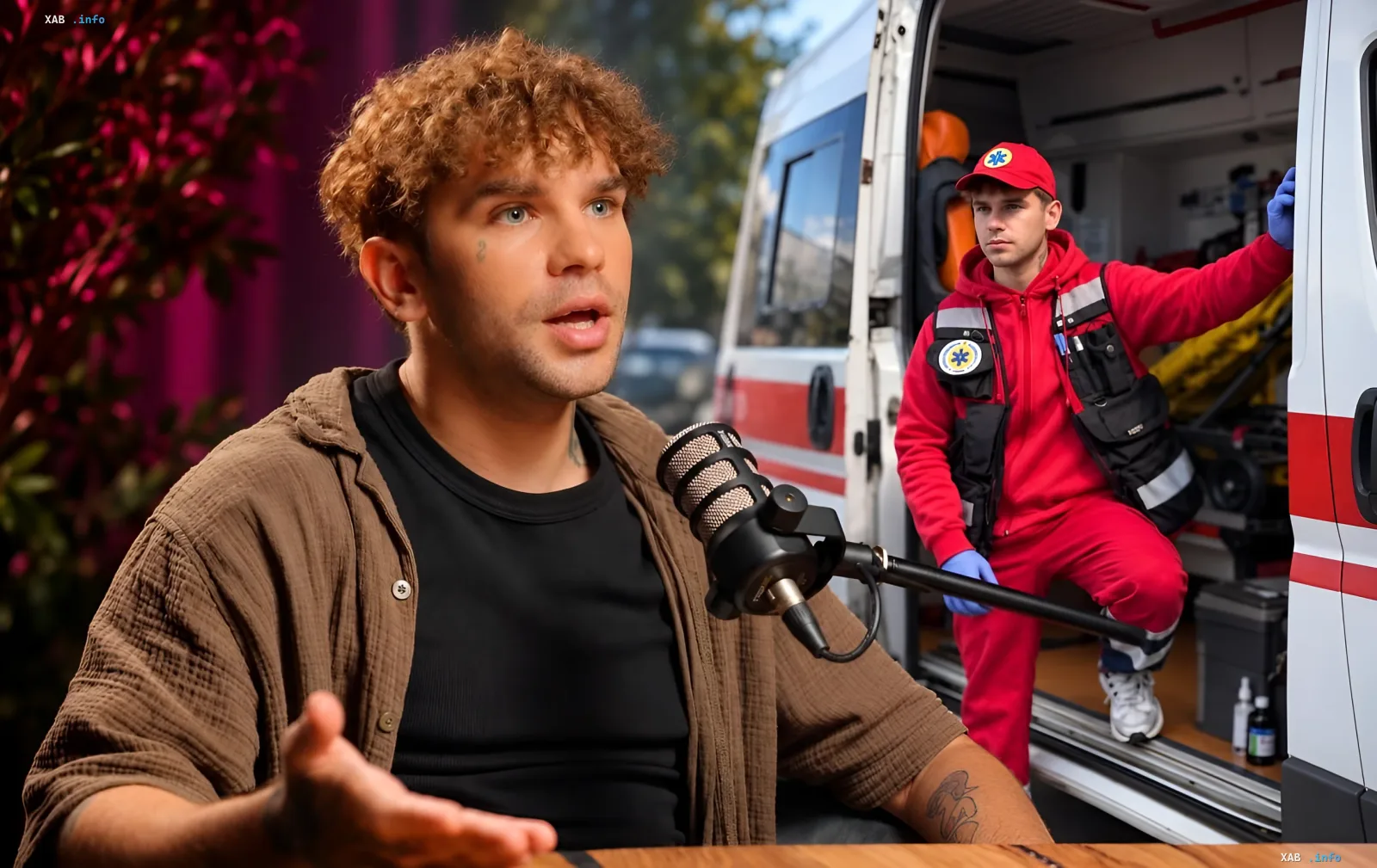
Paramedic Yeh, who works in emergency medical services in Kyiv's Solomianskyi district, described in an interview with DOCTOR CHO (reprinted by Styler) the daily routine of an ambulance crew. He graduated from a medical college about a year ago and almost immediately joined the 103 emergency line. "I always wanted it deep down; I knew I would become a medical worker sooner or later," he said. He now works three to four shifts a week, each lasting 24 hours. His station has nine crews and nine ambulances. Shifts start at 7:00, 7:30, or 8:00, after which the crew responds to calls coming in over the course of the day.
The reality of calls: not just car accidents and critical injuries
According to Yeh, people's ideas about ambulance work often don't match reality. A significant part of the crews' work involves not critical injuries, traffic accidents, or other situations people usually picture when they think of an ambulance. Medical workers are called out for high blood pressure, fever, or a flare-up of a chronic condition that in itself poses no immediate threat to life. "There is a disease, a pathology; it may be serious, but it is not an emergency. That is something to be handled through a family doctor, an oncologist, whoever you are being treated by, scheduled hospitalization, and so on," the paramedic explains. He separately highlights the problem of hypertensive crises: "I have said a thousand times that an ambulance should not be sent for hypertensive crises to bring down blood pressure. People call anyway." At the same time, Yeh clarifies that he is not talking about cases where a person's condition genuinely requires emergency help.
The workload is growing: "Calls aren't getting fewer, they're only getting more"
The paramedic notes that the load on emergency medical services is currently very high. He gives the example of colleagues who, after switching from the former urgent care system, have been receiving far more work. "Calls aren't getting fewer, they're only getting more," he states. As a telling case, he recalls a call to a child with a temperature of 39.9 degrees: the medical workers had to climb to the tenth floor, and the child's mother was afraid to give him antipyretics, even though the necessary medicines were at home. In the end, the medics essentially provided a consultation, explaining the dosage listed in the instructions. "And you climb to the tenth floor just to tell the mom, to provide free consultative services," Yeh sums up.
"Tips" and gratitude: how patients thank the crews
Despite the heavy workload, there are moments in a paramedic's work that are remembered for a different reason. Patients sometimes want to thank the crew for their help. Once, the medics arrived at an elderly woman with severe back pain, provided assistance, and advised her to see a neurologist. The woman first offered money and then said to take "at least a tomato." Patients have also given the medics razors and offered tea or coffee. There was also a case where the gratitude was more valuable: the crew was called to a man with hypertension who had been extremely stressed. After the medics helped him calm down, he gave each member of the crew 1,000 hryvnias. "For me it's like, wow, a person gave 1,000 hryvnias. Well, usually, well, like, they don't give anything at all," Yeh recounts. The paramedic himself calls such money "tips" and clearly distinguishes it from a bribe: "We simply provide emergency medical care. And the person — that is the person's choice. They can tip or they can not."
Salary and working conditions: 17–18 thousand hryvnias in Kyiv
According to Yeh, his official salary is about 14–15 thousand hryvnias a month. In addition, Kyiv medics receive city allowances, so the total comes to about 17–18 thousand hryvnias. Bonuses and overtime pay may also be added to the salary. "The most I have ever earned is 23,000 hryvnias. That's with the add-ons, with the bonuses, that's with me working a full-time rate," the paramedic said. In his words, many colleagues are forced to work at several stations to make up for the low income. Thus, even with a full workload and 24-hour shifts, a paramedic's earnings in Kyiv remain at a level that he himself describes as insufficient for the amount of work performed.