A petition has been registered on the website of the Kyiv City State Administration proposing the development and funding of a municipal program for the engineering protection of residential buildings from Russian drones. The author of the initiative calls for installing anti-drone nets and other engineering barriers on apartment buildings, suggesting that the funding should come from deferred urban beautification projects.
Initiative Details and Expert Involvement
The author of the petition suggests implementing protective nets and engineering structures in residential areas of Kyiv exclusively where specialists confirm their feasibility and effectiveness. Before widespread installation, it is necessary to involve professional engineers, anti-drone experts, and State Emergency Service personnel in evaluating the proposed solutions.
Experts must determine the level of protection against specific types of threats and ensure compliance with strict fire safety requirements, evacuation procedures, and rescue access. The first stage involves funding tests and pilot installations, followed by gradual rollout across residential districts based on transparent criteria if results prove positive.
Funding Sources and Budget Redistribution
To finance the program, the author urges a review of planned municipal budget expenditures on secondary beautification projects that can be postponed. Potential sources of savings include unspent budget allocations intended for the arrangement of pedestrian spaces on Khreshchatyk Street and a new traffic management scheme at Bessarabska Square.
The latter project involves creating six new at-grade pedestrian crossings and reconstructing two existing ones. Funds released by postponing these projects should be redirected toward the design, procurement, installation, and maintenance of protective structures without compromising the needs of low-mobility residents and without shifting financial burdens onto citizens.
Demands on City Authorities and Transparency
The initiative assigns responsibility for financing protective measures directly to the Kyiv City Council. The city administration is urged to establish clear implementation deadlines, assign responsible executors, form open estimates, and publish the results of protective structure efficiency tests.
At the same time, sensitive information regarding the protection of specific strategic or critical facilities must remain strictly confidential. The authors emphasize that anti-drone nets are meant strictly as an additional passive protection measure and cannot replace air defense systems or proper shelters.
Context of Nighttime Attacks and Destruction
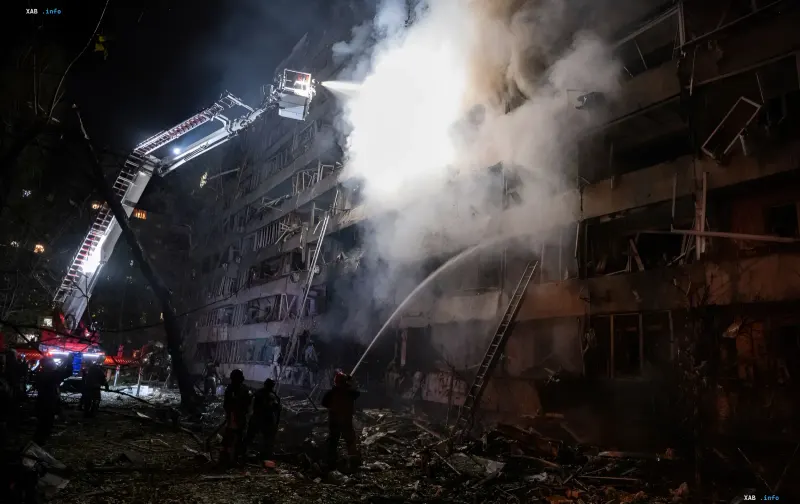
The issue of strengthening residential safety arises amid ongoing massive shelling of the Ukrainian capital. On October 15, falling debris from an enemy drone seriously damaged residential buildings in the Pechersk district of Kyiv, injuring six people.
A day earlier, on October 14, a nighttime attack on Kyiv resulted in three deaths and 27 injuries. Russian forces struck energy infrastructure facilities in the capital and surrounding region, causing temporary power outages across the city.
Significance of the Initiative for Capital Security
Such petitions reflect the public demand for additional local protection mechanisms under constant aerial threats. To be officially considered by municipal authorities, the petition must gather 6,000 signatures within two months.
The success or rejection of this idea will demonstrate the city council's readiness to redistribute budget streams for the engineering protection of the housing sector. In any case, the discussion highlights the need for a comprehensive security approach combining air defense, shelters, and new engineering solutions.