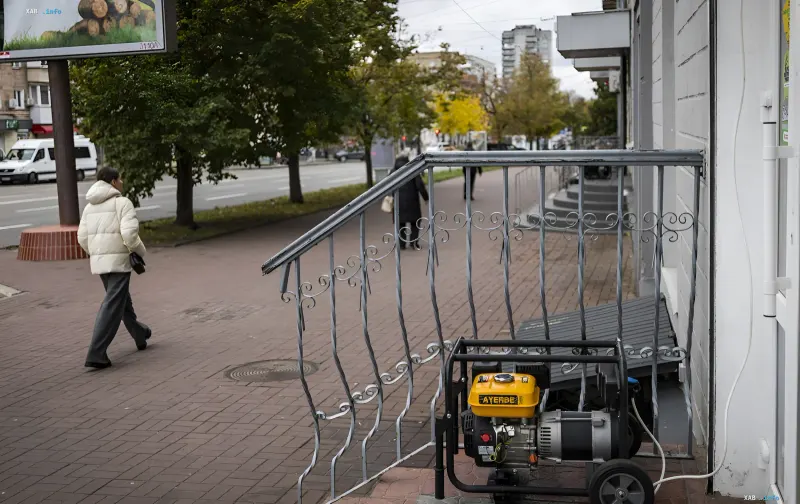
On Saturday, October 31, 2026, a significant portion of Kyiv's residents are facing some of the most severe power supply restrictions of the current period. According to published schedules, certain electricity queues are allotted no more than two hours of power supply per day. This means that a large part of the day in several districts of the capital passes without electricity, forcing Kyiv residents to reorganize their daily routines and plan the use of household appliances in advance.
What the Updated Outage Schedules Show
Energy workers have published detailed schedules for October 31, in which dark intervals indicate a complete lack of electricity, while a lightning symbol on a light background indicates the hours when power is expected. The duration of the blackout directly depends on the specific queue to which the consumer's address is connected. In the hardest-hit queues, the total daily availability of electricity amounts to about two hours, whereas in less burdened segments of the grid, restrictions may be somewhat milder. Therefore, every resident is advised to check the schedule corresponding to their address to know precisely when they can rely on sockets, lighting, and electrical appliances.
The Cause: Repeated Strikes on Critical Infrastructure Facilities
The direct cause of the tighter schedules was the events of the evening of October 30, when Russian unmanned aerial vehicles struck a critical infrastructure facility in Kyiv three times. Repeated hits on the same target led to severe damage to the energy hub and a forced reduction in capacity across the city grid. This is not the first episode of such attacks during the current period: earlier in early and mid-October, similar strikes on energy facilities triggered emergency and stabilization outages in several districts of the capital, and in some cases, schedules temporarily ceased to operate due to cascading grid failures.
The Cascading Effect: Drop in Water Supply Pressure
The blackout of several key infrastructure facilities caused secondary consequences for other municipal systems. In particular, a drop in pressure in the water supply network was recorded in Kyiv, leaving parts of the district without water or with significantly reduced pressure. As industry specialists noted earlier, backup power sources at pumping stations can maintain baseline pressure in the main pipelines, but it may not be enough to pump water to the upper floors of high-rise buildings. This creates an additional burden for residents who are simultaneously deprived of both electricity and a stable water supply.
Recommendations for Capital Residents
Energy workers strongly advise Kyiv residents to check the current outage schedule on DTEK's official resources, as schedules may be adjusted during the day depending on the state of the grid and repair progress. Knowing the specific power supply window allows residents to charge mobile devices, turn on necessary electrical appliances, prepare water, and plan household chores so they fall during hours when electricity is guaranteed to be in the apartment. In conditions where power may be absent for more than 20 hours in a row, the rational use of the two-hour supply window becomes critical for maintaining a basic level of comfort and safety.
Context: Chronicle of the Energy Crisis in Kyiv
The situation on October 31 is a continuation of the escalating energy crisis, which began with the first mass outages in early October and has been steadily worsening since then. While in the first decade of the month energy workers were still introducing stabilization schedules with outages ranging from two to eight hours and asking consumers to reduce consumption during evening hours, by mid-October emergency outages were already in effect in several districts of the capital, invalidating previously approved schedules. The transition from planned restrictions to an emergency regime indicates that the volume of damage to the energy infrastructure exceeds the capacity for rapid restoration, and every new blow to generation and transmission facilities reduces available grid capacity. Under these conditions, the schedules for October 31 with a two-hour supply window in certain queues reflect the current real state of the system rather than a temporary measure, and residents should factor such restrictions into their daily routine for the coming days.