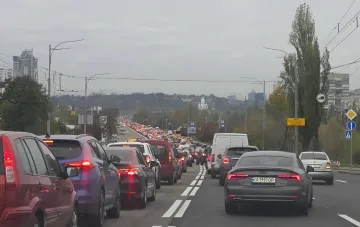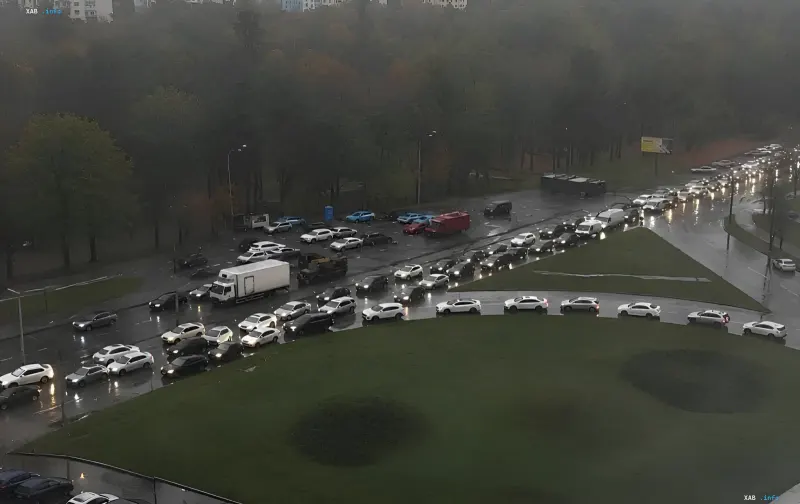
On the morning of November 11, 2026, Kyiv experienced one of its worst traffic collapses in recent memory: multi-kilometer traffic jams formed on key highways and crossings over the Dnipro River, with waiting times in certain sections reaching nearly an hour, according to traffic monitoring services. The heaviest burden fell on the approaches to the bridges connecting the right and left banks, where some lanes were taken out of service or switched to a special mode. According to information gathered by RBC-Ukraine, the crossings recorded the highest level of delays, and due to restrictions and increased demand, taxi fares between the banks noticeably increased.
Traffic Modes on Each Bridge
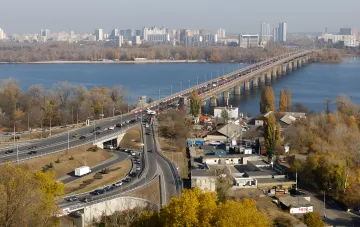
The most difficult situation developed at the approaches to the crossings. Traffic on the Northern Bridge has been only partially restored: one lane operates from the left bank to the right, intended solely for passenger transport, while two lanes are open from the right bank to the left for passenger transport and cars. Patrol officers direct freight traffic on the approaches to the bridge to detour via the Podilskyi Bridge. On the Southern Bridge, no additional restrictions under the backup scheme were introduced for cars and public transport, while trucks moving from the left bank to the right are also rerouted via the Darnytskyi Bridge.
Reversible Traffic on Paton Bridge
Reversible traffic is planned to be launched on the Paton Bridge during peak hours. According to the scheme, from 07:00 to 10:00, three out of five lanes are allocated for traffic toward the right bank, and from 16:00 to 20:00 toward the left bank. Meanwhile, the Kyiv City State Administration (KMDA) previously noted that the actual launch of the reversible lanes would be announced additionally, so drivers were advised to monitor official notifications and road markings. The combination of partial restrictions on the Northern Bridge and the transitional regime on the Paton Bridge created the main bottlenecks for morning traffic.
Taxi Fares and Recommendations for Drivers
Due to high demand and bridge restrictions, the cost of trips between the banks has risen: for example, a trip along the popular Rusanivka — Maidan Nezalezhnosti route via leading taxi services has become noticeably more expensive than usual, with the exact amount depending on the specific app and current load. Drivers are advised to plan routes in advance, use the subway if possible, and leave the lane free for emergency and rescue services. Against the backdrop of morning traffic jams, President Volodymyr Zelenskyy's promise to provide free travel on Kyiv's surface transport is also being discussed, which could additionally redistribute passenger flows in favor of public transport.