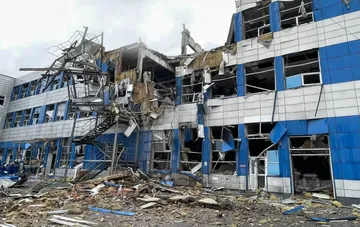
On the night of October 14, 2026, the capital of Ukraine once again faced a massive ballistic missile strike. According to official data from the Air Force of the Armed Forces of Ukraine and the Kyiv City Military Administration (KCMA), the attack was a series of two sequential strikes. The first explosions were heard before dawn, forcing thousands of residents to urgently seek shelter.
Consequences of the strike and damage
The most severe consequences were recorded in a residential area where, according to preliminary information, a ballistic missile hit a nine-story residential building. Rescue teams are currently working at the site, clearing debris and providing assistance to the victims. The extent of the damage is still being assessed, but experts note the high destructive power of the weapons used, typical of the ballistic systems utilized by the Russian Federation during this period of the conflict.
Critical situation with alerts
The lack of timely warnings from Western partners regarding the missile launches has drawn significant attention from both the public and the national leadership. In his statement, the President of Ukraine emphasized that no warning was received from allies this time, which once again raises questions about the reliability of intelligence and early warning systems in the conditions of modern warfare.
Contradictory data
The situation is complicated by variations in the reporting of the incident. While the KCMA officially confirms the impact and urges the population to stay safe, several regional sources report potential criticism toward allies due to the "silence" of intelligence systems. Official Air Force summaries focus on the type of missile weaponry, while media discussions explore versions concerning the possible use of new types of projectiles; however, no official confirmation of missile specifications has been provided at the time of this article's writing.
Analysis of the operational situation
Repeated ballistic missile strikes on Kyiv indicate the Russian Federation's persistent strategy of pressuring the country's infrastructure and civilian centers. Experts point out the difficulty of intercepting this type of target with existing air defense capabilities, which requires a reevaluation of security approaches for metropolitan areas. At the moment, emergency services continue to work at the sites of impact, and residents remain in a state of high alert for potential repeated launches.