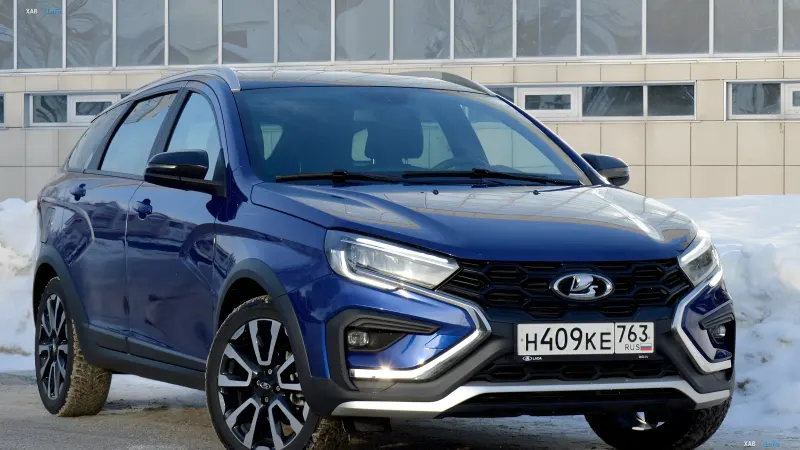
Updated Lada Vesta vehicles, equipped with a new generation engine, will begin arriving at dealerships early next week, roughly between November 16 and 20, 2026. This was announced by representatives of the St. Petersburg-based Pragmatica dealership network, which is among the largest retail channels for AvtoVAZ products in the Northwestern Federal District. According to dealers, the station wagon versions of the updated Vesta are expected to be the most popular among buyers, which is logical given the model's positioning as a family car with expanded cargo space. Pragmatica also anticipates that the engine lineup upgrade will allow the model to retain and even expand its potential customer base, who are currently considering Chinese crossovers and sedans in the two to two-and-a-half million ruble price segment as alternatives.
Technical specifications of the new engine
The central element of the Lada Vesta update is a new 1.8-liter gasoline engine that develops 132 horsepower and delivers a maximum torque of 175 Newton-meters. The motor will be available for all model variants, from base sedans to Cross versions with increased ground clearance and protective body elements. Thus, AvtoVAZ is effectively expanding the Vesta engine lineup by adding a unit that, in terms of characteristics, occupies an intermediate position between previously offered options and is aimed at buyers who appreciate a balance between low-end torque and acceptable fuel consumption in the city cycle.
Pricing policy and transmission
The starting price of the updated Lada Vesta with a six-speed manual transmission is 1,885,000 rubles. For buyers who prefer automated gear shifting, there is a surcharge for the continuously variable transmission (CVT) of 5,000 rubles, bringing the cost of the CVT version to 1,890,000 rubles. Experts note that AvtoVAZ has consciously kept the model's starting price at the previous level, redistributing the costs of modernization within the model line. This allows the manufacturer to avoid alienating a price-sensitive audience for whom the Vesta remains one of the few available new cars from a Russian brand with a full set of modern driver assistance systems.
New options and trim levels
In addition to the engine replacement, the manufacturer has added several new features to the model range, distributed across specific trim levels. The Techno version now comes standard with a tire pressure monitoring system (TPMS) and ambient interior lighting, which allows for changing the color and intensity of the lighting depending on the preferences of the driver and passengers. Lada Vesta Cross versions have additionally received a drive mode selection system, which adapts transmission characteristics and stability control systems to specific road conditions—from asphalt to light off-road and slush. These additions, as conceived by AvtoVAZ marketers, are intended to increase the perceived value of the model in comparison with competitors from China, which often offer only a basic set of safety systems in the same price range.
Market context and dealer expectations
The arrival of the updated Vesta at dealers comes at a time when the Russian car market is experiencing a phase of stabilization after several years of volatility, and competition from Chinese brands, which are actively increasing local production, is becoming increasingly palpable. The Pragmatica dealer network points out that the 2–2.5 million ruble price segment is the most competitive: Chinese crossovers, updated models from Korean and Japanese brands, and AvtoVAZ's own lines are all present here. Maintaining the starting price at 1.885 million rubles while expanding the engine lineup and adding options previously available only in top trim levels is viewed by the manufacturer as a key tool for retaining market share in this segment. The first cars with the new engine are expected to appear in showrooms of Pragmatica and other dealer centers in St. Petersburg and the Leningrad Region by the middle of next week.