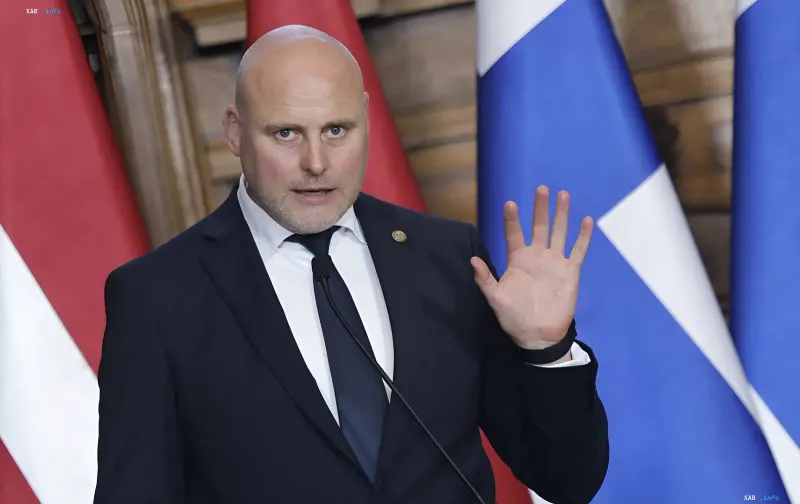
On August 17, 2026, in an interview with Politico, Latvian Prime Minister Andris Kučinskis severely criticized the European Union's current policy towards Russia. The head of the Baltic republic's government called the lack of a unified, automatic entry ban for Russian combatants involved in the war against Ukraine a "major mistake." According to him, existing loopholes in the legislation allow individual EU member states to issue visas to those directly participating in hostilities on Ukrainian territory.
Political rift: France and Italy against the "hard line"
Kučinskis recalled that during the discussion of the latest sanctions package, which was adopted several years ago, a serious rift occurred within the EU. France and Italy opposed the introduction of a full and automatic entry ban for Russian military personnel. Paris and Rome argued their position by stating that entry issues should be regulated through common Schengen visa rules, rather than through the sanctions list mechanism. Meanwhile, Northern and Eastern European countries insisted on stricter restrictions that would be mandatory for all.
The final agreement created only a legal basis for the ban but left each country with the right to decide independently when exactly this ban would come into force. This led to a situation where, according to Riga, "we are allowing visas to be issued to Russian servicemen, the very ones killing Ukrainians on the battlefield." The Latvian Prime Minister interprets this delay and lack of automation as a sign that Europe is "going mad".
Refusal of dialogue: "A useless exercise"
In addition to criticizing visa policy, Kučinskis spoke out against the initiative by European Council President António Costa to open a communication channel with Moscow. The Latvian leader believes that any attempts to establish contact with the Kremlin under current conditions are a "useless exercise." In his opinion, there are no signs of Russian leader Vladimir Putin's readiness for honest negotiations. On the contrary, any negotiations now would only give Russia "time to catch its breath" to make its "next move" and regroup forces.
Latvia, which has severed diplomatic relations with the RF, takes a hard line: restoring ties is possible only after the aggressor country pays reparations to Ukraine and those guilty of war crimes stand trial. Kučinskis cited post-war Germany as an example, noting that integration is possible only after admitting guilt, punishment, and retribution.
Technological response and future threat
In the context of strengthening defense, Latvia officially became a participant in the Drone Deal initiative in June 2026 — an international agreement on cooperation in defense technologies aimed at the development and production of unmanned systems. It was also reported that Riga purchased special anti-drone systems to repel Russian attacks, although the procurement of ammunition for them has not yet been completed.
Kučinskis warned that after the ceasefire, "the danger at the border will only increase." He predicts that hundreds of thousands of "broken" Russian soldiers will return from the battlefield in search of a better life, while other Russians will flee due to the destruction of Moscow's military economy.
Contradictory data
While Latvia insists on the immediate and automatic closure of borders for Russian military personnel, the official position of France and Italy remains unchanged: they believe that the visa issue should be resolved through standard EU migration procedures, not through sanctions packages. This creates a situation where the ban formally exists, but its implementation depends on the political will of each specific country, which, according to Riga, makes the measures ineffective.