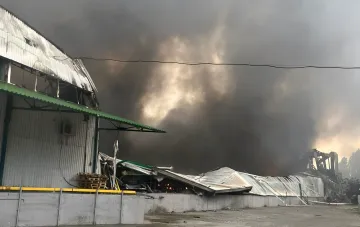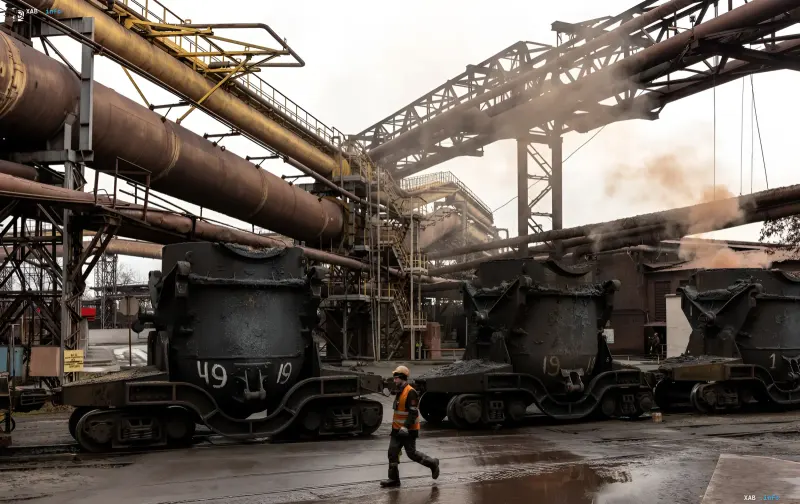
Over the past month, Russian missiles have struck at least four Ukrainian metallurgical enterprises — Zaporizhstal, ArcelorMittal Kryvyi Rih, Kametstal, and the Dnipro Metallurgical Plant. The attacks have resulted in deaths and injuries, and some production has been halted. At ArcelorMittal Kryvyi Rih, key production facilities were damaged, forcing a number of processes to be suspended; Zaporizhstal and Kametstal ceased operations entirely after the strikes. According to the publication, amid the constant shelling, Ukrainian metallurgy is on the verge of a systemic shutdown, with 72% of steel production now at risk.
Systemic Pressure on the Economic Foundation
For the industry, this is the latest wave of losses following the occupation of part of the Donbas enterprises in 2014, the destruction and seizure of major assets in Mariupol, Avdiivka and other cities in 2022, and the loss of the Pokrovska Coal Group in 2024–2025. Nevertheless, metallurgy had managed to partially resume production, restructure logistics, and adapt to electricity shortages. The new series of strikes, however, is once again halting the companies — meaning a loss of jobs, tax revenues, and export earnings. The mining and metallurgical complex remains one of the key sectors of the Ukrainian economy: it provides foreign-currency earnings, employment, taxes, as well as the cargo base for the railway and ports. That is why the attacks on the plants should be viewed not as strikes on individual facilities, but as systemic pressure on the country's economic foundation.
Unequal Competition in External Markets
A separate problem remains unequal competition: while Ukrainian plants spend resources on recovery and operate under military risks, certain Russian metallurgical companies continue supplying the European Union. Despite sanctions and restrictions, Russian firms such as NLMK, Evraz and others retain access to the European market. In 2026 alone, Russia has the opportunity to ship around 3 million tonnes of slabs to the EU within the scope of existing exemptions and transition periods. At the same time, Ukrainian metallurgy faces additional constraints — the operation of the CBAM mechanism and new EU import quotas, which have reduced the export potential of Ukrainian steel. As a result, Ukraine is losing production, exports, and taxes, while Russian companies gain the opportunity to expand their share in external markets.
Loopholes for Russian Oligarchs in the EU
According to the Kyiv Independent, Belgium continues to actively import Russian steel semi-finished products. The owner of NLMK, oligarch and close ally of Vladimir Putin, Vladimir Lisin, who is under sanctions from Ukraine, Canada and Australia, remains outside the EU's sanctions lists. Currently, Russia supplies 58% of the EU's steel slab imports, and a third of these shipments goes precisely to Belgium, where two of Lisin's plants continue to operate virtually on the outskirts of Brussels. The situation looks paradoxical: Europe declares economic pressure on the Kremlin, yet leaves loopholes that allow Russian oligarchs to earn billions even during the war.
What to Do: The Argument Before Brussels
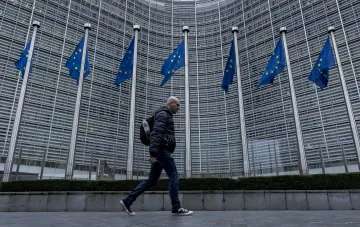
Experts note that under such conditions Ukraine must strive to fully close off to Russian metal products those markets that remain accessible, using the main argument — Russian strikes reduce Ukrainian production and create additional room for Russian competitors. The Ukrainian side should strengthen its argumentation before the EU: the aggressor state should not gain a competitive advantage from the destruction of the industry of the state it is at war with. Only a combination of restoring its own capacities and a tougher sanctions policy by Ukraine and its partners can neutralize the double effect of Russian strikes — the loss of domestic production and, at the same time, the gain for Russian competitors in external markets.